“There’s always something left to wish for.”
Momo“There’s always something left to wish for” is the closing promise in a Men in Gray member’s sales pitch to Momo: an endless succession of toys, partners, and possessions, he claims, can keep Lola from ever becoming bored. The line makes unending desire sound like freedom from boredom, while revealing that the promised game depends on never being satisfied.
The Promise as a Sales Pitch
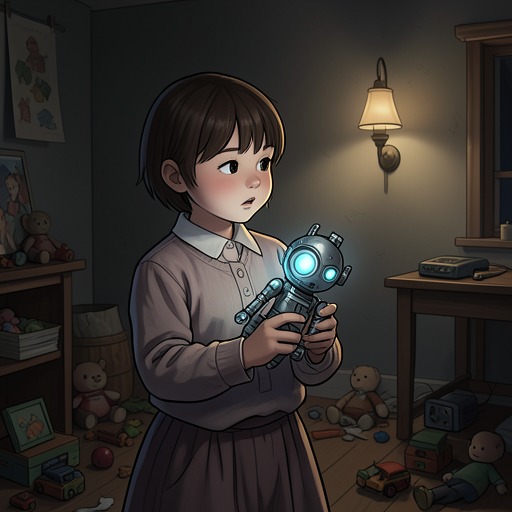
The expression follows the agent’s claim that acquiring more and more things is a simple way to prevent boredom. He anticipates the obvious objection—that Lola might eventually possess everything and become bored again—and answers by introducing Butch, a lifelike boy doll the same size as Lola. The phrase is therefore not an isolated maxim: it seals an argument designed to make the proposed solution seem immune to exhaustion.
A Game Designed to Continue
Butch, the agent explains, has many possessions of his own. If Lola grows bored with him, another girlfriend can be supplied, with outfits made specifically for her. Butch has a friend, that friend has friends, and the chain continues without a stated endpoint. Each possible ending is answered with another product or companion; the game stays open by continually producing a new thing to want.
Boredom and Endless Wanting
The promise reverses the ordinary meaning of having enough. In the agent’s account, acquiring everything would bring boredom, so the answer is not fulfillment but an indefinitely renewed supply of wishes. “There’s always something left to wish for” presents that perpetuation as reassuring, yet its logic makes contentment impossible: the game works only if desire never comes to rest. The phrase thus condenses the pitch’s irony—what is offered as escape from boredom is a cycle that must keep its players wanting.