Deadly tedium
MomoDeadly tedium is the fatal illness Professor Hora warns will follow when the Men in Gray contaminate the time he sends to people. Its progression turns ordinary boredom into enduring dissatisfaction, then into emotional numbness and incapacity for love; at its incurable extreme, its victims resemble the gray figures who depend on dead human time. The illness makes the Men in Gray’s threat more than a demand for surrender: it is a plan to reproduce their own condition in others.
The Illness and Its Progression
Professor Hora describes the disease as gradual rather than immediately recognizable. At first, a person simply loses the desire to do anything. Interest drains away, and everything becomes tiresome. Instead of passing, the boredom deepens over days and weeks. It is accompanied by growing bad temper, an increasing sense of inner emptiness, and dissatisfaction with both oneself and the surrounding world. The sequence matters: the first signs might be mistaken for a passing mood, but their persistence marks a worsening condition.
The next change is not a return to feeling but the disappearance of feeling itself. Dissatisfaction gives way to indifference toward what happens around the sufferer. Joy, sorrow, anger, and excitement—all different responses—become equally inaccessible. The person also loses the ability to laugh and cry. The account thus describes more than a decline in pleasure: it traces the progressive loss of the emotional distinctions through which a person responds to life.
At the disease’s most advanced stage, its victims are cold inside and incapable of loving anyone or anything. Professor Hora identifies this threshold as irreversible: once reached, there is no recovery. The sufferers move about with blank, gray faces and have, in effect, joined the ranks of the Men in Gray. The name Deadly tedium captures the fatal endpoint of a process that begins in familiar boredom but ends in a condition resembling the gray men’s own existence.
The Men in Gray’s Means
The threat is tied to the Men in Gray’s use of stolen time. They take petals from the hour-lilies, let them wither and dry until gray, and make cigars from them. The petals retain remnants of life, but living time is harmful to the Men in Gray; they smoke the cigars so that the time is converted into smoke and made fully dead. Dead human time is what keeps them alive. The opposition between living time and dead time underlies Professor Hora’s warning about the illness.
The danger to other people comes if the wall of smoke being raised around Professor Hora’s house closes off the open sky above it. While enough sky remains open, he can send people their time in good condition. Once the smoke closes overhead, each hour he sends will be contaminated by the time-thieves’ poison, and people who absorb it will become ill. Deadly tedium is therefore presented as the consequence of corrupted time entering human life, not simply as a personal weakness or an isolated spell of boredom.
The Threat to Momo and Professor Hora
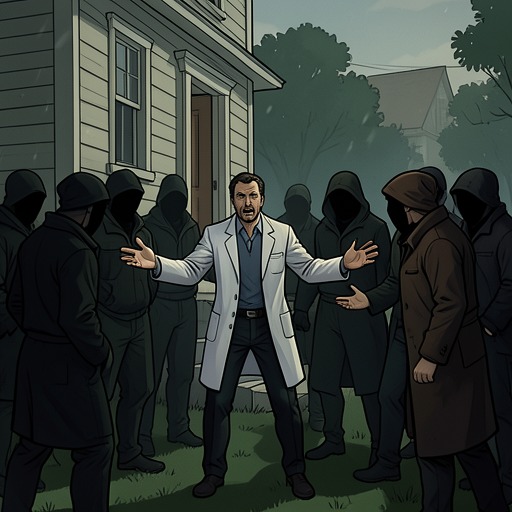
Momo shivers as she understands the danger and asks whether people will be turned into creatures like the Men in Gray unless they hand over all their time. Professor Hora confirms that this is how they hope to bully him into surrendering it. Her response connects the illness’s personal consequences to the larger coercion: the threat is not merely that people will feel worse, but that they will be remade in the image of those who steal their time.
Professor Hora explains that he has waited for people to get rid of the Men in Gray, since people themselves brought them into existence. But the danger around the house means he can no longer wait, and he cannot act alone. He asks Momo to help him. The warning about Deadly tedium thus marks a shift from explaining the Men in Gray’s methods to seeking action against them: the disease’s slow, apparently ordinary beginning conceals an irreversible ending, and the encroaching smoke makes that prospect immediate.