Alicia
MovingAlicia is the caregiver and household worker whose presence helps sustain Edwina through the difficult years of raising Charlie and Rowena. First encountered by Edwina in the grounds of the Imperial War Museum, she becomes a daily part of life at the family home on Kennington Road, caring for the twins and enabling Edwina to build a working life as an illustrator. Edwina later calls Alicia her closest ally, while the story makes clear that this devotion grew through practical labor, shared domestic life, and a bond that endured despite unequal status and racial prejudice.
Identity and First Encounter
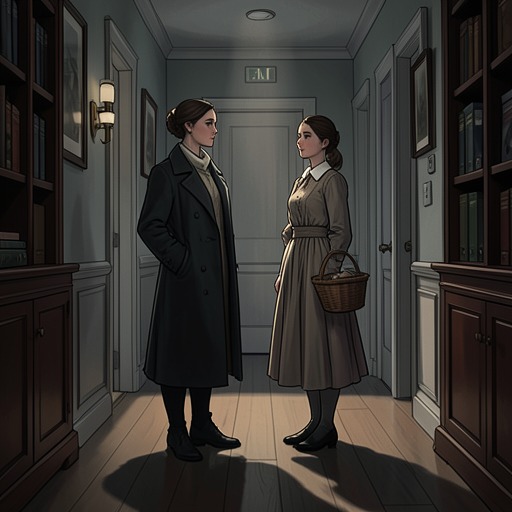
Alicia meets Edwina when the twins are still babies and Edwina is struggling alone, without income, in a large house that needs time and money. The strain has become so severe that Edwina sometimes imagines taking herself and the children over Waterloo Bridge. At the museum grounds, Edwina is sitting apart from the pram, overwhelmed by its crying contents and unsure she can manage the walk home with both children. Charlie throws a shoe from the pram; Alicia retrieves it, sees that there are twins, and distracts them with comic faces and animal noises until they gurgle happily. For Edwina, those few minutes offer something rare: a chance to breathe.
When Edwina breaks into sobs as rain begins, Alicia helps get the family home. She carries one baby under each arm up the stairs, then returns for the pram and hauls it into the house herself. The first meeting establishes Alicia through action rather than formal introduction: she notices a need, responds immediately, and takes on the physical work Edwina cannot manage alone. Edwina later recalls that her mother used a racist slur for Alicia, a detail that places the intimacy of their eventual alliance against the prejudice surrounding it.
Alicia was a part-time cleaner with two sons living in Kingston, where they were cared for by her mother, a separation she described as customary. She lived near the Old Kent Road with her husband and some of his cousins. Edwina never visited Alicia’s home and never met those relatives; Alicia, instead, came to Edwina’s. The closeness that developed therefore existed alongside a clear divide between their domestic worlds.
Care and Daily Life
Alicia returned every day until the twins were too old to need a nanny, and then stayed on to do the ironing and cleaning. On the day she first brought them home, she stripped and dried the babies, changed their clothes, and found dry garments on the pulley. Once warm, they ate hot toast and honey and settled into the playpen. This care answered an immediate need, but it also exposed how badly equipped Edwina was to manage the household alone.
After Ollie was gone, Edwina depended on the Aga he had insisted on installing for warmth, though she could not cook on it. She used a Baby Belling to heat baby food and relied on tinned goods, Heinz soups, and jars of food. She knew the twins were not eating properly: Rowena had a gummy eye and Charlie coughed repeatedly. Alicia’s cooking and practical attention helped fill the gap. Later, she did most of the cooking and laundry, while Dickie had his work shirts sent out for professional cleaning. Edwina remembers Alicia’s anger when this arrangement was explained to her: she huffed, banged pans, and left Edwina hiding in the studio. The episode shows both the volume of Alicia’s labor and the household’s assumption that more of it could simply be assigned to her.
Work, Friendship, and Unequal Status
Alicia’s daily care gave Edwina the time and freedom to earn money from the Betsy and Tom books. Edwina illustrated the series, shaping the Love family through details such as Betsy’s red button-up shoes, Tom’s freckles, and the biscuits in his pockets. She credits Alicia with making it possible to be a working mother in the 1960s. While Alicia looked after the twins in the nursery or kitchen, Edwina drew and painted in her studio; they often met for lunch, usually soup and food on toast, before Edwina returned to work.
Edwina’s later memories make that arrangement feel both intimate and materially specific. In a letter written while preparing to sell the house, she recalls Alicia’s flour-covered hands, her bibbing the babies, the sound of her singing, and the sweet potato she travelled to Brixton to fetch. Edwina remembers the twins’ first taste of mango and says the house would not have been hers without Alicia. The house is thus preserved not only as property or architecture, but as a record of Alicia’s repeated acts of care. Edwina’s gratitude is profound, even as the relationship’s terms remain unequal: Alicia worked in Edwina’s home, and Edwina never entered hers.
Prejudice and Household Conflict
Alicia’s place in the household did not protect her from racism. Dickie once described Lucas as not having been in close contact with a “coloured” person. Edwina rebuked him, rejecting the term and the degrading images it carried. She connected Dickie’s attitude to Wyebourne College, where, in her view, the only Black people Dickie or Lucas encountered were pupils of royal descent or staff cleaning toilets. Her defense of Alicia sits beside her recollection that Alicia disliked Lucas and did not hesitate to express dissatisfaction with the work he demanded of her; she marked his clothes for the school matron to mend rather than touch his belongings herself.
Their relationship was therefore neither effortless nor sentimental. Alicia could be moody, disliked hoovering, and did not want to do things for Lucas; Lucas, in turn, disliked her touching his possessions. Years later, Lucas admits that he did not like Alicia, and Edwina tells him that Alicia thought he was stuck up. He accepts the judgment, linking his attitude to the schools that had taught him to believe in a social order he no longer values. Their mutual dislike reveals how class and race shaped the household even where its members depended on Alicia’s labor.
Injury and Lasting Significance
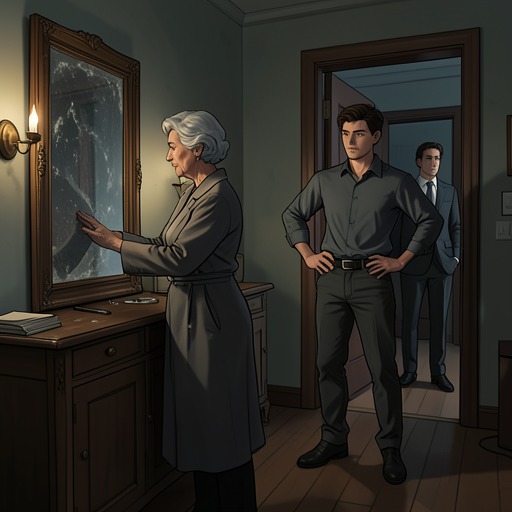
The decisive break between Edwina and Charlie comes when he returns to the house to steal valuable antiques. He fills a rucksack with silverware and framed landscapes, but Alicia catches him as he is about to leave. During the confrontation on the stairs, she is badly injured, suffering a smashed hip and collarbone. Whether Charlie pushed her or she fell is left unresolved; what matters to Edwina is that he ran without stopping to help. She has the locks changed, and her trust in her son is, in Dickie’s account, effectively shut away.
Alicia is still beside Edwina years later at Dickie’s funeral. She wears an enormous orange-and-green jungle-print turban that blocks the view of people seated behind her, and Barbara responds with another racist remark about her presence in the front row. The image places Alicia visibly at Edwina’s side, in contrast to the family members keeping to opposite sides of the church. When Lucas later tells Edwina that he did not like Alicia, Edwina answers that the feeling was returned; neither pretends their history was simple. Yet Alicia’s lasting importance is unmistakable. She helped Edwina raise the twins, sustain a career, and keep the house; then, when Charlie’s theft turned the household against itself, she became the person whose injury made the cost of his actions impossible for Edwina to ignore.