The Butterfly Fairy Turns to Stone While Waiting for Her Husband
MulanThe Butterfly Fairy Turns to Stone While Waiting for Her Husband is a story the Jade Rabbit tells Mulan about an immortal whose devotion to her mortal husband ends in a suspended, stone existence. The tale begins with a warning that she cannot fully understand, becomes a long separation measured by the seasons, and culminates in a transformation discovered only after it has happened. Its revelation is not simply that an immortal can suffer loss: the Jade Rabbit explains that the Butterfly Fairy is neither dead nor living in any ordinary sense, and that reunion with her husband is the sole condition for her return.
Warning and Departure
The Butterfly Fairy and her husband are poor, living in rough-cloth robes and eating plain rice, but their marriage is happy. She helps him prepare for the Emperor’s examinations, studying with him and making sure he eats dinner. The story sets her former life of celestial abundance against this modest household, yet presents no visible regret on her part: her devotion is expressed through the daily work of sharing and supporting his life.
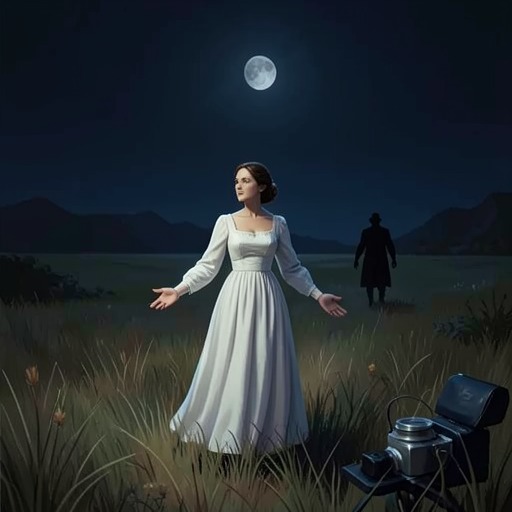
One night, the Butterfly Fairy dreams that a dear friend, another immortal attendant of the Queen Mother of the West, has come to warn her. The Queen Mother has sent a message that a shadow hangs over the mortal husband. The friend cannot explain what will happen, but repeats the deadline: the Butterfly Fairy must be beside him before the magnolia blooms, or his spirit will depart. The warning gives the fairy a precise condition but withholds its meaning. Her questions about whether he will die receive no answer; even the Queen Mother’s concern that coming danger could drown the fairy too does not resolve what awaits them.
The practical circumstances make the warning difficult to act upon. The examinations are held at the distant Imperial City, and the most practical route is to travel to a port village and continue by boat. The couple can afford only one fare, so the husband must go alone. He promises to leave after the autumn examinations and return before midwinter, well before the flowers bloom. As he departs in summer, he reassures her that his spirit will not leave the earth unless she is with him. His confidence offers comfort, but it cannot answer the dream’s warning or secure his return.
Waiting at the River
As summer passes into winter, the husband does not come home. The Butterfly Fairy keeps vigil through the long nights; when the days begin to lengthen and he is still absent, she can no longer remain in the house. After the icicles begin to melt, she packs provisions, closes the house, and travels to the port village where he boarded his boat. The journey is a response to the warning as much as to his absence: unable to know what has happened, she goes to the place from which his return might be seen.
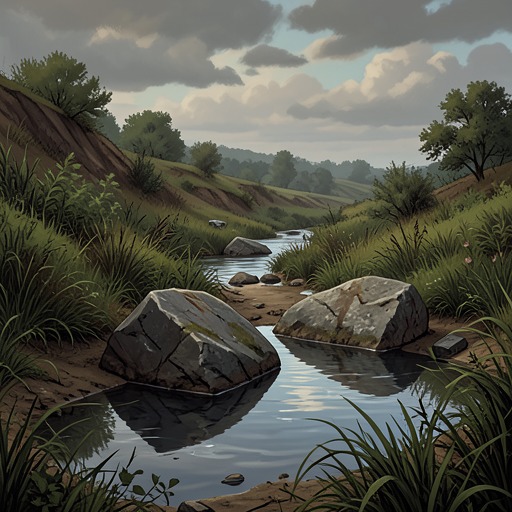
At the docks she waits day after day, through changing weather, without attending to the wear of her clothes. The villagers come to know her as the Waiting Wife. Their name turns her private hope into a public identity: she is the solitary figure at the river’s edge, watching for a boat that never brings her husband. Those who meet her eyes remain haunted by the sight, and an old woman recalls it as watching hope itself disappear. The story gives the villagers’ response weight, while leaving the husband’s fate unexplained. His absence is certain; what caused it is not disclosed.
The landscape registers time passing even as the wife’s vigil continues. The mountains grow green, the air warms, and more boats reach the village, but none carries her husband. One day a family hurries to welcome someone arriving by boat with flowers. A branch falls from their bouquet at the Waiting Wife’s feet. She reaches for it as if in a dream, then drops it when she sees the pink magnolia blossom. The detail makes the deadline visible at last: the season named in the warning has arrived, and the promised return has not.
Transformation and Discovery
No one sees the Waiting Wife’s expression change or witnesses her fall. The account marks her disappearance instead: the woman who had kept watch by the river is gone, and a large, oddly shaped white rock stands in her place. Its twisted layers, hollow eyes, and ragged openings recall the torn clothing she wore while waiting. The resemblance links the stone to the woman without showing the transformation itself. The villagers can identify what has replaced her, but the decisive change remains unwitnessed.
When the Jade Rabbit recounts this ending to Mulan, she protests that the Butterfly Fairy could not have turned to stone because immortals cannot die. The Jade Rabbit distinguishes immunity from invulnerability: immortals do not suffer sickness or aging, but they can be killed by a blade or poison. The Butterfly Fairy’s fate is different. She turned herself to stone rather than continue living with a broken heart, and the Jade Rabbit describes that state as close to death without being death itself. The story therefore makes the transformation an act of despair while preserving a difference between petrification and an ended life.
The Jade Rabbit adds an important qualification: the Butterfly Fairy is not alive in any ordinary sense, but she is not dead, either. Her return depends on reunion with her husband. That condition gives the river vigil an unresolved consequence rather than a final answer. The account confirms the fairy’s stone existence but does not show whether the husband returns or whether they reunite.
The Tale’s Place in the Larger Story
The story is told within the conversation between the Jade Rabbit and Mulan, rather than presented as an independently narrated episode. Its ending changes how Mulan understands the place where she and the Jade Rabbit have arrived. She recognizes that the husband in the tale is the scholar the Jade Rabbit mentioned earlier, and connects that identity with the oddity of their coming upon the Butterfly Fairy’s house. The Jade Rabbit agrees that the encounter may not be coincidence, while Mulan asks whether another immortal is involved. The tale thus links the Waiting Wife’s old sorrow to the companions’ present circumstances without yet disclosing who might be acting or why.
Its structure rests on contrasts that remain unresolved: a happy marriage and a solitary vigil, a promise of return and an absence that outlasts the promised season, an immortal body and a state resembling death. The magnolia is both a natural sign of spring and the measure of the time allowed by the warning. When its bloom appears, the wife’s waiting ends, but the story does not grant her the reunion that could restore her. Instead, the stone preserves the outline of her vigil and leaves the possibility of return dependent on a meeting the account has not yet supplied.