British Cabinet rejects demand for Czechoslovakia to cede the Sudetenland immediately
MunichThe British Cabinet’s refusal to send Sir Horace Wilson’s telegram marked a decisive limit to Britain’s willingness to press Czechoslovakia into surrendering the Sudetenland under threat of invasion. The decision emerged from a debate in which avoiding an immediate war competed with the moral and diplomatic costs of advising a smaller state to yield, and it showed that Neville Chamberlain’s search for a settlement could still be checked by his ministers’ objections.
Crisis and the proposed telegram
The dispute unfolded as the crisis over the Sudetenland moved towards an imminent deadline. Chamberlain told the Cabinet that an orderly transfer of the territory to Germany, subject to a plebiscite, had been hoped for and accepted by the Czechoslovak Government. Adolf Hitler, however, had announced that he would not wait even a week and intended to invade on Saturday. After meeting Hitler in Berlin, Sir Horace Wilson had warned him that if France fulfilled its treaty obligations to Czechoslovakia, Britain would be obliged to support France. Hitler’s reported answer was that he was prepared for every eventuality and expected war within days.
Against that background, Wilson proposed a further attempt to avert conflict: a telegram advising Czechoslovakia to accept Hitler’s terms before his deadline, withdraw from the Sudetenland, and allow Germany to occupy it. He presented the proposal as the surest way to keep the United Kingdom out of a war that might spread far beyond Central Europe. If Czechoslovakia refused, he argued, Britain could at least say it had done its best and would no longer be morally obliged to intervene. The recommendation thus joined a concrete ultimatum to a calculation about Britain’s future responsibility: pressure Czechoslovakia now, Wilson argued, and Britain might escape the consequences of a wider conflict.
Disagreement over the price of avoidance
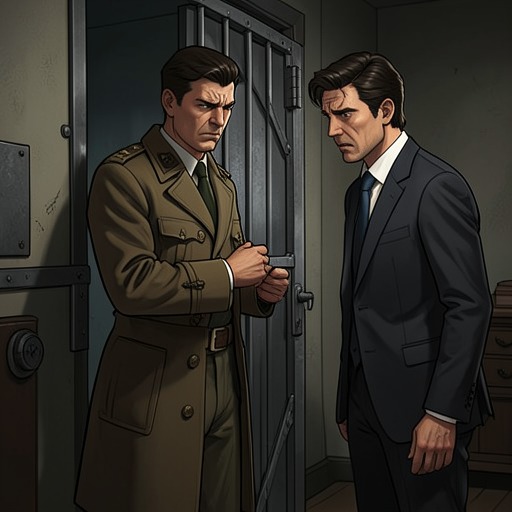
Chamberlain acknowledged the proposal’s simplicity, but Lord Halifax and Sir Alexander Cadogan rejected its implications. Halifax asked what would happen if Czechoslovakia refused. Cadogan and Halifax then made clear that telling it to surrender territory under threat of force would make Britain, in effect, an accomplice to Germany. They feared that such a course would destroy Britain’s standing in the world and damage the Empire. Halifax also stressed the effect on France, which would be placed in an intolerable position if Britain urged surrender while France faced its treaty commitments alone.
Wilson answered that France should have considered the consequences before guaranteeing Czechoslovakia without consulting Britain. Cadogan sharply rejected that reasoning: he insisted that Britain could not allow France to fight Germany alone. Their exchange exposed more than a disagreement about tactics. Wilson treated separation from the conflict as the central objective; his opponents argued that the means of avoiding war could itself betray Britain’s obligations and undermine its credibility. The Cabinet was weighing not just the risk of fighting, but what Britain’s conduct would mean if it chose not to.
In the later argument over whether the telegram should be sent, Lord Halifax set out the objection in moral and practical terms. He could not support the Prime Minister on the matter or send Wilson’s draft because the demand amounted, in his judgment, to complete capitulation. He accepted that refusing the proposal might bring grievous consequences for millions, including people in Britain, and might make war certain. But he argued that the government could not urge Czechoslovakia to do what it believed wrong. Nor could Britain offer a firm guarantee that the German Army would stop at the Sudetenland rather than occupy the whole country. The missing guarantee made the proposed sacrifice especially uncertain: territorial concession might not purchase security for Czechoslovakia or peace for Europe.
Chamberlain’s decision
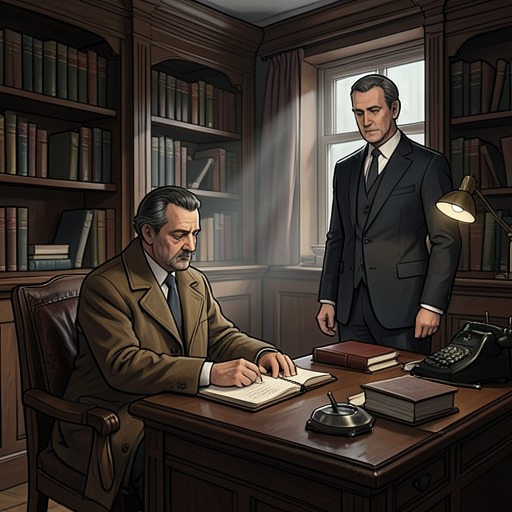
The challenge placed Chamberlain in a consequential position. He had supported the effort to avoid war and described Wilson’s telegram as a possible last chance, yet Halifax’s case was powerful enough to alter the course of the meeting. Chamberlain acknowledged the arguments against his proposal and looked around the table for the view of his colleagues. When no one spoke in support of sending it, he said he was prepared to leave the matter there. He then told Wilson that the telegram would not be sent.
The refusal was not an assurance that war had been averted, nor did it resolve the territorial crisis. It meant that the British Cabinet would not itself urge Czechoslovakia to meet Hitler’s demand for immediate withdrawal. The distinction matters: the government continued to seek a settlement, but declined this particular means of obtaining one, in part because it could not be sure that yielding the Sudetenland would protect the remaining country.
A decision under continuing pressure
The surrounding crisis underscores how little room the decision left for confidence. In the Cabinet’s discussion of military readiness, partial mobilisation was proposed as a signal that Britain was prepared to fight; Chamberlain feared that such a signal might instead push Hitler into war or make him lose face. The choice between demonstrating resolve and avoiding provocation therefore shadowed the refusal of Wilson’s telegram as well. In both debates, the same problem persisted: an action intended to deter or contain Hitler could also accelerate the confrontation.
Nor did the telegram’s rejection close the sequence of deadline-driven diplomacy. Later, Sir Nevile Henderson reported that Benito Mussolini had asked Hitler to postpone mobilisation for twenty-four hours so the situation could be reconsidered, and that Hitler had agreed. At a subsequent briefing on the Munich negotiations, Wilson described Hitler as treating Saturday as the deadline for a settlement, warning that otherwise he would march in, and gave his own assessment that Hitler was not bluffing. These later developments do not undo the Cabinet’s decision; they show that it was a choice made amid continuing pressure, not a resolution of the crisis. The episode’s central tension remained: Britain sought to prevent war, but its ministers would not accept that the pursuit of peace required them to demand an unguaranteed surrender from Czechoslovakia.