Munich settlement
MunichThe Munich settlement was the agreement by which Britain, France, Germany, and Italy averted an imminent European war by permitting German troops to occupy predominantly German portions of Czechoslovakia’s Sudetenland. Its terms were assembled under severe time pressure and left disputed matters for later resolution. The ceremony of signatures brought the crisis to a formal close, but the settlement’s speed, coercive circumstances, and uncertain consequences remained visible in the reactions of the people around it.
Crisis and the British Cabinet’s dilemma
The agreement followed Adolf Hitler’s threat to invade Czechoslovakia if his demands were not met. Neville Chamberlain told the British Cabinet that Hitler had rejected even a short delay and had declared that war would follow if France and Britain intervened. Chamberlain had already warned Hitler that Britain might support France if France fulfilled its treaty obligations to Czechoslovakia. The prospect of action was not abstract: the Cabinet considered partial mobilisation, which could be operational by 1 October. Its advocates argued that a visible military signal might persuade Hitler that Britain was prepared to fight; Chamberlain worried that it could instead provoke a leader who could not tolerate losing face.
The Cabinet’s debate exposed the political limits on any British response. Chamberlain asked how the public could be persuaded to sustain a winter war if Czechoslovakia collapsed before the end of October, particularly when Britain had already conceded that the Sudeten Germans should not have been placed under Czech rule. Lord Halifax reported that the Dominions would not support a war over so narrow an issue, while the United States would not join and Ireland would remain neutral. Sir Alexander Cadogan raised the possibility of Soviet support, but Chamberlain objected that the Soviet Union had no common border with Czechoslovakia and could intervene only by crossing Poland or Romania. Lord Gort warned that a wider conflict could involve Germany in Europe, Italy in the Mediterranean, and Japan in the Far East.
Sir Horace Wilson proposed a telegram urging the Czechoslovaks to accept Hitler’s terms before his deadline: withdraw from the Sudetenland and allow German occupation. His argument was that this was the surest way to avoid a war of potentially enormous scale. Lord Halifax opposed sending it, calling the demanded transfer under threat of force a capitulation and warning that Britain could not urge the Czechoslovaks to do what it considered wrong. He also doubted that Germany would stop at the Sudetenland. Halifax and Cadogan argued that Britain would become Germany’s accomplice and lose standing if it pressed the Czechoslovaks to yield. The decision was therefore constrained both by the danger of war and by the domestic and international cost of appearing to endorse coercion.
Deadlines, intervention, and negotiation
The immediate timetable shifted when Sir Nevile Henderson telephoned from Berlin with news that Benito Mussolini had sent Hitler a message. Italy would stand by Germany in a conflict, but Mussolini asked Hitler to postpone mobilisation for twenty-four hours so the situation could be reconsidered; Hitler agreed. That pause did not remove the threat. At a later meeting, Wilson reported that Hitler regarded the crisis as critical and insisted it be settled by Saturday: Britain, France, and Italy must guarantee that Czech evacuation would begin then, or German troops would enter. Wilson’s assessment was that Hitler was not bluffing and that a settlement had to be reached that day to avert war.
The terms themselves remained contested. Sir William Strang asked whether Hitler would accept an international commission to determine which areas should become German. Wilson reported that Hitler rejected that approach as too slow and demanded a plebiscite, with each district’s future decided by a simple majority. Yet the final arrangements used an international commission for unresolved questions. As Erich Kordt explained to Paul von Hartmann, Chamberlain had prolonged the negotiation with details until Hitler could no longer tolerate the delay; outstanding issues would be left to a commission of the four powers, allowing each side to claim a measure of victory. Kordt’s description captures the agreement’s method: it did not settle every contention so much as move some of them beyond the conference table.
Terms and signing
The agreement provided for German troops to occupy predominantly German portions of the Sudetenland progressively over ten days, beginning the following day. Most of Hitler’s demands were met. The agreement also assigned the international commission a role in the unsettled matters: its members were to include the Secretary of State in the German Foreign Office, the British, French, and Italian ambassadors accredited to Berlin, and a representative nominated by the Government of Czechoslovakia. The provision gave Czechoslovakia a named place in the commission, even as the central territorial decision was made by the four governments meeting in Munich.
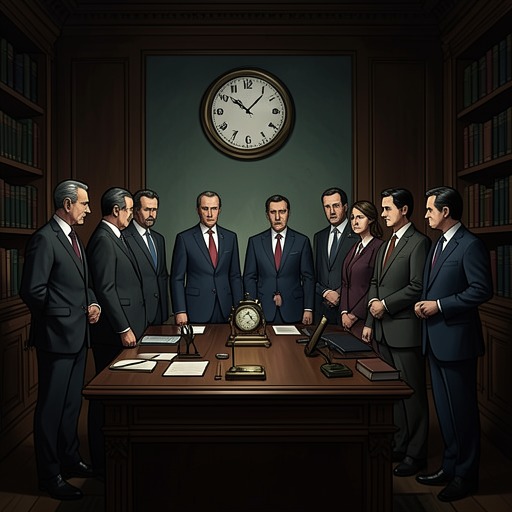
The signing was a hurried, procedural scene rather than a display of ease. After the leaders had posed for a photograph, Hitler went to the desk wearing spectacles supplied by an SS adjutant. He tried to use an inkstand, found it empty, and had to accept an official’s fountain pen. He then signed the main agreement and its accompanying papers in a repeated sequence: an aide blotted each wet signature, another removed the sheet, and a fresh document was put before him. The process continued for several minutes, twenty signatures in all, covering copies for the four powers as well as annexes and supplementary declarations. The legal drafting had enabled the negotiators to postpone points of contention and complete a settlement in less than twelve hours.
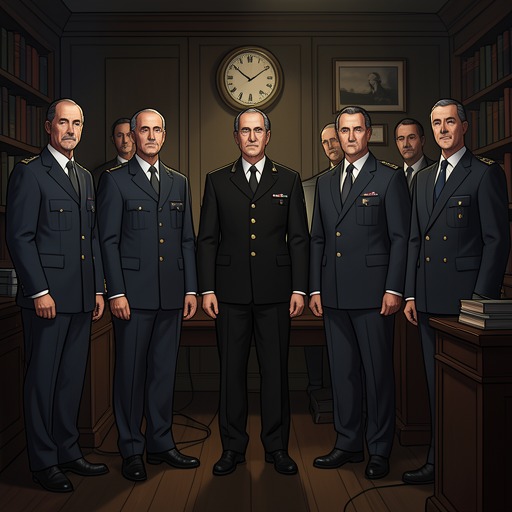
Neville Chamberlain examined the document before signing it. Outside, a crowd cheered; Hitler gestured for the study window to be closed. In the shadows, Paul von Hartmann watched with an exhausted, blank expression, while Hugh Legat saw the contrast between the public excitement and the strain inside the room. The signatures made the agreement official, but neither the closed window nor the formal papers could make the unresolved questions disappear.
Immediate aftermath and significance
A newspaper report described the war for which Europe had been preparing as averted and presented Chamberlain’s peace efforts as a success. Munich’s crowds gave him the loudest applause. The reception at home was likewise celebratory: during the return flight, the British party was tired and melancholy, and Chamberlain had ordered that a hamper provided by the Regina Palast Hotel not be touched because it was a German gift. The contrast between public acclaim and private exhaustion made the settlement’s emotional cost part of its immediate aftermath.
On returning to Britain, Chamberlain addressed the crowd and thanked the British people for the letters of support and approval he and his wife had received. He presented the settlement of the Czechoslovak problem as a prelude to a broader European peace, then held up the paper bearing his and Hitler’s names and prepared to read it aloud. Hugh Legat remembered the image for the rest of his life: Chamberlain holding the document aloft, unable to read it without stretching it at arm’s length because he had not put on his spectacles. The agreement thus ended the immediate crisis while lending itself to two sharply different readings: a celebrated escape from war and a settlement made under the threat of force, with its unresolved consequences deferred rather than erased.