Paoli
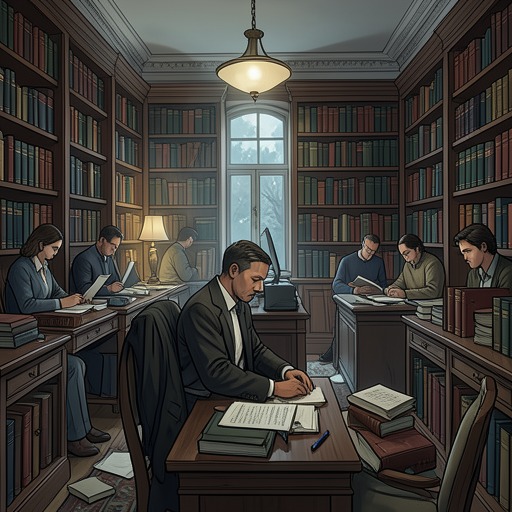
NauseaPaoli, known as the Corsican librarian, exercises authority in the library by supervising students and restricting access to certain books. His confrontation with the Self-Taught Man escalates from accusation to violence, exposing the force behind that everyday institutional discipline.
Identity and Conduct
Paoli favors the high-school students because he can supervise them in a paternal manner. He sometimes lets them talk and move about before reprimanding them and threatening to report their behavior to the headmaster. His authority is not limited to keeping order: he also directs what young readers may consult.
Certain library volumes, including works by Gide, Diderot, and Baudelaire, as well as medical texts, are marked with a red cross. When a student seeks one of these books, Paoli draws the student aside and questions him about his age, schoolwork, and free time, warning that he may inform the student’s teacher. The episode presents him as a gatekeeper who treats access to reading as subject to personal scrutiny.
Confrontation with the Self-Taught Man
Paoli accuses the Self-Taught Man of inappropriate conduct toward the boys beside him. He says that he has witnessed it, claims to know the man’s name, address, and employer, Chuil-lier, and threatens to write to the employer and involve the courts. He also recasts the Self-Taught Man’s years of reading and requests for books as a pretense, linking his alleged misconduct to the very learning Paoli had seemed to facilitate.
The Self-Taught Man does not appear surprised by the accusation. The narrator reads resignation in his response and suggests that he has long anticipated being caught. When the assistant librarian, a timid young man whom Paoli intimidates, asks what is happening, Paoli hesitates. The Self-Taught Man warns that he will report Paoli if struck and says he will leave voluntarily.
Violence and Narrative Role
Paoli nevertheless attacks him. The Self-Taught Man tries to find his package and wipe his face, then says he is leaving. The narrator says he rises too late to prevent the assault; the woman nearby is pale. These actions make the library’s conflict more than a dispute over rules: Paoli’s control of the room culminates in force against a reader already prepared to withdraw.
The episode connects Paoli’s supervision of students and restrictions on books with his treatment of the Self-Taught Man. He invokes institutional authority—the employer and the courts—while also enforcing his judgment directly. In the narrator’s account, his moment of hesitation does not check that power; it precedes the blow that ends the confrontation.