opening
Rafiel’s Death Notice
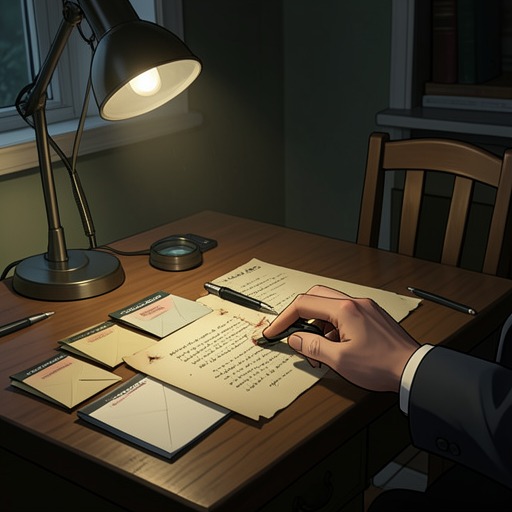
[Jane Marple](entity:character-recall-character-jane-marple-a9e79c053cbb) read the obituary of Jason Rafael in The Times and gradually recalled their friendly relationship from an earlier Caribbean incident. His death revived her feelings: he was a difficult, cruel person, yet had a hidden kindness, and understood her extraordinary talent for recognizing human evil
shortly after reading the notice
The Nemesis Reflection
While knitting, [Jane Marple](entity:character-recall-character-jane-marple-a9e79c053cbb) recalled the scene in Jason Rafael's tropical bedroom, remembering his amused expression when she called herself the Goddess of Vengeance, and the pink wool scarf she was wearing when she asked for his help. Reflecting on her cold and cruel side, she concluded that when justice required
the same evening
The Strange Gardener
That night, [Jane Marple](entity:character-recall-character-jane-marple-a9e79c053cbb) met a strange woman in the garden who introduced herself as Miss Bartlett. The woman claimed to be a companion to the gardener, staying temporarily at Lady Sanderson's; she praised Jane Marple's garden and offered to work for her, although her knowledge of h
about one week after Jason Rafiel’s death
Rafiel’s Solicitors’ Letter
A letter from James Brodribb was sent, inviting [Jane Marple](entity:character-recall-character-jane-marple-a9e79c053cbb) to [London](entity:location-recall-location-london-420923d4a60a) to discuss a proposal related to the deceased Jason Rafael. Cheryl guessed that Jane Marple might inherit a large sum of money, while Jane Marple considered more modest possibilities, such as a book or a family
the following week
The Twenty-Thousand-Pound Condition
In the law firm, [James Broadribb](entity:character-recall-character-james-broadribb-db9df9326ab8) told [Jane Marple](entity:character-recall-character-jane-marple-a9e79c053cbb) that Jason Rafael had set aside £20,000 for her; if she accepts and successfully completes the proposal, she can claim the money one year later. She read a sealed statement requiring her to investigate a crime, without
the evening after the solicitors’ meeting
The Nemesis Letter
That night after meeting with the lawyer, [Jane Marple](entity:character-recall-character-jane-marple-a9e79c053cbb) reread Jason Rafael's letter. The letter explained that she was born with a natural talent for pursuing justice and asked her to investigate a crime. He gave her a year to do so, promising to provide funds for the case, and warned
three days later
Marple Accepts the Mission
After weighing her age, physical weakness, financial needs, and curiosity, [Jane Marple](entity:character-recall-character-jane-marple-a9e79c053cbb) accepted Jason Rafael's commission. She admitted that the money could help a charity and allow her to enjoy pleasures she could not afford on a daily basis, but what truly attracted her was the intellectual challenge. She wrote to
soon after accepting the mission
The Search for Esther
Not long after accepting her mission, [Jane Marple](entity:character-recall-character-jane-marple-a9e79c053cbb) wrote a letter to Joan Prescot, asking for Estelle Walters' address and disguising her inquiry as seeking gardening information. She learned that Estelle had remarried and now lives in the Winslow cottage near Alton
several days later
The Visit to Esther Anderson
A few days later, [Jane Marple](entity:character-recall-character-jane-marple-a9e79c053cbb) managed to meet with Estelle Anderson outside a supermarket and visited her that afternoon. Estelle confirmed that Jason Rafael left her a substantial inheritance, that [Arthur Jackson](entity:character-recall-character-arthur-jackson-2fcc1c110760) did not stay with him, and that Jason Rafael had two daughters and a son, Michael Rafael; Michael
three or four days after the visit to Esther
Rafiel’s Travel Instruction
Several days after visiting Est, the second letter left by Jason Rafael after his death arrived. In the letter, he jokingly said he would keep pursuing Jane Mapp, confirming she had accepted his proposal, and instructed her to wait for notification from a travel agency in [London](entity:location-recall-location-london-420923d4a60a)
the following week
The Country-House Tour
Next week, [Jane Marple](entity:character-recall-character-jane-marple-a9e79c053cbb) joined this long-distance bus tour. The members included Mrs. Leslie Potter, Joan Crawford, the Colonel Walker couple, the Butler couple, [Elizabeth Temple](entity:character-recall-character-elizabeth-temple-e0ece4dccc4d), Edmund Wanstede, Richard Jamieson, Miss Lummel, Miss Bensham, Mr. Caspar
day one of Tour No. 37
The First Tour Day
On the first day of the thirty-seventh tour group, everyone visited Blenheim and gradually adapted to the rhythm of sightseeing, dining, and conversation at the hotel. Miss Poirot classified her companions, some marked as harmless, some possibly providing information, and others possibly posing a threat
night after the first tour day
The False Eyebrow Dream
The night after the first day of travel, [Jane Marple](entity:character-recall-character-jane-marple-a9e79c053cbb) wrote an analysis of her mission because she could not sleep. She concluded that Jason Rafael must have arranged this trip to have her meet someone connected to the murder, injustice, or both
day two of the tour
The Queen Anne House
On the second day of the trip, the group visited a manor from the reign of Queen Anne. The keeper told a story of an old murder involving a lover, a secret compartment, and a betrayed husband. Richard Jamison dominated the entire tour with his architectural commentary until the murder story briefly diverted
the same afternoon
Temple’s Pilgrimage
On that afternoon, [Jane Marple](entity:character-recall-character-jane-marple-a9e79c053cbb) was resting beside [Elizabeth Temple](entity:character-recall-character-elizabeth-temple-e0ece4dccc4d) in the manor garden. Temple explained that her participation in this trip was not just for sightseeing, and she accepted Jane Marple's description of her as a pilgrim
after the second tour day
The Invitation to Jocelyn
Marple decides to rest rather than join the afternoon excursion. At the Golden Boar, [Lavinia Glynne](entity:character-recall-character-lavinia-glynne-91d8cb86b2d0) approaches her and says that [Jason Rafiel](entity:character-recall-character-jason-rafiel-063ffad5cf92) had written to the three sisters who live nearby, asking them to invite Rafiel’s old friend to stay with them.
Marple accepts the invitation, recognizing it as another deliberate step in Rafiel’s plan. The journey shifts from the public world of the coach to [The Old Manor House](entity:location-recall-location-the-old-manor-house-5051474da5e4), where the past crime is embedded in family memory and a neglected garden.
that evening
The Three Sisters’ House
At [The Old Manor House](entity:location-recall-location-the-old-manor-house-5051474da5e4), Marple meets [Clotilde Bradbury-Scott](entity:character-recall-character-clotilde-bradbury-s-57f82e6414df), [Lavinia Glynne](entity:character-recall-character-lavinia-glynne-91d8cb86b2d0), and [Anthea Bradbury-Scott](entity:character-recall-character-anthea-bradbury-sco-3ace4e204f95). The house and garden are neglected, burdened by declining finances and the absence of younger family members.
The three sisters create sharply different impressions: Clotilde is powerful and dramatic, Lavinia pleasant and emotionally restrained, and Anthea vague, frightened, and unstable. Marple senses an atmosphere of grief and menace, though she cannot yet identify whether the sisters are allies, witnesses, or enemies.
the following afternoon
The Garden’s Lost Greenhouse
Anthea shows Marple the mound covering the ruins of the family greenhouse. She mourns the former vines, peaches, nectarines, heliotrope, and flower borders, while the rapidly spreading [Polygonum baldschuanicum](entity:object-recall-object-polygonum-baldschuanic-041bc0c9d532) conceals the collapsed structure.
Anthea’s distress is disproportionate to ordinary gardening nostalgia, and she hurries Marple away from the mound. The overgrown plant becomes a physical symbol of hidden history: beautiful on the surface, but capable of swallowing everything beneath it.
the next morning
The Housemaid’s Morning Story
Janet, the elderly housemaid, tells Marple that [Verity](entity:concept-recall-concept-verity-8a46f365db3e), a young woman once cared for by the sisters, disappeared after becoming involved with [Michael Rafiel](entity:character-recall-character-michael-rafiel-8de58c2320e1). Her body was found months later in a ditch, strangled and battered, and Michael was convicted.
Janet also recalls rumors that several girls had been murdered and that Michael may have been responsible for more than one. The story gives Marple the name Michael Rafiel and confirms that the tragedy at [The Old Manor House](entity:location-recall-location-the-old-manor-house-5051474da5e4) is central to Rafiel’s mission.
the same morning
The Village Investigation
Marple visits the churchyard and speaks with local people about the Bradbury-Scott family, [Verity](entity:concept-recall-concept-verity-8a46f365db3e)’s death, and [Nora Broad](entity:character-recall-character-nora-broad-177f949b3bc4), another girl who disappeared around the same time. She learns that Nora was considered promiscuous and that her body was never found.
The village gossip also confirms Clotilde’s profound attachment to Verity and Anthea’s disturbing behavior, including her past cruelty toward animals. These fragments suggest that the official story of Verity’s body and Michael’s guilt may conceal a substitution.
the same day, during the Bonaventure excursion
The Boulder Attack
A message arrives that [Elizabeth Temple](entity:character-recall-character-elizabeth-temple-e0ece4dccc4d) has been struck by a boulder on the path at [Bonaventure](entity:location-recall-location-bonaventure-13649bd3b53c) and taken to hospital with severe concussion. The coach tour is suspended while the group awaits news.
[Joanna Crawford](entity:character-recall-character-joanna-crawford-ec2650d28dba) and [Emlyn Price](entity:character-recall-character-emlyn-price-649d87c435c0) report that they saw a figure in a red-and-black check polo-neck pushing the boulder from above. The description suggests deliberate murder and also suggests that the conspicuous clothing was intended to be seen and then discarded.
the morning after the boulder attack
Wanstead Reveals His Role
[Edmund Wanstead](entity:character-recall-character-edmund-wanstead-55702760d525) tells Marple that Rafiel described her to him and arranged for him to join the tour. He was instructed to keep an eye on her because Rafiel feared that harm might come to her.
Wanstead identifies himself as a pathologist and psychologist specializing in medical jurisprudence and criminal minds. He explains that he became involved because a prison governor believed [Michael Rafiel](entity:character-recall-character-michael-rafiel-8de58c2320e1) had been wrongly convicted of murder and asked him to investigate the case.
during the same consultation
The Governor’s Doubt
Wanstead recounts his examination of Michael in prison. Although Michael had a long record of theft, fraud, assault, sexual misconduct, and juvenile delinquency, Wanstead found that the psychological and physical evidence did not fit a killer who would strangle [Verity](entity:concept-recall-concept-verity-8a46f365db3e) and then brutally disfigure her.
The prison governor likewise believed the verdict was wrong. [Jason Rafiel](entity:character-recall-character-jason-rafiel-063ffad5cf92) therefore commissioned Wanstead to seek the truth, with Marple as his second investigator, while preserving her independence by withholding the facts.
during the same consultation
Rafiel’s Demand for Justice
Wanstead tells Marple that Rafiel wanted his son released, not because he believed Michael was morally good, but because he believed Michael had not committed [Verity](entity:concept-recall-concept-verity-8a46f365db3e)’s murder. Rafiel described his son as morally sick and incorrigible, yet insisted that an innocent man must not remain imprisoned.
This revelation clarifies the mission’s moral complexity. Rafiel seeks [Justice](entity:concept-recall-concept-justice-d9e24622fd18) for Michael while making no sentimental claim that Michael will reform; his fatherly duty is separated from affection and grounded in a ruthless commitment to facts.
later that day
Temple’s Hospital Message
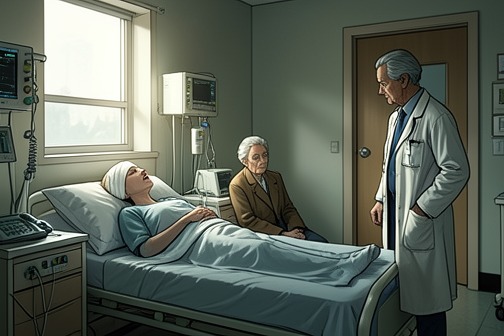
Wanstead takes Marple to the hospital in [Carristown](entity:location-recall-location-carristown-b4f77247ab4f) because [Elizabeth Temple](entity:character-recall-character-elizabeth-temple-e0ece4dccc4d) has regained consciousness briefly and asked specifically for [Jane Marple](entity:character-recall-character-jane-marple-a9e79c053cbb). Temple recognizes Marple through her old friendship with [Henry Clithering](entity:character-recall-character-henry-clithering-bc8048cabc3b) and says that Marple can help discover the truth.
Temple identifies the murdered girl as [Verity Hunt](entity:character-recall-character-verity-hunt-3ffbb8dd4ea8), rejects [Nora Broad](entity:character-recall-character-nora-broad-177f949b3bc4) as the relevant victim, and urges Marple to determine which of several possible people was responsible. She calls the boulder the Stone of Death, then dies after whispering that Marple must find out about [Verity](entity:concept-recall-concept-verity-8a46f365db3e).
an hour and a half later
Elizabeth Temple’s Death
[Elizabeth Temple](entity:character-recall-character-elizabeth-temple-e0ece4dccc4d) dies without regaining consciousness. Her final words transform Marple’s vague assignment into a definite inquiry into [Verity Hunt](entity:character-recall-character-verity-hunt-3ffbb8dd4ea8)’s fate and the identity of the person who caused it.
The death also proves that the boulder incident was not a harmless accident. Temple had been on a pilgrimage toward knowledge, and someone killed her before she could reach the Archdeacon or complete the disclosure she believed Marple could make.
the day after Temple’s death
Broadribb Connects the Cases
[James Broadribb](entity:character-recall-character-james-broadribb-db9df9326ab8) reads of [Elizabeth Temple](entity:character-recall-character-elizabeth-temple-e0ece4dccc4d)’s death and remembers that [Fallowfield](entity:location-recall-location-fallowfield-43ba28e638d7) was the school attended by the murdered girl in the old [Michael Rafiel](entity:character-recall-character-michael-rafiel-8de58c2320e1) case. He and [Mr Schuster](entity:character-recall-character-mr-schuster-8c19840f5078) discuss the possibility that Temple’s death is connected with Rafiel’s son.
Their conversation confirms to the reader that the old murder and the new killing belong to the same chain of events, even though the lawyers still lack the facts needed to understand Rafiel’s posthumous plan.
the evening after Elizabeth Temple’s death
The Name Verity
Back at [The Old Manor House](entity:location-recall-location-the-old-manor-house-5051474da5e4), Marple deliberately speaks the name [Verity](entity:concept-recall-concept-verity-8a46f365db3e) and watches the sisters react. Lavinia is surprised, Clotilde is overcome by silent grief, and Anthea responds with excited, almost pleasurable eagerness.
The reactions establish that Verity remains an emotionally live presence in the house. Marple learns that Verity had been a beloved ward of Clotilde, a pupil of [Elizabeth Temple](entity:character-recall-character-elizabeth-temple-e0ece4dccc4d), and the girl whose death everyone has been trying not to discuss.
that evening
The Secret Marriage Plan
Lavinia tells Marple that [Verity](entity:concept-recall-concept-verity-8a46f365db3e) had been involved with [Michael Rafiel](entity:character-recall-character-michael-rafiel-8de58c2320e1), whose criminal record was already notorious. Verity disappeared, and her body was later identified as hers after being found strangled and disfigured.
The account is incomplete, however, because it omits the secret wedding plan later revealed by [Archdeacon Brabazon](entity:character-recall-character-archdeacon-brabazon-8b38759dc64d). Marple now knows that Verity’s relationship with Michael was not merely a casual affair but may have involved an intended escape from the emotional control of [The Old Manor House](entity:location-recall-location-the-old-manor-house-5051474da5e4).
the following morning
The Inquest Begins
Before the inquest, Marple gathers further local information. She learns that boulders have caused previous accidents at [Bonaventure](entity:location-recall-location-bonaventure-13649bd3b53c), but the absence of a natural cause in Temple’s case remains suspicious.
She also hears that [Nora Broad](entity:character-recall-character-nora-broad-177f949b3bc4) disappeared after entering a car, had been associated with Michael’s circle, and was never found. The details strengthen Marple’s belief that Nora may have become part of a deliberate substitution designed to protect another secret.
the same morning
The False Charity Parcel
At the village post office, Marple pretends that a parcel of knitted clothes was mistakenly sent to the wrong charity. The postmistress remembers that Anthea delivered a heavy dress box and reveals its actual destination.
Marple realizes that Anthea has mailed away the red-and-black check polo-neck seen near the boulder attack. The garment’s disappearance confirms that the witness description was deliberately staged and that someone connected with [The Old Manor House](entity:location-recall-location-the-old-manor-house-5051474da5e4) killed [Elizabeth Temple](entity:character-recall-character-elizabeth-temple-e0ece4dccc4d).
later that morning
The Inquest Testimony
At the inquest, [Mrs Sandbourne](entity:character-recall-character-mrs-sandbourne-7ae62e807528) describes the tour and the accident, while [Joanna Crawford](entity:character-recall-character-joanna-crawford-ec2650d28dba) gives evidence that a figure among the boulders pushed a rocking stone down the slope. [Emlyn Price](entity:character-recall-character-emlyn-price-649d87c435c0) substantially confirms her account.
The witnesses cannot identify the figure, but the red-and-black garment makes deliberate deception likely. The Coroner refuses to declare accidental death and adjourns the inquest, leaving the murder investigation open.
after the adjourned inquest
Marple Seeks Nora Broad
Marple decides not to resume the coach tour. She remains near [Jocelyn St Mary](entity:location-recall-location-jocelyn-st-mary-c81ad2aac3e1) and visits people connected with [Nora Broad](entity:character-recall-character-nora-broad-177f949b3bc4), learning that Nora was considered reckless but had received kindness and clothing from Clotilde.
The local accounts emphasize that Nora vanished at precisely the period when [Verity](entity:concept-recall-concept-verity-8a46f365db3e) disappeared and that the body found later was assumed to be Verity’s. Marple begins to suspect that Nora’s disappearance is not a separate tragedy but the concealed mechanism of Michael’s conviction.
the same afternoon
Archdeacon Brabazon’s Account
[Archdeacon Brabazon](entity:character-recall-character-archdeacon-brabazon-8b38759dc64d) visits Marple at [The Golden Boar](entity:location-recall-location-the-golden-boar-461172155a28) and explains that [Elizabeth Temple](entity:character-recall-character-elizabeth-temple-e0ece4dccc4d) had intended to visit him. He confirms that [Verity](entity:concept-recall-concept-verity-8a46f365db3e) and Michael came to him secretly to arrange a marriage and that both genuinely loved one another despite Michael’s criminal record.
Brabazon waited for the couple on the appointed day, but neither appeared and no explanation arrived. He has always believed that something prevented the wedding rather than that the lovers simply abandoned it, making the secret marriage plan a crucial missing event.
during Brabazon’s account
Love and the Missing Wedding
Brabazon describes [Verity](entity:concept-recall-concept-verity-8a46f365db3e)’s devotion to Michael and her hope that marriage might reform him. He also explains that she was deeply attached to Clotilde, who had become a substitute mother and a dominant emotional presence after Verity’s parents died.
Marple recognizes the conflict between two forms of love: Verity’s desire for an adult life with Michael and Clotilde’s possessive attachment. [Elizabeth Temple](entity:character-recall-character-elizabeth-temple-e0ece4dccc4d)’s phrase, [Love is the most frightening word in the world](entity:expression-recall-expression-love-is-the-most-f-ff807191892b), now points toward love as the motive for a crime.
the following morning
The Tour Departs
Most members of the coach party resume their journey, while [Joanna Crawford](entity:character-recall-character-joanna-crawford-ec2650d28dba) remains behind with [Emlyn Price](entity:character-recall-character-emlyn-price-649d87c435c0) under the pretext of illness and sightseeing. Marple stays near [The Old Manor House](entity:location-recall-location-the-old-manor-house-5051474da5e4), despite Wanstead’s concern for her safety.
She gives Wanstead the charity address and asks him to trace the parcel, then warns him that [Nora Broad](entity:character-recall-character-nora-broad-177f949b3bc4)’s body may still be hidden somewhere nearby. Her refusal to leave shows that she has moved from gathering clues to testing a concrete theory.
later that day
The Return to the Manor
Anthea comes to [The Golden Boar](entity:location-recall-location-the-golden-boar-461172155a28) and insists that Marple return to [The Old Manor House](entity:location-recall-location-the-old-manor-house-5051474da5e4). Marple accepts, observing the sisters more closely and sensing that Anthea is frightened while Clotilde bears the burden of a deeper grief.
Clotilde admits that Anthea has become unstable and that Lavinia fears her. The sisters’ strained relationship suggests that the crime has not ended with [Verity](entity:concept-recall-concept-verity-8a46f365db3e)’s disappearance; it has continued to poison the household and may now threaten another victim.
that afternoon
Clotilde’s Confession of Fear
Clotilde tells Marple that she tried to separate [Verity](entity:concept-recall-concept-verity-8a46f365db3e) from Michael and admits that Anthea became jealous and hostile toward Verity. She recalls Anthea’s cruelty to a parrot and hints that she once attacked someone, though she insists that Anthea could not have been involved in Verity’s death.
Clotilde’s account is emotionally charged but evasive. Her insistence that Michael alone was responsible, together with her fear of Anthea, makes Marple suspect that the sisters share knowledge of a crime whose true details have been suppressed.
that evening
The Guardian Angels Stay
[Miss Cooke](entity:character-recall-character-miss-cooke-ab5ee63a0608) and [Miss Barrow](entity:character-recall-character-miss-barrow-e1a49fca3dff) visit [The Old Manor House](entity:location-recall-location-the-old-manor-house-5051474da5e4) after pretending to have gone sightseeing. They join the sisters and Marple in discussing [Elizabeth Temple](entity:character-recall-character-elizabeth-temple-e0ece4dccc4d)’s death, while Marple deliberately suggests that Joanna and Emlyn may have rolled the boulder themselves.
The false accusation diverts attention from the real suspect and tests the visitors’ reactions. Marple notices that Miss Cooke’s warning about the coffee is unusually urgent, confirming that the two women are not ordinary tourists.
late that evening
The Poisoned Coffee
Clotilde serves coffee after showing Marple the photograph of [Verity](entity:concept-recall-concept-verity-8a46f365db3e). [Miss Cooke](entity:character-recall-character-miss-cooke-ab5ee63a0608) warns Marple not to drink it, implying that it has been adulterated, while Clotilde’s sleeve knocks the cup to the floor before Marple can appear to consume it.
The danger becomes explicit: Clotilde is prepared to kill anyone who can uncover the past. Later, one of the protective agents secretly passes Marple a high-powered whistle, giving her a means to summon help without exposing the agents’ presence.
three o’clock that night
The Midnight Confrontation
Clotilde enters Marple’s bedroom to ensure that the offered milk has been consumed. Marple refuses it and identifies herself as [Nemesis](entity:expression-recall-expression-nemesis-53e698532e52), accusing Clotilde of killing [Verity](entity:concept-recall-concept-verity-8a46f365db3e) because she could not bear to lose her to Michael.
Clotilde does not deny the emotional motive. She argues that her love was absolute and that Michael was unworthy, revealing the possessive force behind the crime while still concealing how Verity actually died.
during the midnight confrontation
The Substituted Body Revelation
Marple explains that Clotilde probably gave [Verity](entity:concept-recall-concept-verity-8a46f365db3e) an overdose of sleeping medicine, buried her beneath the collapsed greenhouse, and covered the place with [Polygonum baldschuanicum](entity:object-recall-object-polygonum-baldschuanic-041bc0c9d532). She then murdered [Nora Broad](entity:character-recall-character-nora-broad-177f949b3bc4), dressed Nora’s body in Verity’s clothes, and arranged for it to be identified as Verity.
The substitution allowed Clotilde to make Michael appear guilty of Verity’s murder. It also explains the missing body, the disfigured corpse, the false testimony, and the persistent terror surrounding the garden.
during the same confrontation
The Third Murder Exposed
Marple accuses Clotilde of killing [Elizabeth Temple](entity:character-recall-character-elizabeth-temple-e0ece4dccc4d) because Temple was traveling to meet [Archdeacon Brabazon](entity:character-recall-character-archdeacon-brabazon-8b38759dc64d) and might have connected [Verity](entity:concept-recall-concept-verity-8a46f365db3e)’s letter with Brabazon’s knowledge of the secret wedding. Clotilde had used the conspicuous jumper to misdirect witnesses before sending it away as charity.
[The murder of Elizabeth Temple](entity:event-recall-event-the-murder-of-elizabeth-f78fb3d3e0e4) thus becomes the present-day continuation of the original crime. Clotilde has repeatedly chosen violence to preserve her private possession of Verity and the false story that condemned Michael.
immediately after the accusation
The Protective Intervention
Clotilde advances on Marple and threatens to kill her, but Marple blows the high-powered whistle. [Miss Barrow](entity:character-recall-character-miss-barrow-e1a49fca3dff) emerges from the doorway and [Miss Cooke](entity:character-recall-character-miss-cooke-ab5ee63a0608) steps out of the wardrobe, revealing themselves as professional protective agents placed on the tour by Rafiel.
Their intervention prevents Clotilde from carrying out a fourth murder. Rafiel’s carefully arranged [Guardian Angel](entity:concept-recall-concept-guardian-angel-bd59aac3c772) mechanism has protected Marple while allowing her to confront the killer personally.
after Clotilde’s arrest
The Garden Excavation
Investigators excavate the mound at [The Old Manor House](entity:location-recall-location-the-old-manor-house-5051474da5e4) and find [Verity](entity:concept-recall-concept-verity-8a46f365db3e)’s remains beneath the collapsed greenhouse. The body has not been strangled or disfigured, confirming Marple’s reconstruction that Verity died peacefully from an overdose.
The discovery proves that the body used at trial was not Verity’s and vindicates Michael’s claim that he did not kill her. The garden, long treated as a place of nostalgia, becomes the final physical proof of Clotilde’s possessive crime.
after the intervention and excavation
Clotilde’s Death
Clotilde drinks the poisoned milk herself after the agents remove Marple from danger. Her death is treated as the final consequence of the murderous life she created, ending years of concealed grief, fear, and possessive love.
Marple views the outcome not as simple triumph but as a grim form of retribution. Clotilde’s punishment is to escape the unbearable existence she had fashioned around [Verity](entity:concept-recall-concept-verity-8a46f365db3e)’s buried body, while the truth finally escapes the house.
after the truth is established
Michael’s Exoneration
[Edmund Wanstead](entity:character-recall-character-edmund-wanstead-55702760d525) introduces Marple to Michael, who is about thirty-two after years in [Manstone Prison](entity:location-recall-location-manstone-prison-0a1c414e35a9). Michael learns that the evidence has cleared him and that a release and free pardon are being arranged.
He remains uncertain and emotionally damaged, but he is not bitter. Marple tells him that his father pursued [Justice](entity:concept-recall-concept-justice-d9e24622fd18) for him despite recognizing his moral faults, and she gives him the photograph of [Verity](entity:concept-recall-concept-verity-8a46f365db3e), which he declines because he wants to begin a new life rather than remain bound to the past.
near the ending
The Legacy Is Released
Marple returns to [James Broadribb](entity:character-recall-character-james-broadribb-db9df9326ab8) and confirms that she has fulfilled the terms of Rafiel’s proposition. The solicitors acknowledge that the investigation uncovered three murders, recovered [Verity](entity:concept-recall-concept-verity-8a46f365db3e)’s remains, and secured Michael’s release.
Marple orders the twenty-thousand-pound legacy placed in her current account rather than invested. She intends to spend it on pleasure and charity, honoring Rafiel’s wish that the reward should provide her with enjoyment rather than merely accumulate for the future.
ending
Marple’s Final Nemesis
As Marple leaves the solicitors, she laughs and says that Rafiel would have wanted her to have fun. Broadribb and Schuster reflect on how little she resembles the classical [Nemesis](entity:expression-recall-expression-nemesis-53e698532e52), while recognizing that she has carried out the role with patience, theatrical ingenuity, and ruthless precision.
The novel closes by joining gentleness with retribution. Marple remains an apparently ordinary elderly woman, but her [Sense of Evil](entity:concept-recall-concept-sense-of-evil-c3ad17cff03a) and devotion to [Justice](entity:concept-recall-concept-justice-d9e24622fd18) have allowed Rafiel’s posthumous mission to succeed.