Mabel Orphaned after Her Parents' Murder
NeverthelessMabel’s orphanhood begins with the invasion of Navon, when Balthasar’s men kill Amyntas and Darice. The loss strips away the family that had anchored her life, but it does not turn her toward withdrawal: it helps propel her from the fields into a military role and makes her surviving, exiled brother Gael the only family she has left. Her grief remains bound to a larger question—how to act when the people and institutions that should protect others have failed them.
Family Life Before the Attack
Before the invasion, Mabel’s daily life was closely tied to Amyntas. While other peasant girls were expected to learn household skills and prepare for marriage, she spent her mornings in the fields with her father. She would return with dirty clothes and untidy hair, forgetting the behavior expected of her when she was beside him. The routine had lasted since she learned to stand, and the narration presents it as a defining bond rather than a passing childhood preference.
Mabel also stood apart from the other girls in appearance and temperament. Her golden skin and wild, burnt hair made her conspicuous, while Amyntas and Mabel did not consider that difference a problem. Darice, by contrast, hoped that her daughter would blend in and avoid notice, believing conformity would help her live well. The family therefore held different ideas about how Mabel should move through the world, but her attachment to her father and her mother’s concern for her remained part of the life the attack would destroy.
The Attack and the Discovery of Her Parents
During the assault on a Navon village, residents were driven from their homes and attacked. Mabel saw people in distress but could not stop to help: she had somewhere she needed to reach. At home, she searched for her parents and found Amyntas beneath the wooden store used for pots. He had been beaten and murdered away from a battlefield, leaving Mabel without a final farewell or the chance to ask him anything more.
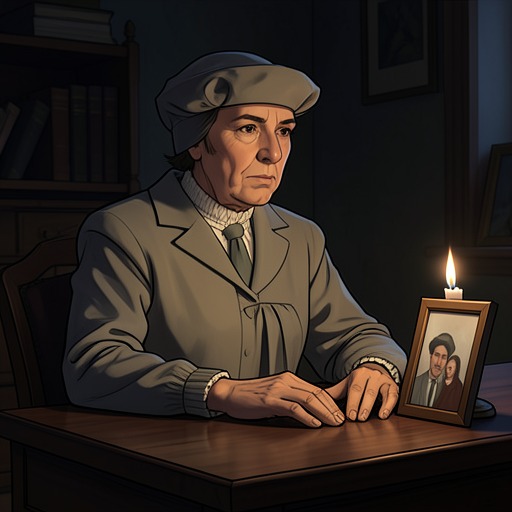
She then found Darice beside an unfinished dress. Mabel had prayed that she could become better, but at first she could do little beyond drag herself through the house and cry as she held her mother. The narration stresses the delay in understanding: only later, alone in the small house that now seemed too large, did Mabel fully recognize that she was an orphan and had lost the only people who cared for her. The empty house gives the loss a changed scale; the place remains, but the people who made it a home are gone.
Grief Redirected into Military Service
Mabel did not return to the castle after her parents’ deaths. The king left her undisturbed for three days, after which she would have been expected to resume what had been interrupted at the palace. With her parents gone, she saw no reason to go back and be trapped there again. Instead, she stopped at the military base, where young people from across Navon were assembling to join an army short on trained soldiers.
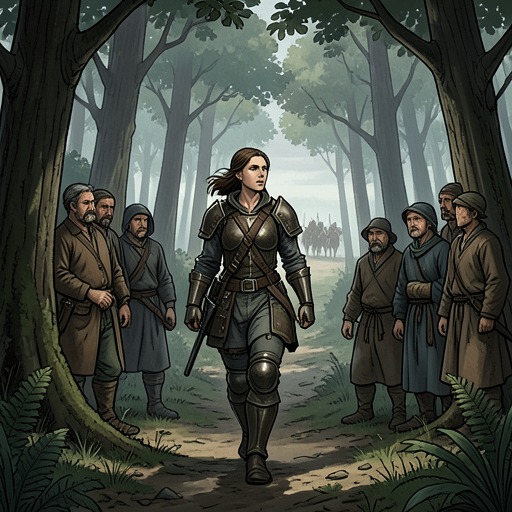
Mabel was the only girl among them and knew she was not supposed to be there. She nevertheless wanted to belong to something that mattered. The attack had begun at night, and by midnight the city had been devastated; the invading troops had suffered far fewer losses than Navon’s people. Mabel felt compelled to make up for the victims, beginning with her parents. That desire connects private bereavement to public purpose: enlistment is not presented merely as a search for work, but as her answer to a catastrophe she could not prevent.
The commander assumed that Mabel wanted a paycheck and offered a hearing with the king and help for her family’s difficult circumstances. She declined the financial explanation and insisted that she wanted to be a soldier. Yet the army did not initially give her that place. She was not properly introduced to the troops, and her duties included polishing and checking weapons, inspecting armor and cavalry equipment, and following the commander to be ready when he or the soldiers needed something. She also faced hostile remarks about being a woman in the camp. Orphanhood gives her a reason to seek service, but it does not remove the gendered barriers that limit what service she can perform.
The Narrowing of Family and the Wider Duty
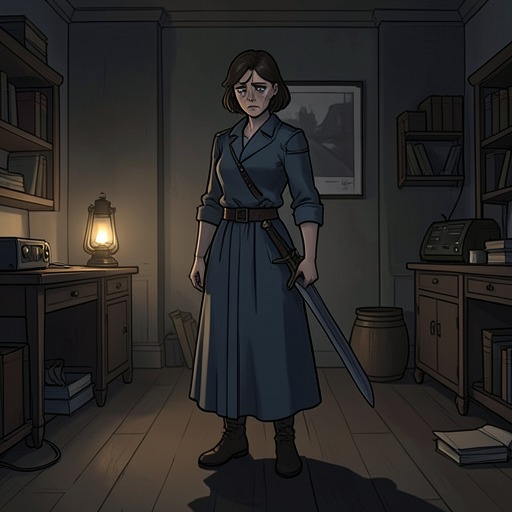
Mabel’s parents’ deaths leave Gael, her exiled brother, as her only surviving family. She tells Shai that she had not sought him earlier, explaining that she and Navi had treated her presence beyond the usual boundaries as impossible. She admits, too, that she has not forgiven Gael for what he did. They shared the same parents but chose different paths, and she wants to look him in the eyes and ask why he chose what she regards as cowardice instead of contributing to something greater. Her grief therefore does not erase anger; it makes the absence of her brother more immediate while leaving their estrangement unresolved.
Later, when Navi prepares Navon to face another attack, he orders the village brought to the castle for shelter before the army is called. Shai’s men help move the villagers there, and Mabel learns that women and children are to go inside the castle walls while men remain to fight. She understands the arrangement but is unsure she can follow it. Having spent the story trying to stand with the soldiers, she fears that leaving them would mean escaping while they faced danger. Her response does not undo her orphanhood or promise that she can protect everyone; it shows how the loss of her own family has become inseparable from her concern for other people.
Significance of the Orphan State
Mabel’s orphanhood is both a concrete consequence of the invasion and a turning point in her choices. It ends her return to the palace, intensifies her wish to serve, and changes Gael from an estranged brother into her only remaining family. At the same time, the story resists presenting grief as a simple source of strength: Mabel is left without a final word to her father, understands the full loss only afterward, and continues to carry resentment toward the brother she seeks.
The contrast between her former life in the fields and the later military camp also matters. The girl who once stood outside expectations because she preferred working beside her father now stands outside the army because she is a woman. Her parents’ deaths make her more determined to act, but Navon’s institutions still direct her toward safer or subordinate work. By the time villagers are moved toward the castle, her idea of responsibility reaches beyond family ties: she cannot easily accept safety for herself if it means leaving the soldiers to face danger alone.