The work is the life
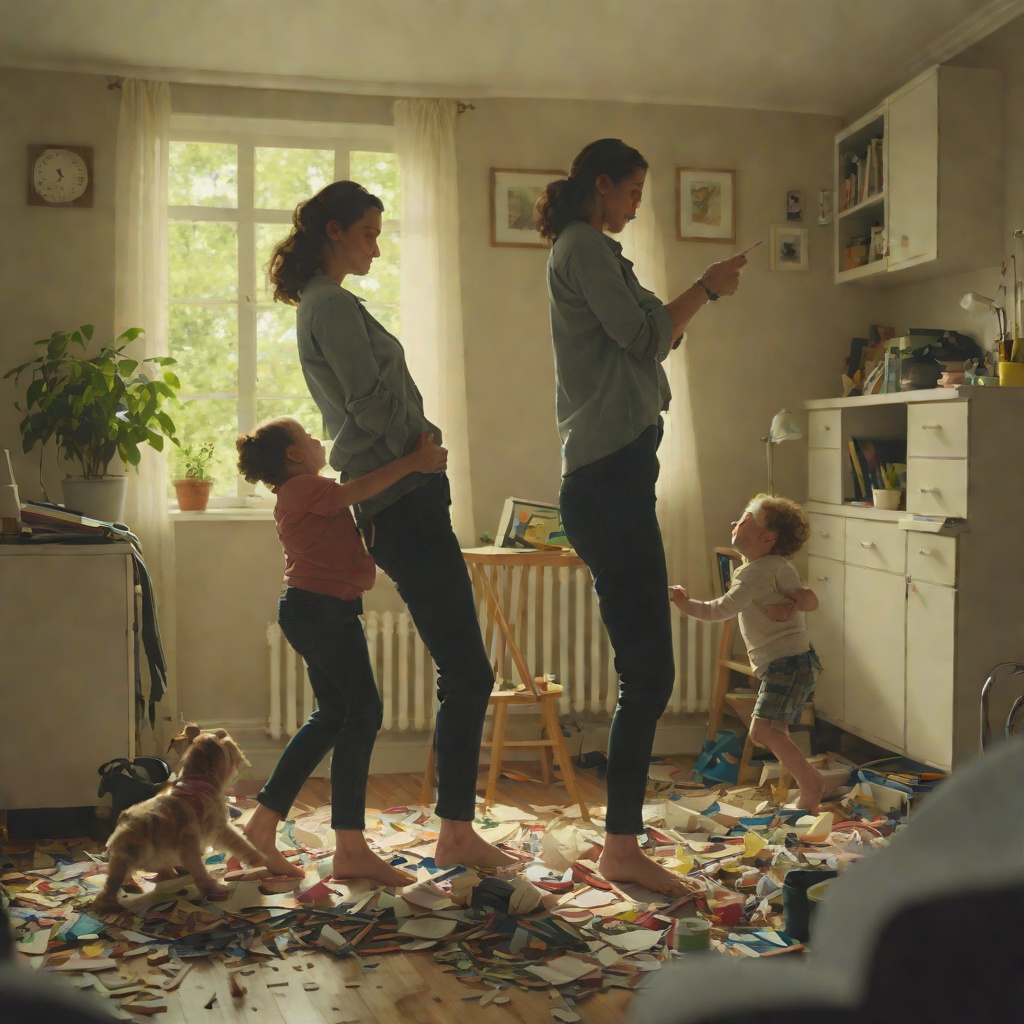
NightbitchThe work is the life is the protagonist's radical redefinition of labor and existence, spoken to her husband during a late-night phone call from a hotel room in South Dakota, declaring that there is no distinction between her work and her life. It crystallizes the novel's central feminist argument: that motherhood, art, and selfhood are not separable compartments but one continuous, indivisible project. The phrase marks the turning point where Nightbitch stops seeing her domestic and creative labor as alienated drudgery and begins to understand it as the very substance of her being, a realization that transforms her relationship to her body, her past, and her rage.
The Utterance and Its Context
The phrase emerges during a phone call initiated by her husband, who, sensing that something was changing, transpiring, evolving, though unsure precisely what it was, called each night from a sad hotel room somewhere in South Dakota. His question was simple and habitual: How's the work? The repetition of the word work hung in the air before she answered, and when she did, it was with a long pause that signaled a fundamental shift in her thinking. The work, she repeated, and then delivered her declaration: The work is the life. There isn't a distinction. Her husband's response, Okaaaay, drawn out with evident confusion, underscores the gap between their understandings. She elaborated, explaining that she had felt for so long alienated from her work, from herself, but that she now saw the work and the life were of a piece and that it was simply her job to find the connections. The exchange is a moment of profound self-clarification met with incomprehension, a pattern that defines her marriage throughout the novel.
The Alienation It Resolves
The statement directly answers the alienation that had consumed her since quitting her job. Earlier, she had inflated with mother-rage and composed elaborate, emotional arguments against the system and capitalism and the patriarchy and then religion and gender roles and biology, feeling that the whole fucking thing was a sham, the working and pumping and hurrying and not holding her baby. Her sense that society, adulthood, marriage, motherhood, all these things, were somehow masterfully designed to put a woman in her place and keep her there had begun to weigh on her, taking on an unwieldy heft after her son arrived and growing even heavier after she quit her job, as her body struggled to regain its equilibrium. Once she was stripped of all she had been, of her career, her comely figure, her ambition, her familiar hormones, an anti-feminist conspiracy seemed not only plausible but nearly inevitable. The work is the life is her escape from this conspiracy theory of her own existence, a refusal to see her life as a plot against her and instead as a unified field of meaning.
The Revaluation of Motherhood and Art
The phrase also revalues the labor she had been taught to despise. She had bought into the popular societal myth that if a young woman merely secured a top-notch education she could then free herself from the historical constraints of motherhood, that if she simply had a career she could easily return to work after having a baby and sidestep the drudgery of previous generations. Having a baby did not represent a departure from work to which a woman might theoretically one day return; it instead marked an immersion in work, an unimaginable weight of work, a multiplication of work exponential in its scope, staggering, so staggering, both physically and psychically, that even the most mentally well person might be brought to her knees. The work is the life refuses this framework of motherhood as a detour from real work, insisting instead that the domestic, the maternal, and the creative are one continuous practice. It is the verbal counterpart to her physical transformation, the moment her mind catches up to what her body has already begun to know.
The Body and the Past
The declaration also connects to her rediscovered bodily knowledge and her Appalachian upbringing. She knew how to keep bees, dip candles, brush wool, use a spinning wheel and make yarn, dry onions and garlic, develop photographs with vegetable juices, bake absolutely anything, make every single sort of braid, sing every single sort of song, track an animal through the woods. She knew enough to live inside an entire life all on her own, and yet her husband, with his electronics skills and his engineering, was the one who made all the money, even though she could make a world, and then, too, make a person to live in that world. The work is the life reclaims this world-making capacity as the truest form of labor, one that her education and career had taught her to devalue. It is also a reconciliation with her mother, whose pushing her out the door she had once seen as abandonment but now understood as her mother's best love, a recognition that generations of women had delayed their greatness only to have time extinguish it completely. The phrase is thus not merely a slogan but a reclamation of a matrilineal inheritance of skill and survival.
The Naming and the Transformation
The phrase completes the arc begun with her self-naming as Nightbitch. When she had referred to herself as Nightbitch, she meant it as a good-natured self-deprecating joke, because that's the sort of lady she was, a good sport, able to poke fun at herself. But in the days following this new naming, she found the patch of coarse black hair sprouting from the base of her neck and was, like, What the fuck. The work is the life is the intellectual counterpart to this physical mutation: just as the name Nightbitch becomes literal, so too does the idea that work and life are one become embodied truth. The phrase transforms her alienation into integration, her rage into purpose, and her motherhood into art. It is the thesis her entire transformation proves, the verbal key to understanding why a woman who could make a world and a person to live in that world would need to become a monster to claim it.