LaVanne Two
NomadlandLaVanne Two is the replacement van LaVonne Ellis bought after her maroon 2003 GMC Safari, LaVanne, broke down beyond her means to repair. The nearly new twelve-passenger Chevrolet Express gave her a way out of being stranded, but the circumstances of its purchase and its later use show how fragile vehicle-based mobility can be: a van can provide shelter and movement while still leaving its owner exposed to debt, scrutiny, and displacement.
Breakdown and Replacement
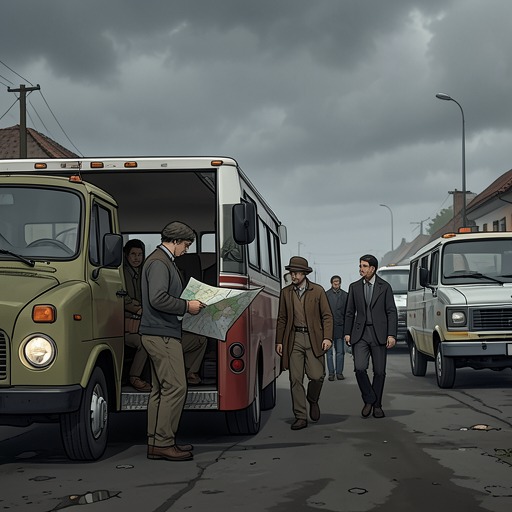
After the last Rubber Tramp Rendezvous, LaVanne failed again, leaving LaVonne stranded in Ehrenberg without money for repairs. She still owed several thousand dollars on the van, which had broken down repeatedly before. For nearly a month and a half, she lived in the dead vehicle as the weather warmed and the surrounding community thinned out.
When she could afford to tow LaVanne to a repair shop, the estimate to fix its engine came to $3,000—more than she could pay. While walking her puppy, Scout, nearby, LaVonne spotted a nearly new twelve-passenger Chevrolet Express on a used-car lot. The van was not a planned upgrade so much as an available alternative at the point when the old vehicle could no longer serve as shelter or transport.
A salesman offered to arrange a loan despite LaVonne’s bad credit. She was uncertain about the terms, but believed that without the purchase she would become homeless. She took the loan and named the replacement LaVanne Two, carrying the old van’s name into a vehicle intended to make continued travel possible.
Shelter, Mobility, and Debt
LaVanne Two entered LaVonne’s life through a costly bind: repairing the old van was unaffordable, while replacing it required borrowing under uncertain terms. The sequence makes the vehicle’s practical importance concrete. A functioning van meant more than transportation; it was also the means by which LaVonne could avoid being left without shelter. Yet obtaining that means added a new financial obligation, even as she was still responsible for payments on the failed vehicle.
The book places this dependence within the wider conditions of nomadic life. Travelers must maintain official domiciles for vehicle registration, licenses, taxes, voting, and other obligations, even when they have no fixed home in practice. Their movement also depends on finding places where they may stop: public land permits can impose time limits, and authorities in places such as Coconino National Forest have treated signs of long-term vehicle dwelling as grounds for questioning or eviction. In that setting, LaVanne Two could restore LaVonne’s capacity to move without guaranteeing that she could remain wherever she parked.
Stealth Camping and the Knock
After leaving Ehrenberg, LaVonne returned to familiar San Diego and stealth-camped there. One spring, an officer named Nunez approached LaVanne Two. He told her he wanted to make sure she was alive and to confirm that she was not operating a meth lab. He did not issue a citation; the van’s clean, nearly new appearance and LaVonne’s dog contributed to an encounter that ended without a ticket.
The visit nevertheless changed what the van could conceal. Officer Nunez recorded LaVonne’s name, license plate, and the make and model of LaVanne Two. Her identity and vehicle were now documented, and her cover was compromised; she would soon have to move on. The episode makes the van’s double role visible: it protected LaVonne from immediate exposure to the elements, but as a recognizable, traceable vehicle it also made her location legible to authorities.
Significance
LaVanne Two is both a practical refuge and a sign of constrained choice. Its purchase follows the breakdown of a vehicle that had already been a repeated source of trouble, and the replacement is secured through a loan LaVonne does not fully understand. The name links the new van to the old one, but the change in vehicle does not remove the underlying insecurity: shelter depends on a working machine, while the ability to stay in that shelter depends on parking rules and the reactions of others.
The van’s story also sharpens the distinction between mobility and freedom. LaVonne can travel again, yet the San Diego encounter shows that remaining in one place may bring official attention and force another move. LaVanne Two thus figures not as a simple solution to homelessness, but as a necessary, indebted, and exposed home on wheels.