Quartzsite Sports, Vacation & RV Show
NomadlandThe Quartzsite Sports, Vacation & RV Show was an annual trade fair that nomads called the Big Tent. With more than two hundred exhibitors, it offered a concentrated view of mobile life as both a consumer market and a search for work. Its opening brought a change in pace to the Rubber Tramp Rendezvous: as campers visited the show and considered their next moves, the gathering’s easy days gave way to questions of jobs, travel, and departure.
Setting and Scale
The show overlapped with the Rubber Tramp Rendezvous in Quartzsite, Arizona, and attracted thousands of nomads each year. LaVonne Ellis and other campers looked forward to it as a major local event. Its more than two hundred exhibitors made the Big Tent feel like an extended sales pitch, with demonstrations of blenders and cleaning products alongside booths offering remedies for a wide range of ailments.
The exhibits also addressed the financial pressures of RV ownership. One vendor promoted a way out of unaffordable motorhome payments, while another table offered mail-forwarding and home-base services for itinerants seeking a South Dakota address. Such services had practical importance: even people who traveled continuously still needed an official domicile for matters including vehicle registration, taxes, voting, and insurance.
A Marketplace for Mobile Life
The Big Tent’s offerings ranged from practical everyday goods to specialist services. Visitors could find pet identification tags, firearms training, and massage pillows, as well as information from RV insurance providers and organizations such as the American Association for Nude Recreation. The breadth of the displays presented itinerant life as an established market, with products and services for people who carried their homes on the road.
That commercial setting did not erase the financial uncertainty that brought many nomads to Quartzsite. The same event that sold solutions for RV ownership also put work opportunities in front of people trying to support themselves while traveling. The show joined consumption, logistical needs, and employment in one place, making the infrastructure of mobility visible alongside its appeal.
Recruitment and Seasonal Work
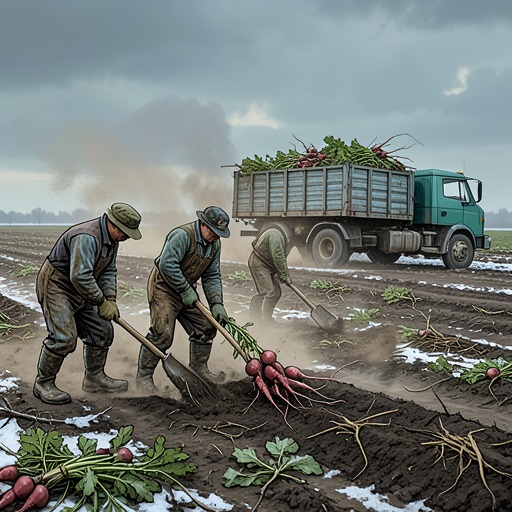
Several tables recruited workampers. Amazon representatives collected names for Amazon CamperForce and handed out souvenir sticky-note pads bearing the program’s RV logo. Concessionaires for the United States Forest Service encouraged visitors to apply for campground-host positions; some interviewed candidates and assigned sites on the spot, and one representative had uniforms for new employees. Express Employment Professionals sought workers for the annual sugar beet harvest, with its recruiter presenting an application as a route to a job for the coming season.
These offers connected the show’s mobile clientele to jobs that could determine where they went next. The tables made the seasonal labor circuit concrete: campground work, warehouse employment, and harvest work were not separate from the life advertised inside the Big Tent, but part of the means by which travelers paid for it.
The Show and the Rendezvous’s Departure
After the Big Tent opened, the Rubber Tramp Rendezvous changed tempo. Campers increasingly disappeared on day trips to town, and conversations turned toward where people would go, whether they had found work, and when they might meet again. The fourteen-day limit on free camping was nearing its end. On the first day of the rendezvous, a Bureau of Land Management ranger had issued permits and recorded license-plate numbers; soon, campers would have to move at least twenty-five miles away.
The show did not itself create that deadline, but its opening coincided with the moment when the camp’s temporary community had to confront dispersal. Some people would travel alone and others in small groups, seeking another campsite or a job. The Big Tent thus stood at a hinge in the winter gathering: a place to find services and possible employment just as regulations and the seasonal cycle pushed its visitors back onto the road.