Assassination of Yitzhak Rabin
OsloThe Assassination of Yitzhak Rabin is presented as a pivotal rupture in the play’s account of the Oslo peace process: after a clandestine channel has helped bring Israeli and Palestinian representatives toward agreement and become an official channel, an Israeli extremist kills the Israeli prime minister at a demonstration supporting the accords. The play sets the killing within a chronology of mounting losses and renewed violence, complicating any straightforward ending of triumph.
Background and Stakes
The assassination follows the transformation of the Oslo Channel from secret contact into an official negotiating channel. The play traces the channel to an alternative to grand pronouncements between governments: intimate discussions in an isolated setting, where Israelis and representatives of the Palestine Liberation Organization could meet and talk. Its emergence, the playwright explains, made the Oslo Accords possible; without the small group of Israeli, Palestinian, and Norwegian participants working in secret, the accords would not have happened.
The shift toward official negotiations is made explicit when Joel Singer announces, on behalf of Prime Minister Yitzhak Rabin and the State of Israel, that the back channel will become the official channel. The assassination therefore arrives after the play has shown a major institutional change, not before the negotiations have yielded any result. The public demonstration in support of the Oslo Accords makes the killing an attack on a peace process already visible and contested within Israel.
The Killing in the Play’s Chronology
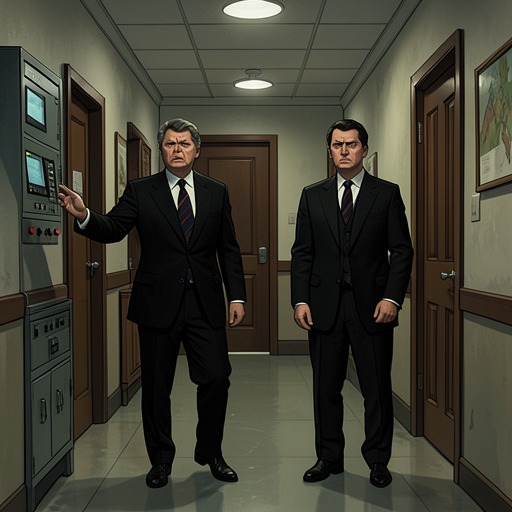
The play identifies the setting and date as Tel Aviv, November 1995. During a demonstration supporting the Oslo Accords, an Israeli extremist who opposes them assassinates Yitzhak Rabin. The event is reported as one entry in a compressed closing chronology rather than expanded into a staged account of the shooting; its stark announcement gives the killing force through its place among other dated losses and acts of violence.
That sequence first recalls the signing in the White House Rose Garden, then reports that Johan Jorgen Holst died of a heart attack four months later. A month after Holst’s death, an Israeli settler killed twenty-nine Palestinians praying at the Cave of the Patriarchs in Hebron. The account then moves to Rabin’s assassination and, in February 1996, a Palestinian suicide bomber’s killing of twenty-six Israelis on a Jerusalem bus. The juxtaposition does not equate these events or explain them as a single cause-and-effect chain; it shows the peace effort unfolding amid continuing violence and political opposition.
Representation and Historical Limits
The assassination appears within a play based on real historical events but not offered as a documentary. J. T. Rogers describes the work as researched fiction: its characters and their dialogue are the playwright’s, and he says he theatricalized and reinvented events to focus attention on the Oslo Channel’s central act of encountering adversaries as human beings. The closing chronology consequently supplies the event’s broad historical circumstances without making the play’s dialogue a verbatim historical record.
The presentation also makes the killing’s political significance concrete. Rabin is not assassinated during a scene of negotiation but at a demonstration for the agreements, by an extremist opposed to them. The location of the violence within Israel and its direct connection to opposition to the accords underscore that diplomatic progress did not remove the danger surrounding the process.
Aftermath and Significance
The surrounding chronology refuses a simple resolution. The death of Holst, the Hebron killings, Rabin’s assassination, and the Jerusalem bus bombing follow the Rose Garden signing in the play’s account, setting the achievement of an agreement beside continuing loss. The assassination is thus both a death and a measure of how exposed the peace effort remains after it has gained public and official form.
Even so, the play’s ending does not declare the channel’s work meaningless. After the later violence has been recounted, Terje Rød-Larsen tells Mona Juul that without the Oslo Channel there would have been no Palestinian Authority, and that the prospect of a Palestinian state had become accepted by the world. The closing claim preserves the distinction between securing a political opening and ending violence: Rabin’s murder makes the fragility of the former unmistakable, while the play continues to insist on the consequences of the work that preceded it.