Second Palestinian Intifada
OsloThe Second Palestinian Intifada begins in September 2000, seven years to the month after the Oslo Accords were signed. In the play’s closing sequence, renewed violence interrupts the story of a secret diplomatic channel that had brought Israeli and Palestinian representatives into direct contact. The juxtaposition makes the uprising a measure of how fragile a negotiated opening can be: the channel changed who could meet and what could be discussed, but the play does not claim that those talks caused the return to violence or settled the conflict.
The diplomatic opening
Before the uprising, Terje Rød-Larsen describes a second channel built in opposition to grand, public pronouncements between governments: isolated, intimate discussions between people. He offers to oversee the arrangement and find a place where Israeli representatives and the Palestine Liberation Organization can meet privately. The Oslo Channel thus begins as a back channel, not as an officially authorized Israeli delegation.
Its operation depends on practical arrangements as well as political risk. When Ahmed Qurie arrives, he insists that Terje Rød-Larsen meet the delegation personally and that no one else handle its passports. The detail captures the vulnerability and guarded trust of a process that is not yet public or official. At the meetings, Terje Rød-Larsen proposes a shared rule: behind a closed door the participants may disagree, but outside it they will share meals, speak about their families, and light the fire. Personal contact is presented as a way to see people across the negotiating divide as more than representatives of opposing sides.
From back channel to official status
The unofficial talks make rapid progress, but their status remains contested. After a two-day meeting, Terje Rød-Larsen argues that the Israeli delegation should be upgraded to official status. Yossi Beilin answers that Israel has no delegation to upgrade and that such a step would be illegal. The exchange shows the narrow space between diplomatic momentum and the formal authority required to act on it.
That boundary is also a source of friction over reciprocity. Beilin says the Israeli side will decide whom it sends and will consider a request when the Palestinians put a substantive proposal on the table. Ahmed Qurie responds that the Palestinians have offered to take Gaza off Israel’s hands and demands an upgrade in return. The argument is not simply about who attends: each side disputes whether the other has met the conditions for a more consequential channel.
The pace of change is nevertheless striking within the play. Yossi Beilin says that four months earlier the parties had not even conceived of meeting, while now they have a document before them. Later, Joel Singer conveys an offer on behalf of Prime Minister Yitzhak Rabin and Israel: the back channel is to become the official channel. This transition marks a significant achievement of the secret process, even as it makes clear that private contact and formal political authorization are distinct stages.
Human contact and unresolved stakes
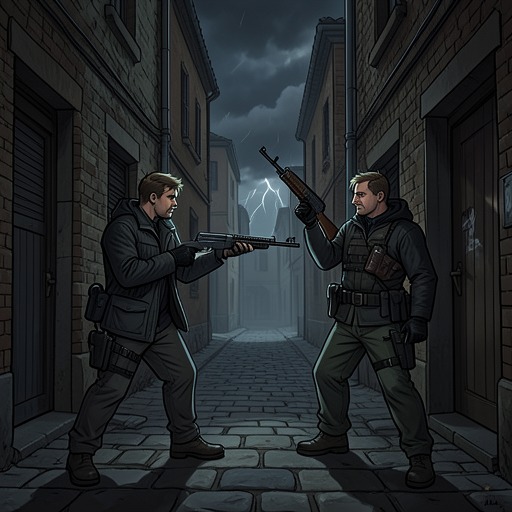
The play gives the diplomacy a human counterpoint in a scene recalled by Mona Juul. She and Terje Rød-Larsen crouch behind an overturned car as bodies fall; they then see two armed boys facing one another, one in uniform and one in jeans. Although they appear to belong to opposing sides, Mona describes their faces as sharing the same fear and the same desire not to be in that confrontation. The moment becomes, for the couple, a point of beginning: an encounter that makes shared vulnerability visible without erasing the conflict around it.
That emphasis on recognition recurs when Ahmed Qurie and Uri Savir walk together on the estate grounds in the snow, with Terje Rød-Larsen and Mona Juul following at a distance. Uri Savir says he wants the process to work and that Shimon Peres wants it to work; Ahmed Qurie answers that he and the Chairman want the same. The walk and its exchange stage a possibility of shared purpose, not proof that political differences have disappeared. Elsewhere, Shimon Peres argues that Israel needs the Palestine Liberation Organization to continue to exist, because he sees the alternatives as worse. The negotiations therefore carry stakes beyond the wording of an agreement: the continued existence of a counterpart is itself presented as important to Israel’s interests.
Outbreak and aftermath
The play dates the renewed violence to September 2000 and states that it returns to the Occupied Territories seven years after the Accords were signed. It names this turning point as the beginning of the Second Palestinian Intifada. Set beside the earlier scenes of new meetings, arguments over delegation status, and eventual official recognition of the channel, the announcement marks a sharp historical reversal. The diplomatic achievement remains part of the story, but it has not prevented violence from returning.
The coda places further losses and political changes around this turning point. A Palestinian suicide bomber detonates himself on a bus in Jerusalem, killing twenty-six Israelis. Hassan Asfour is attacked in the hallway of his apartment building in Gaza and later retires from public life. The play does not elaborate on the attack; it records its consequence as another withdrawal from public life amid the renewed violence.
Ahmed Qurie later becomes Prime Minister of the Palestinian Authority. Two years after that, Hamas defeats the Palestine Liberation Organization at the ballot box, and Qurie retires from public life. These outcomes extend the ending beyond the outbreak itself: the people associated with the negotiations remain subject to political reversals and personal consequences. The final contrast is not that diplomacy was meaningless, but that the opening it created did not amount to a durable transformation of the conflict.