Gradualism
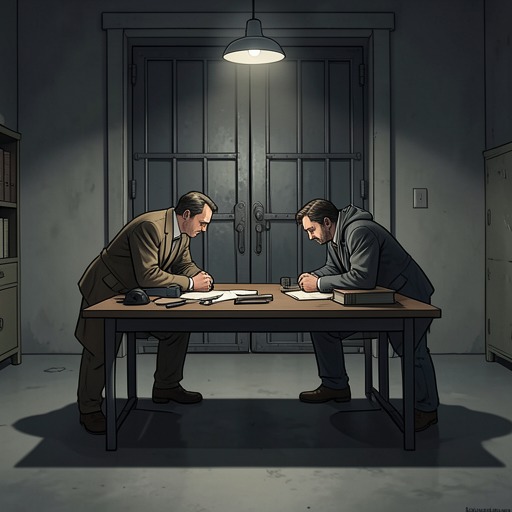
OsloGradualism is Terje Rød-Larsen’s proposed alternative to all-at-once negotiation: adversaries focus on a single issue, resolve it, and then move to the next, building trust as they proceed. In the play, it is more than a procedure for arranging talks. It is a personal method that shapes the negotiators’ contact, the handling of specific disagreements, and the growing pace and risk of the process.
Definition and Contrast
Terje Rød-Larsen distinguishes Gradualism from Totalism, a model in which every disagreement and all organizations representing the parties are brought to the table at once. He describes Totalism as rigid and impersonal, with repeated failures as its result. Gradualism instead narrows the immediate task: negotiators take up one point of contention, seek a resolution, and only then advance to another. The sequence is intended to make progress possible where an attempt to settle everything together would leave the sides confronting their entire conflict at once.
The difference is also a difference in what negotiation relies on. Terje Rød-Larsen presents Gradualism as rooted in personal rather than organizational relations. Its aim is not only to produce a series of issue-level agreements, but to let adversaries build a bond of trust through the process of addressing them. This makes trust part of the method’s operation, rather than a condition that must already exist before talks can begin.
Personal Contact as Method
The play introduces the model through a lecture-hall address, but Mona Juul places it in the context of her own history with Terje Rød-Larsen: she had been his student, and their relationship developed from argument and counterargument into marriage. Her account links the public theory to personal engagement. The method is presented not as detached expertise but as an idea formed and carried forward within a relationship.
That emphasis becomes a practical rule at the Borregaard talks. Terje Rød-Larsen separates the closed room, where participants may disagree intensely, from the shared space outside it, where they are to eat together, speak about their families, and light the fire. He insists that this sharing of ordinary personal life allows the participants to see one another as people. The arrangement gives Gradualism a social dimension: the parties do not leave their disagreements behind, but are asked to encounter one another beyond the formal contest over proposals.
The model’s rationale is also connected to what Terje Rød-Larsen and Mona Juul witness together: two boys, one in uniform and one in jeans, each holding a weapon, whose faces show the same fear and desire not to be fighting the other. Terje Rød-Larsen asks whether even a two-percent chance of giving them a different narrative is worth pursuing. The scene supplies a human reason for attempting an improbable negotiation, without suggesting that recognition alone resolves the conflict.
Applying the Method to Disputed Issues
The negotiations show the value and limits of narrowing the discussion to concrete questions. Ahmed Qurie challenges Yair Hirschfeld over the absence of a direct response to a specific Palestinian offer concerning control of Gaza, rejecting the Israeli draft as eloquent generalities. The exchange sets a practical test for negotiation: broad language does not substitute for an answer to the proposal actually on the table.
Territorial control then becomes a series of linked but distinguishable points. Uri Savir says Israel is willing to relinquish control of Gaza; Ahmed Qurie responds that the Palestinians will accept this on condition that control of Jericho be relinquished at the same time. The two men’s positions establish both the method’s incremental logic and its constraints: one proposed concession can prompt a demand that another issue be addressed alongside it. Savir also says Israel will not negotiate Jerusalem’s sovereignty, marking a boundary that the process cannot simply dissolve by breaking the agenda into smaller parts.
The exchange over other terms is similarly concrete. Ahmed Qurie agrees to drop the demand that outstanding disputes be referred to international arbitration, while Uri Savir agrees to negotiate the transfer of Gaza and Jericho. Savir proposes that each man report an insult to his own leader, then have Terje Rød-Larsen call two days later to say that the demands have been accepted. The scene presents negotiation as a combination of substantive trade-offs and carefully managed communication; an apparent rupture does not necessarily end the channel.
Later, disagreement over border security and checkpoints again exposes the work required to move from positions toward terms. Ahmed Qurie accepts that Israeli forces will be responsible for border security but insists on joint control of all checkpoints. Shimon Peres rejects ceding that point, while Ahmed Qurie’s response combines a threat to burn the document and wage war with openness to a counterproposal. The exchange does not record a resolution, but it shows the continuing effort to keep a possible next step in view even when the positions remain sharply opposed.
Risks, Pressure, and Momentum
Terje Rød-Larsen warns that drawing the personal into negotiation can release powerful emotions, and that once the process begins there is no going back. Events, he says, will accelerate and stretch participants to a breaking point. His account does not promise that trust-building makes the process safe; it makes persistence through mistakes and unforeseen consequences part of the model’s demand.
The surrounding political events give that warning force. After a Palestinian youth kills two Israelis in Tel Aviv, Prime Minister Yitzhak Rabin seals Gaza. Earlier, the murder and mutilation of an Israeli border guard is followed by the deportation of four hundred Palestinians accused of terrorist links to a hilltop in southern Lebanon, without blankets, food, or water. These episodes establish the pressures within which the talks proceed, but the play does not present them as automatic causes of agreement. In another tense moment, Yossi Beilin argues that Rabin would have faced severe political consequences had he not closed the border, while the Norwegian side urges continuation of discussions. The negotiation must contend with political costs as well as the other party’s demands.
Dramatic Significance
Mona Juul explicitly identifies the idea and process as what drove everything the participants said and did, asking the audience to bear it in mind while watching and judging them. That framing makes Gradualism both a negotiating method and a lens on the play’s action: a small proposal, a personal exchange, or a decision to continue after conflict can carry consequences beyond its immediate scale.
The method’s central tension is that its incremental structure promises manageable steps, while its personal and political consequences may accumulate faster than the participants can control. The play places moments of mutual recognition and practical compromise beside violence, closure, unresolved sovereignty, and hard limits on what each side will concede. Gradualism offers a way to keep moving through those contradictions; it does not guarantee that movement will culminate in trust, agreement, or a settled peace.