“To choose your own pain”
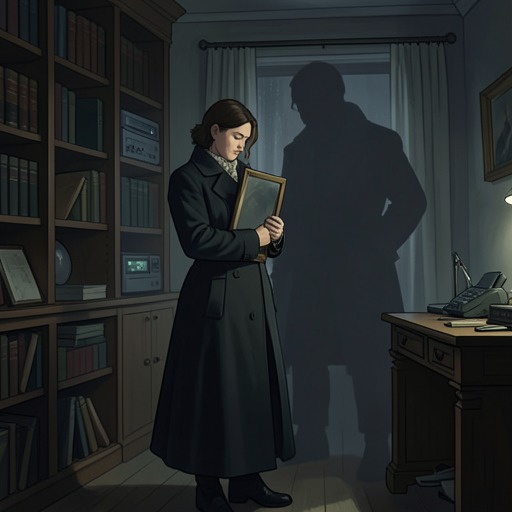
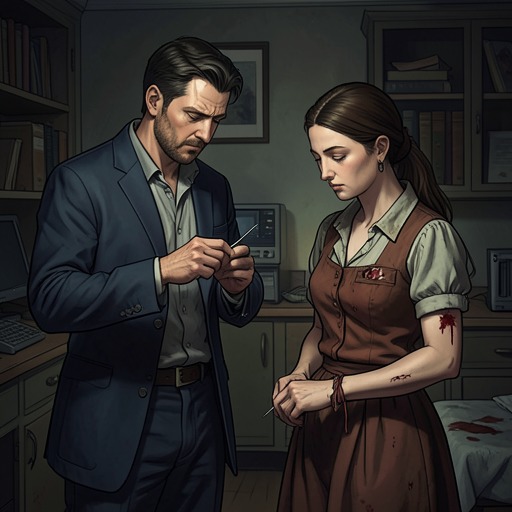
PiercingTo choose your own pain names Sanada Chiaki’s fragile effort to reclaim agency through a pain she has chosen, set against experiences in which pain and trauma arrive without her consent. The expression is not a promise of mastery: her self-directed act offers a temporary point of belief, while the looming Nightmare threatens to make even the terms of suffering no longer hers.
Meaning and Use
Sanada Chiaki connects the expression to a piercing she had done herself. She takes pride in having carried it through and regards the experience as both frightening and empowering; she is also considering another piercing and a tattoo. The distinction that matters to her is not pain versus its absence, but chosen pain versus pain imposed from outside. The former can feel like a decision she owns, even when the decision is difficult.
That sense of ownership is precarious. During a period when her work and relationships have been going badly, Sanada Chiaki strokes the ring and treats it as one of the few things she can believe in. Yet even her own touch can feel as if it belongs to someone else. The object therefore holds two meanings at once: it marks an act of self-determination, but it also exposes how tenuous her connection to her own body can be.
Choice and the Nightmare
For Sanada Chiaki, choosing pain is bound to the hope that she can recover desire and courage. She fears that the absence of sexual desire signals the beginning of a recurring cycle in which she comes to believe that she is responsible for the bad things around her. When the Nightmare takes hold, she expects that pain will no longer be something she chooses; it will instead determine what happens to her. The expression thus defines agency by contrast with a feared loss of control, not as a condition she can secure permanently.
That loss begins to surface during her encounter with Kawashima Masayuki. After an awkward moment makes him angry, Sanada Chiaki panics and experiences words slipping out of reach. She tries to maintain composure by applying lipstick, but the gesture does not prevent the return of traumatic memories. Later, as the words continue to vanish, the narrative presents memory as emerging through bodily sensation before it becomes an image she can recognize. The progression gives the expression a darker counterpoint: deliberate, chosen sensation is set against the involuntary bodily and mental return of trauma.
Contrast with Kawashima Masayuki
Kawashima Masayuki’s childhood offers a related but distinct account of pain and agency. After his father died when he was four, his mother beat him. He learned to endure the abuse by telling himself that the person being hit was not really him, and by concentrating until he felt removed from the pain. He recalled that his mother singled him out while taking his younger brother on outings, and that after he once followed them she tied him in the bathroom. His mental distance was a survival strategy developed under conditions in which he had little power to choose what happened.
The difference from Sanada Chiaki’s expression is consequential. Her chosen pain represents an effort to make a decision about her own experience; Kawashima Masayuki’s distancing arose because he could not stop the abuse. As an adult, he recognizes the old response in a renewed feeling of separation from his body. At a convenience store, the warm interior and the sight of disposable diapers bring back the sense that he has left himself behind and is waiting elsewhere. The echo shows that a method of enduring pain can persist beyond the circumstances that produced it, without becoming the same thing as freely choosing pain.
Narrative Significance
The expression gathers together two different forms of compromised agency: an intentional act that gives Sanada Chiaki a limited sense of ownership, and a defensive separation Kawashima Masayuki learned as a child. Neither cancels the force of involuntary trauma. In Sanada Chiaki’s experience, words can recede as memories return; in Kawashima Masayuki’s, the present can briefly reproduce the feeling of being outside his own body. Against those returns, the idea of choosing one’s own pain remains a narrow but meaningful claim to self-direction—one that the novel repeatedly tests rather than treats as a cure.