Kawashima's childhood placement in the Home
PiercingKawashima Masayuki’s childhood placement in the Home was a turning point in his separation from an abusive household, and the beginning of a pattern of drawing that later echoed the loneliness of his childhood. Recalled in adulthood, the event is neither an uncomplicated rescue nor a clean break: its aftermath includes a new place to live, a way to endure fear, and memories that remain active in his relationships and crises.
Background and Separation
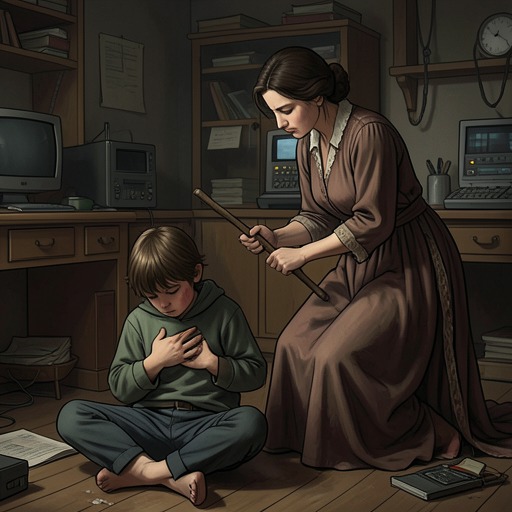
Kawashima’s father died when he was four. His mother then began abusing him, while leaving his younger brother untouched. Kawashima believed as a child that he must be at fault, and learned to prepare himself for the possibility of being hurt without warning. He also tried to distance himself mentally from what was happening, a strategy he later described as a way to make the experience more bearable.
The separation deepened when Kawashima was about five or six. His mother began locking him inside while taking his younger brother to the children’s play area on the roof of a department store in Odawara. On one occasion, Kawashima climbed out and followed them; his mother brought him back and tied him to the bathroom pipes. He remembered falling asleep on the tiled floor and waking after dark, looking out at an empty, narrow road. The episode joined physical isolation to an image that would recur in his early drawings.
Placement and Life in the Home
Later, a middle-school teacher arranged for Kawashima to be placed in a home for abused children. Kawashima stayed there for a little over two years, then went to live with his paternal grandmother. The account establishes the teacher’s intervention as the route into care, but does not describe the placement as erasing what had preceded it.
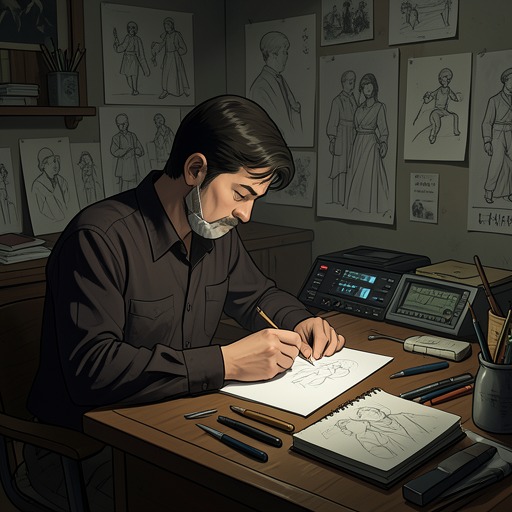
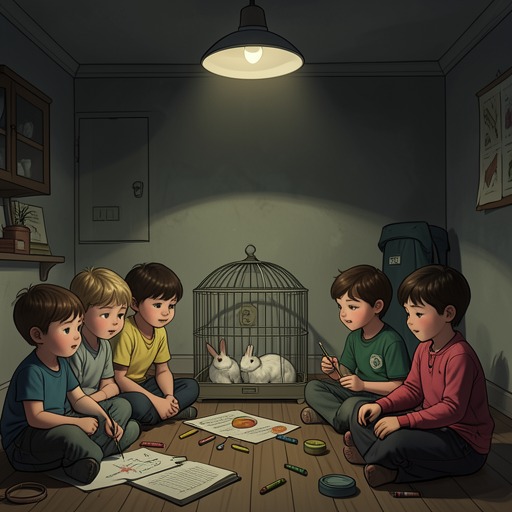
Kawashima began drawing after arriving at the Home, and at first drew only narrow roads at night. In adulthood, he could vividly picture the Home’s playroom: white sand in the sandbox, dolls, stuffed animals, puppets, model vehicles, toy telephones, blocks, a small trampoline, and art materials. He also remembered children who withdrew, resisted interaction, or struggled to control their behavior. His adult recollection slides from observing their difficulties into imagining why adults might reject or mistreat them. That reasoning does not excuse the abuse; it shows how deeply he had absorbed the idea that children could be treated as blameworthy.
What Followed
At high-school graduation, Kawashima’s mother apologized for how she had treated him, then asked him to forgive her. He initially nodded, but something in him gave way and he slapped her. He later recalled this as the only time he ever struck her. The moment offers no simple reconciliation: the apology was, in his view, self-serving, and his response came after years of injury and estrangement.
Kawashima had not told anyone the full story before disclosing it to Yoko. When he bowed his head after speaking, Yoko took his hand and squeezed it. Their relationship gave him a closeness in which he could finally recount what had been kept secret, while the memory of his childhood remained part of the history he brought into their marriage.
Lasting Significance
The habits Kawashima formed in childhood recur later as ways of managing fear. He described preparing himself for his mother’s unpredictable violence and mentally separating himself from the experience; during a later crisis, he recognized an internal voice that had helped protect him as a child. The novel links this remembered coping strategy to his earlier life without making the placement itself a complete explanation for his adult conduct.
The contrast with his life with Yoko is marked. After meeting her, Kawashima’s bouts of self-loathing largely subsided, and he was not overwhelmed by his old panic when Rie was born. Yet he later describes the return of that fear. The Home therefore stands in his history as both a concrete change in where he lived and part of a childhood whose images, coping strategies, and emotional consequences persisted beyond it.