Valera’s Cabin
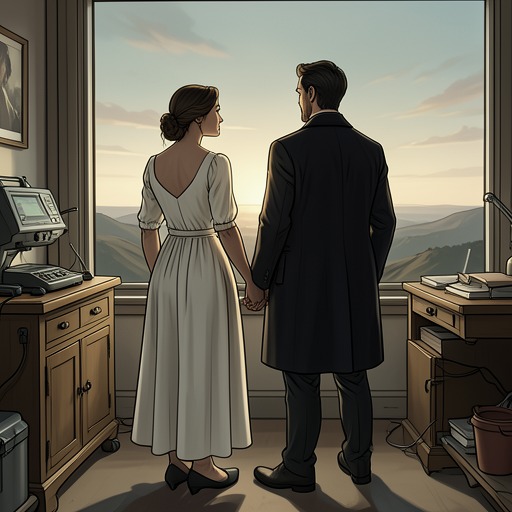
PleasureValera’s Cabin, privately named Shangri-La, is Valera’s remote home and chosen refuge in Alaska. Hidden from the wider human population, it represents the solitude she has preserved for nine years; when violence reaches its threshold, the cabin’s privacy gives way to danger, healing, and the practical work of keeping Sagan alive.
Seclusion and the Name Shangri-La
For nine years, the cabin has been Valera’s place to disappear from the rest of humanity. Its location is known to the people who labored to build it, while townspeople have only a vague idea of where it is: they see Valera when she comes to town for supplies, but do not know for certain where she lives. She has deliberately maintained that uncertainty, making isolation a condition of the home rather than an accidental feature of its remoteness.
A small wooden sign on the door gives the hidden place its private name: Shangri-La. The sign turns the cabin into more than a shelter. It marks the refuge Valera has made for herself, a place whose carefully maintained balance and peace depend on remaining unknown.
Intrusion and Healing
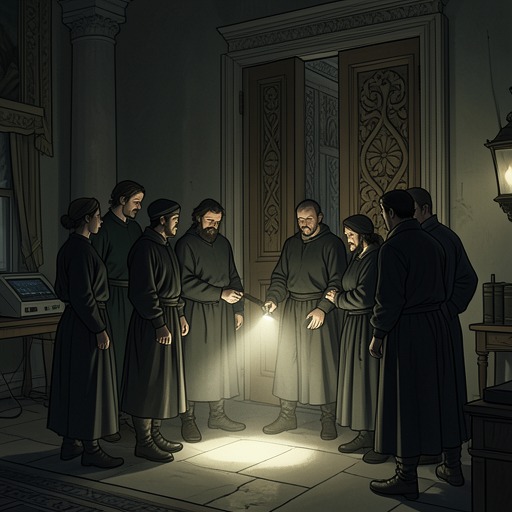
That refuge is breached when Morrigan and Davide arrive. Valera recognizes that the burlap they have brought contains a body; when it falls without a sound or any sign of life, fear and nausea accompany her questions about what has been done to the man and why the intruders are there. As Morrigan and Davide remove their outer clothes and exchange intimidating looks, Valera feels their hostile attention and senses their intent. The threat is no longer distant: it has entered the space she had kept apart from the world.
The cabin also becomes the place where Valera turns from fear toward action. She lays her hands on the poisoned man’s chest and feels the extraordinary tension and power in his musculature, a physical contrast to the appearance of a priest and pacifist. She begins a healing spell, making her concealed home the setting for an encounter with the man and the unfamiliar culture he represents.
A Shelter Against the Light
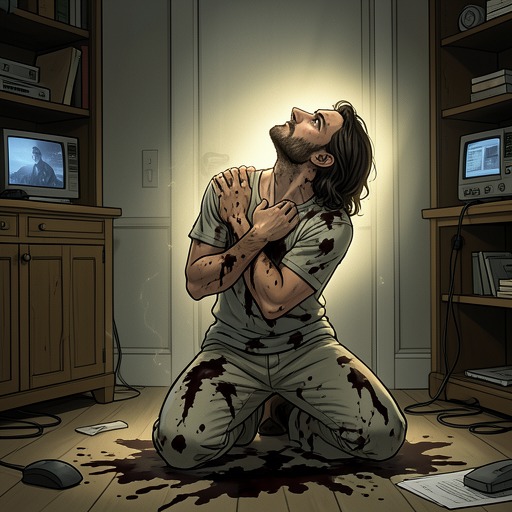
Later, the cabin’s protection takes a more immediate form. After Sagan has been nearly killed by poisoning, Valera works to shield him from light: she lowers the window shades and pins fabric over windows without shades. Most windows have storm shutters designed for the ice storms and blizzards of the northern territories, giving her another means of darkening the house.
Sagan retreats to Valera’s darkened bedroom, and she worries that the remaining diffuse light near the windows might injure him if he comes too close. He has told her it will be harmless at a safe distance, but she repeatedly checks her work, aware that his recovering body is running on borrowed energy. Alaska’s darkness will return within a few hours, and she is relieved that it will make him safe.
The cabin’s rooms also contain the limits of what Valera can know about her guest. Finding Sagan asleep in the back bedroom, she understands that he needs rest, and that his evasiveness protects not merely himself but an entire culture. Her curiosity about magic and the Dark Cultures remains, but the cabin is also where she recognizes the danger of pressing him for knowledge he cannot safely reveal. Its role has shifted from private retreat to a refuge whose shelter depends on both physical protection and respect for guarded knowledge.