Erica Taylor attacks Tabitha
REErica Taylor's assault on Tabitha is the violent escalation of a conflict that began in childhood and spread from the Taylor family's home to Springton High School. Its decisive significance lies in the way several forms of harm converge: Tabitha's former friendship with Ashlee Taylor, the Taylor sisters' abuse, false accusations, school harassment, and the intervention that removed Ashlee from her sisters. Erica's attack is therefore not an isolated outburst but the most immediate expression of a wider cycle of violence and retaliation.
Causes and Background
Tabitha explains that she and Ashlee Taylor used to be friends, until one of Ashlee's older sisters pushed her from the Taylor family's trampoline during the summer and gave her a concussion. After that injury, Tabitha stopped visiting the Taylor home. The broken friendship did not end the conflict, because Ashlee began hiding her older sisters' belongings and blaming Tabitha for the thefts, treating her as a convenient scapegoat even though she was no longer going over to the house.
The situation worsened when bullying at Springton High escalated. Tabitha says that something she told a member of the school board about the Taylor family's situation apparently helped prompt officials to separate Ashlee from her sisters. The intervention protected Ashlee but also intensified Erica Taylor's anger. In Tabitha's account, that sequence is the direct cause of Erica's later decision to lash out at her: an attempt to expose or interrupt abuse produced a new target for the abuser's rage.
The Assault and Its Immediate Meaning
The supplied account does not reproduce the full scene of Erica Taylor's attack, but it establishes that Erica attacked Tabitha after the school-board intervention and that the attack caused renewed head trauma. Tabitha had already suffered a concussion from the trampoline incident and a fractured wrist after being shoved off a curb at school. Erica's assault thus entered a body already marked by repeated violence rather than creating a single, self-contained injury.
Tabitha presents the episode as part of a darkly absurd chain of errors. She calls the events a possible “comedy of errors,” while recognizing that the phrase may only make the continuous succession of disasters easier to endure. Her formulation preserves both the absurdity and the cruelty of the situation: misunderstandings, concealment, institutional action, and retaliation accumulate until violence appears almost mechanically generated by the preceding failures.
Physical and Psychological Consequences
The renewed head trauma contributed to Tabitha's continuing physical fragility. Her body was still undergoing puberty while also enduring extreme weight loss and repeated shocks: the original trampoline injury, the school-related wrist fracture, and the later Halloween-party attack. She becomes sufficiently uncertain about her own future knowledge to wonder whether it might be a hallucination caused by tissue or nerve damage in her brain. The assault therefore threatens not only her safety but also her confidence in her memories, perceptions, and identity.
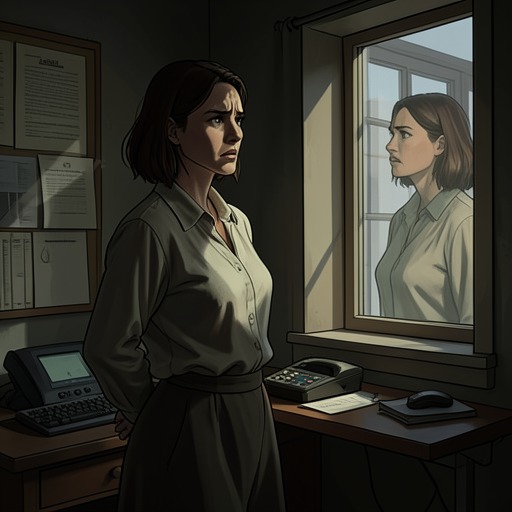
The injuries remain visible. Tabitha is described as very pale, with stitches on her head and a shaved patch of red hair beginning to grow back as soft fuzz; she is also still wearing a cast. These details make the consequences materially present rather than merely retrospective. Her vulnerability is visible to the people around her, even when the larger community reduces the surrounding events to gossip about a “drama queen” or a girl associated with rumors.
Public Fallout and Protection
The attack occurs within a social environment already saturated with rumor. Students circulate conflicting stories about Tabitha, her family, occult associations, pregnancy, and her supposed importance, while the suspension or expulsion of students who harass her leads some observers to assume that she must have influential parents. The contrast between rumor and reality is stark: behind the speculation is a teenager who has been injured repeatedly and who is trying to explain how one family conflict became a school-wide crisis.
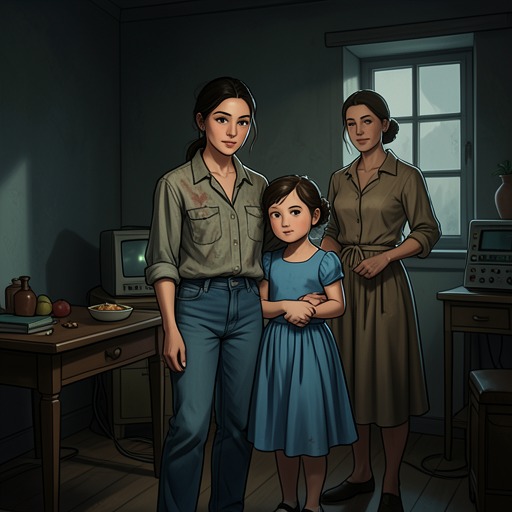
At the Williams residence, Mrs. Williams views Erica's attack as evidence that Tabitha's family and neighborhood have failed to protect her. She recalls that Tabitha was bullied out of school, nearly killed at the Halloween party, and forced to leave home after another crisis involving Lisa Moore. Seeing Tabitha exhausted, pale, and still wearing her cast, Mrs. Williams responds with protective anger. Her reaction shifts the assault from a private dispute into a test of adult responsibility: the question is no longer only what Erica did, but why so many adults and institutions allowed Tabitha to remain exposed to danger.
Narrative Significance
Erica Taylor's assault embodies the book's recurring cycle of school bullying and domestic abuse. Tabitha's effort to help Ashlee leads to official separation, the separation provokes Erica, and Erica's retaliation adds another injury to Tabitha's already damaged body. The event also demonstrates the limits of future knowledge. Tabitha expects certain broad developments, but changes in the timeline and the butterfly effect make each new crisis less predictable, leaving her afraid that the knowledge meant to protect her is becoming unreliable.
The assault consequently functions as both plot escalation and thematic evidence. It shows how vulnerable children can become targets when they interrupt an abusive family structure, how institutional intervention may have consequences beyond its intended protection, and how repeated violence fragments a survivor's sense of bodily and narrative control. Erica's action is remembered not as an independent incident but as one link in a chain whose effects continue through Tabitha's injuries, isolation, fear, and demand for someone finally to put a stop to the pattern.