Goblina Binder Theft
REGoblina Binder Theft is the theft of Tabitha Moore’s Goblina project binder during class, followed by its discovery in a restroom waste bin. What the perpetrators dismiss as a joke becomes a decisive escalation in Tabitha’s school crisis: the binder contains her recovering creative identity, and its disappearance persuades her that Springton High is no longer a safe place to remain.
The Binder as a Personal and Creative Anchor
Tabitha Moore has been using the binder to collect her thoughts and develop the Goblina project. After writing new entries, she feels an unusual satisfaction because transferring her persistent thoughts onto paper makes them seem temporarily removed from her head. The work is described not as a casual notebook but as a tangible representation of her inner life, comparable to the security Alicia Brooks finds in keeping her sketchbook close. The binder therefore joins practical school materials to a much more intimate function: it gives Tabitha a physical place in which to contain, organize, and express experiences that otherwise feel overwhelming.
The contents are unfinished and often nonsensical, but their roughness is part of their importance. Tabitha experiences the writing as cathartic and as a promising attempt to bring new inspiration to the failed work of her previous life. The binder holds more than disjointed ramblings; it represents a piece of herself that she is learning to carve out and communicate to other people. Its theft consequently attacks both property and authorship, removing an object through which Tabitha is trying to rebuild a future self.
The Theft and Tabitha’s Recognition
While seated in class, Tabitha falls asleep for almost thirty-five minutes. When she wakes, she instinctively searches for the binder before fully processing what has happened. The desk is empty, the binder is not on the floor, and it is not in the backpack beside her. When she considers that another student may be looking through it, several nearby girls deliberately avert their eyes at the same moment. Their coordinated avoidance gives the absence a social meaning: the binder has not simply been misplaced, and the surrounding students appear to know why it is gone.
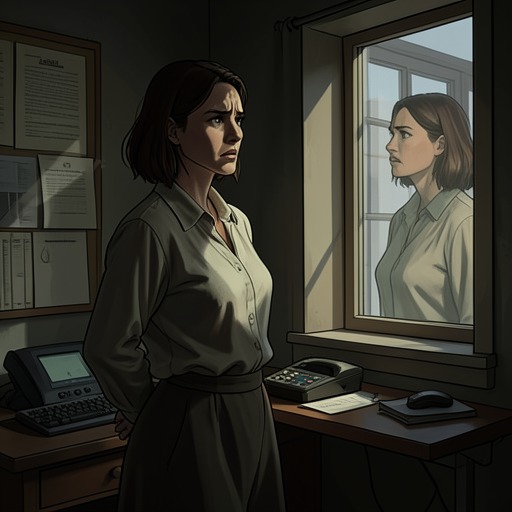
Tabitha’s realization is immediate and intensely upsetting. Already dealing with a sore arm and a cast, she feels angry, hurt, and exposed, while the loss revives memories of classmates taking her belongings in her first life. She wants to scream, cry, shut down, or curl up like a child, but she forces herself to remain composed. Pressing her injured hand against the cast until the pain increases, she rises from her seat and insists on acting as an adult even while shaking with distress. The scene turns the binder into the point at which her carefully maintained self-control nearly fails.
Tabitha reports the incident to Mr. Stern, explaining that a personal project of great importance disappeared while she was asleep. Although she has managed not to cry openly, tears have run down her face, and the quiet attention of the class makes her feel watched. She tells Mr. Stern that she is going home because she no longer feels well or safe at school, adding that she does not know whether she will ever return. The theft thus produces an immediate reversal: a place where Tabitha is academically successful becomes a place from which she feels compelled to withdraw.
Investigation and the “Joke” Defense
The binder is recovered after Mr. Stern notes that Clarissa Dole had received permission to use the restroom. A search of that restroom finds Tabitha’s missing binder in the waste bin. Tabitha had not gone there, and no other student in the class period needed to do so. The physical location establishes a clear chain between the classroom disappearance and Clarissa’s movement through the school, even though Clarissa initially denies responsibility.
Mrs. Cribb confronts Clarissa with the recovered binder and reconstructs the sequence: several girls behaved suspiciously, the students denied taking anything when their bags were inspected, and Clarissa alone had both the relevant restroom visit and the opportunity to place the binder there. Clarissa repeatedly characterizes the act as a joke and claims that the girls intended to tell Tabitha where the binder was. Her use of “we” prompts Mrs. Cribb to ask which other girls participated, shifting the inquiry from an isolated prank toward a coordinated act involving multiple students.
The defense collapses under the circumstances. The binder was not merely hidden for amusement; it was placed in a waste bin while its owner was absent and vulnerable, and the students concealed their knowledge when questioned. The gap between the perpetrators’ label and the act’s consequences is central to the event. Calling it a joke attempts to make the harm sound temporary and harmless, while the investigation recognizes that the conduct has produced fear, humiliation, and a possible interruption of Tabitha’s education.
Escalation Within the Harassment Crisis
Mrs. Cribb treats the theft as part of a wider pattern rather than as an ordinary disciplinary matter. The school is already conducting a criminal harassment investigation after false allegations nearly cost a teacher his job and threatened to damage Tabitha’s reputation. Tabitha has also endured constant harassment and has been physically harmed twice during the year badly enough to require medical attention. Against that background, the stolen binder becomes another incident in an accumulating record of intimidation.
The school-board response makes the stakes explicit. Mrs. Cribb warns that Tabitha is at the top of her class but may voluntarily withdraw from Springton High because she does not feel safe there, and she acknowledges that this possibility is a serious institutional problem. The binder theft therefore exposes a contradiction in the school’s public function: academic achievement does not protect a student when the surrounding environment permits repeated harassment and makes personal belongings unsafe.
Mrs. Cribb further connects the case to outside authority. The Springton Police Department is understood to owe Tabitha a debt of gratitude, while the district attorney and an independent firm are preparing legal action. The school board intends to assist through expulsions, arrests where warranted, and testimony in court. Clarissa’s confidence falters when she realizes that the prank occurred during an active criminal investigation. Her final reaction shows the moment when the language of mischief gives way to recognition of legal and institutional consequences.
Consequences and Narrative Significance
The theft changes Tabitha’s relationship to both the binder and the school. Before it disappears, the binder helps her externalize intrusive thoughts and nurture a new version of her creative work. Once stolen, its material absence makes her private vulnerability visible. The object that had served as a quiet container for her imagination becomes evidence of how easily that inner space can be invaded, discarded, and turned into a spectacle for others.
As an action in the larger plot, Goblina Binder Theft combines a discovery sequence with an escalation of conflict. Tabitha first discovers the loss through the suspicious behavior of nearby girls, then learns that the binder was deliberately placed in the restroom waste bin, and finally sees the school treat the incident as part of a serious harassment campaign. The event does not resolve the hostility surrounding her; instead, it strengthens the case for her withdrawal from Springton High and broadens the response from classroom discipline to police, legal, and school-board involvement.
The incident also clarifies the difference between Tabitha’s inner maturity and the environment’s treatment of her. She tries to manage the crisis with adult restraint, but that restraint does not make the harm minor. The binder’s recovery restores the physical object without undoing the fear that caused her to say she might never return. In that sense, the decisive loss is not only the binder’s temporary absence but Tabitha’s remaining confidence that the school can protect her while she rebuilds her life and her work.