Lisa Moore Returns After Abandoning Her Four Sons
RELisa Moore Returns After Abandoning Her Four Sons is the Thanksgiving sequence in which Lisa Moore re-enters the lives of her four sons after previously leaving them without explanation or reliable care. Her arrival creates an outward image of reunion, but the scene steadily strips that image away: the boys’ joy is immediate and genuine, while Tabitha Moore, Shannon Moore, and Grandma Laurie see the return as a threat to the fragile family arrangement that has grown around the children. The action therefore turns on a sharp reversal in value. A mother’s homecoming should promise safety and belonging; here, it revives abandonment, mistrust, and the fear that Lisa has returned for money rather than for her sons.
Background and the Abandoned Sons
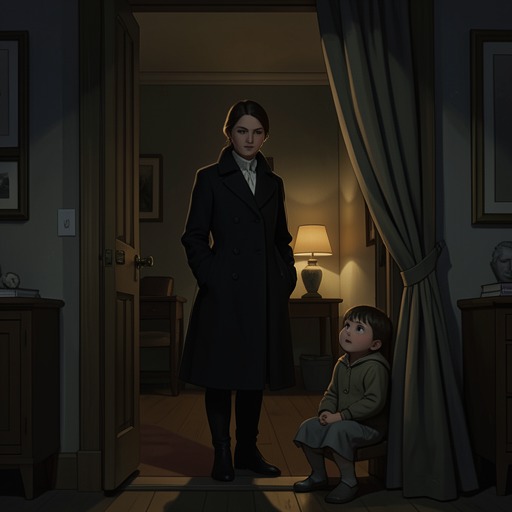
Lisa’s absence has already forced the family to reorganize itself around her failure. Grandma Laurie remembers that, while the boys were in Lisa’s care, Lisa did little to keep them out of trouble or teach them right from wrong. She paid scant attention to them, treated their needs as inconveniences, and seemed to require every household situation to revolve around herself. Her response when Aiden scraped his knee captures the pattern: instead of comforting the injured child, she blamed the other boys for failing to watch him. The children were thus left with a mother who exercised authority mainly when their behavior inconvenienced her, while practical responsibility fell elsewhere.
Grandma Laurie’s judgment is severe because she has also experienced the consequences of Lisa’s disappearance. Lisa’s return means another mouth to feed, and Laurie privately recognizes that the boys’ distress when Lisa left had nonetheless been accompanied by an improvement in their circumstances. The narrative does not treat abandonment as a single past act that ends when the parent comes back. It presents abandonment as a continuing family condition, one in which the children’s attachment remains alive even while their daily security has been transferred to other adults.
The Thanksgiving Return
The reunion occurs not on the family’s usual Thanksgiving date but one day early, because the Moores are meant to join the MacIntire family on the actual holiday. Tabitha rides between Alan Moore and Shannon Moore in Alan’s truck, while Lisa Moore sits in the open truck bed behind them. The arrangement is conspicuous: Lisa is physically present but not integrated into the cab’s tense silence, and Tabitha studies the cast on her lap while comparing this altered Thanksgiving with the life she remembers. The changed date and changed cast of relatives emphasize how thoroughly the revised timeline has unsettled the old family narrative.
When the truck reaches Grandma Laurie’s home, Lisa calls to the boys and rises in the moving truck bed to whistle at them. Aiden runs across the yard, and the truck must slow as he crosses in front of it. Lisa jumps down and opens her arms with the theatrical pride of a returning hero; Aiden meets her with enough force to nearly knock her over. His reaction is not presented as proof that Lisa deserves trust. It is evidence of the child’s enduring need for his mother. Tabitha watches with mounting frustration because she understands that the reunion’s emotional force can make the adults overlook the history behind it.
The scene’s most painful contrast lies between Aiden’s instinctive cry of “MOM!” and Tabitha’s awareness that Lisa left the children who still loved her. Lisa performs affectionate reunion by calling Aiden her baby and patting his back, but Tabitha sees the gesture against the years of absence. The boys’ tears and excitement briefly make Lisa appear indispensable; the surrounding family knowledge immediately makes that appearance morally unstable.
Suspicion, Money, and Family Boundaries
Tabitha suspects that Lisa has returned not from a transformed commitment to motherhood but because she wants money. She is convinced that Lisa is using heroin or is close to returning to heroin use, and she suspects that drugs are hidden in Lisa’s purse, which Lisa guards constantly. Yet Tabitha lacks proof. Even finding needles would not establish that the substance was heroin rather than insulin, and any accusation would be reduced by the adults to the word of an emotional teenager already known to be at odds with Lisa. This evidentiary problem gives the reunion a second layer of danger: Tabitha sees a threat but cannot make the family recognize it without appearing hostile or irrational.
Shannon Moore’s silence whenever Lisa is mentioned becomes a form of alignment with Tabitha. Shannon has historically had little rapport with Alan Moore’s relatives, though her relationship with Grandma Laurie has recently improved; the new family order is therefore built from relationships that did not exist or were not strong in Tabitha’s earlier life. Tabitha now considers her parents, Grandma Laurie, and the four cousins to be her family, while excluding Lisa and Daniel Moore from that category. Her definition of family has become ethical and relational rather than merely biological: those who protect, remain, and take responsibility belong; those who abandon or exploit the children do not.
Lisa’s return also threatens to reopen other suppressed injuries. Tabitha’s recovered memories connect the Taylor sisters’ abuse of her and Ashlee Taylor to the guilt of having abandoned Ashlee after witnessing her bruises and terror. That history matters here because it clarifies why Tabitha cannot treat adult neglect as harmless family drama. She has already learned how silence protects the powerful and leaves children to carry the consequences. Her resistance to Lisa is therefore partly an attempt to prevent another child-centered crisis from being normalized by the adults around her.
Conduct at the Family Table
Lisa’s behavior at Thanksgiving confirms the family’s apprehension. Grandma Laurie objects to Lisa’s appearance and manner, and the sour expressions worn by Tabitha and Shannon make clear that Lisa is unlikely to become a welcome permanent presence. Laurie’s memories further undermine Lisa’s performance as a returning mother: Lisa had not consistently attended to the boys, and even ordinary childhood distress had irritated her rather than elicited care.
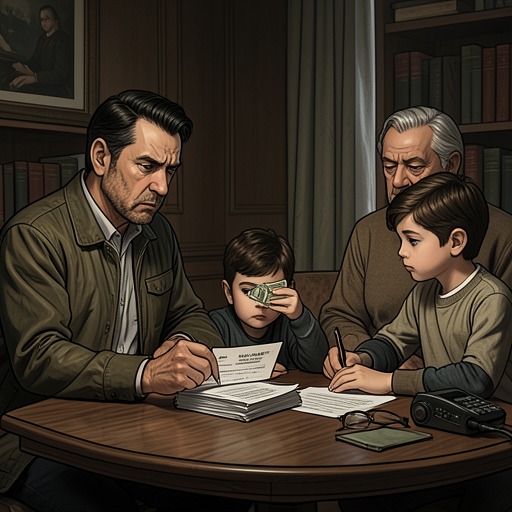
At the table, Lisa orders Aiden to put ham on his plate and eat it, threatening all four boys with the loss of dessert if their plates are not clean. Tabitha knows that the children had politely refused the ham when Alan asked whether they wanted any, and that Lisa herself forced portions onto their plates with her fingers despite tongs being available. The episode converts a supposedly ordinary Thanksgiving dispute into a compact display of coercive control. Lisa treats the boys’ preferences as disobedience, reframes their refusal as an insult to Grandma Laurie, and uses food and dessert as instruments of authority.
The boys’ question about whether there will be dessert exposes the imbalance beneath Lisa’s command. Their attention turns immediately to the reward she has made conditional, while Tabitha remains focused on the humiliation and contamination of the forced gesture. The table therefore becomes a miniature version of the family system: Lisa claims maternal power, the children accommodate her demands, and Tabitha watches for the harm hidden inside an ordinary domestic scene.
Consequences and Significance
The return does not produce reconciliation. It makes the family’s divided loyalties visible. The boys are overjoyed to see their mother, but Tabitha experiences their reunion as something she should perhaps have prevented, because she expects Lisa’s presence to bring renewed instability and exploitation. Grandma Laurie’s perspective supports that fear: although she cannot deny the boys’ attachment, she believes Lisa has not been a proper mother and that their upbringing has repeatedly led back to the same problem—Lisa’s self-centeredness.
The confrontation eventually contributes to Tabitha’s decision to leave her parents’ home temporarily. When Sandra MacIntire is present and Tabitha comes downstairs carrying an overstuffed schoolbag, Tabitha tells Alan that she is going to stay somewhere else for a while. Alan immediately refuses, but Tabitha repeats that she is leaving and apologizes. The choice is a consequence of the wider family conflict surrounding Lisa’s return: Tabitha no longer accepts remaining in a household where her warnings are dismissed, her moral objections are treated as moodiness, and the people she regards as dangerous are granted access through family ties.
The action’s broader significance lies in its refusal to equate reunion with repair. Lisa’s return reactivates the boys’ love, but it does not erase her abandonment; it supplies emotional spectacle without establishing safety. Against that spectacle, Tabitha’s altered understanding of family insists that motherhood is demonstrated through protection, attention, and responsibility. The scene leaves Lisa physically restored to the family gathering but ethically outside the circle Tabitha is trying to build, while the four boys remain caught between the mother they still need and the adult whose past conduct has made that need dangerous.