Narrative identity
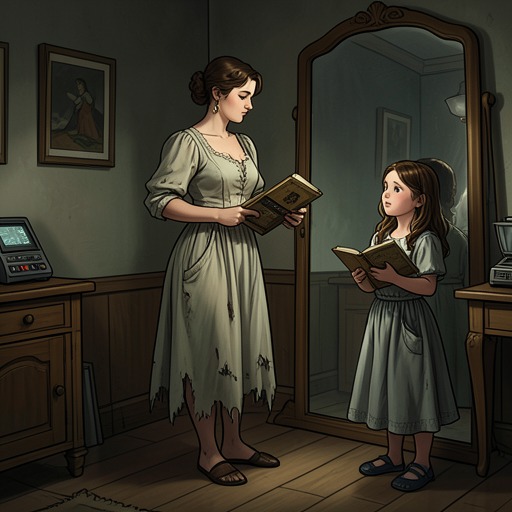
RENarrative identity is the sense of self formed by interpreting life as a story: experiences acquire significance through the roles, reversals, losses, and possible futures that a person can connect. The novel treats that identity as unstable rather than innate. Tabitha Moore’s return to 1998 forces her to test whether the events of her earlier life have a purpose, while Shannon Moore’s recovery requires her to recognize that the story organized around Shannon Delain has ended and that another account of herself may still be written.
Definition and Narrative Function
The concept appears most directly through the novel’s insistence that a storyteller experiences events in terms of narrative meaning. Tabitha Moore does not regard her past merely as a collection of jobs, injuries, memories, and accidents; she searches for the element each experience contributes to the shape of her life as a whole. That search gives narrative identity both a creative and a psychological dimension. A life feels coherent when its episodes seem to belong to a larger story, but the same impulse can become painful when a person demands purpose from experiences that may have had none.
Tabitha Moore’s work at Safety plant illustrates this tension. In the 2020s she spent almost five years filling orders for workers’ harnesses, learning to measure and mark nylon at a cut table, separate and seal material with a pressurized hot knife, operate industrial sewing machines, and join leather pieces with rivet machines. Those skills were real, but the late-1990s versions of the harnesses used different specifications, so her expertise could not simply be transferred into the life she now wanted. The problem was therefore not only practical uselessness. Tabitha Moore feared that an entire period of her former life might have no narrative function at all, and she wondered whether her search for meaning was merely a sunk-cost fallacy protecting her from admitting that those years had been wasted.
Tabitha Moore and the Lost Story
Tabitha Moore’s second life makes narrative identity unusually visible because she possesses memories that belong to a future no one around her can recognize. Her knowledge cannot always be used, her expectations no longer reliably predict events, and the identity she carried in the 2020s does not fit the adolescent body and social position she has regained. The time displacement therefore produces more than chronological confusion. It separates experience from usefulness and memory from recognition, leaving Tabitha Moore to decide which parts of her former self can survive the change in setting.
Her writing offers a more durable bridge between those selves. The blue binder containing the outline for Goblina and Goblin Princess becomes a treasured object whose value she understands fully only after it is lost and unexpectedly returned. In her previous life, Goblina and Goblin Princess had seemed merely good rather than great; revisiting them in 1998 gives the work a new perspective and an enthusiasm that feels like a fresh beginning. The binder thus preserves more than a creative project. It holds evidence that Tabitha Moore’s past identity as a storyteller can still connect to the person she is becoming.
Yet the reconstruction is emotionally unstable. Tabitha Moore admits to Alicia Brooks that she is no longer sure who she is. She describes weeks of near-daily emotional breakdowns, crying, impulsive decisions, shifting moods, the effects of hormones and physical injury, and the feeling that she is a wreck. Her comparison with her first life sharpens the distinction. She remembers having been a damaged child who rarely cried because she held both the bad and the good at a distance, hated herself, and felt trapped. In the second life, feeling more intensely does not mean that she has achieved a stable identity; it means that the old emotional distance has broken down, leaving her more exposed to both pain and possibility.
Depression and the Loss of Narrative
The novel explicitly distinguishes depression from ordinary sadness. Depression is presented as the loss of emotional access to things that once produced intense feeling: pursuits lose their meaning, victories become hollow, and the person’s own story disappears. This condition is passive rather than theatrically dramatic. Instead of supplying a clean moral struggle, it causes repetition of ineffective actions and allows a more goal-oriented person or external demand to take over the direction of life.
That formulation clarifies both Tabitha Moore’s crisis and Shannon Moore’s history. A damaged narrative identity does not necessarily announce itself through constant visible grief. It can appear as indifference, stalled purpose, self-loathing, or the inability to imagine a future that belongs to the self. The novel’s refusal to reduce depression to a simple reaction to bad events also prevents recovery from becoming a single triumphant decision. Meaning must be rebuilt through small changes in orientation, relationships, and action rather than discovered as a ready-made explanation.
Shannon Moore’s Rewritten Identity
Shannon Moore recognizes her own lost narrative while reading Tabitha Moore’s notes. Watching her daughter play with the Moore cousins, she is struck by the contrast between Tabitha Moore’s youthful appearance and the sophistication of the ideas she can express. The realization is unsettling because Tabitha Moore does not merely display intelligence; she seems able to understand and examine fully formed concepts, including experiences Shannon Moore has felt but never articulated.
The manuscript and notes become a form of indirect witnessing. Shannon Moore sees that Tabitha Moore’s writing can give shape to feelings that have remained unspoken, and she also discovers that the child’s observations alter her understanding of her own past. The notes are not a conventional diary, yet they function partly as one: they preserve impressions, meanings, and emotional truths that the family never discussed. A remembered flea-market trip demonstrates this power. Shannon Moore recalls the trip as crowded, humid, unpleasant, and dominated by an overpriced hot dog, but Tabitha Moore records it as fun. The discrepancy reveals that the same event belongs to two different narratives, and that the child’s experience cannot be reduced to the adult’s retrospective judgment.
Shannon Moore also notices a recurring stigma of inferiority attached to the word “goblin” in Tabitha Moore’s notes. That observation draws her toward her own unresolved issues. She recognizes how intimidating it is that Tabitha Moore works so hard not to omit anything that might matter to her story, because Shannon Moore has spent years leaving parts of her own experience unexamined. Narrative identity here is not simply self-expression; it is the pressure to acknowledge what has been excluded, distorted, or treated as too difficult to name.
Reconstruction and Significance
For Shannon Moore, the old narrative was organized around Shannon Delain, the imagined future of becoming a model, a beautiful Hollywood actress, a star, and somebody important. When that future failed, she experienced the loss not merely as disappointment but as the collapse of the self built around it. She describes the aftermath as the disappearance of spark and drive, replaced by bitterness and severe clinical depression. Her book about Shannon Delain had closed, but the ending of that story created the possibility of another one.
The new narrative develops through concrete changes rather than a single revelation. Shannon Moore considers her morning walks, renewed intimacy with Alan Moore, the terror of believing Tabitha Moore had been lost, and the family’s church service as possible beginnings. She cannot identify one definitive moment when the new Shannon Moore came into existence. Her identity remains undecided and open to what has not yet happened. That uncertainty is important: narrative reconstruction does not restore an original, supposedly authentic self; it creates a future through continuing choices.
The family becomes the setting in which that new identity can be tested. Shannon Moore’s social fears return at church, while other fears fall away, and she wonders whether dissociation or the loosening of Shannon Delain’s dead weight has enabled her to feel alive, purposeful, and driven again. The change is frightening because it exposes the years she believes were wasted, but it also gives her a responsibility. She resolves to become a better mother, recognizing that Tabitha Moore, the expected new child, and the four nephews all deserve a family rather than the half-hearted parenting she previously provided. The Moore cousins’ transformation in her eyes—from children she could barely tolerate into family—shows narrative identity operating relationally: a new account of Shannon Moore requires a new account of who belongs in her life.
Narrative identity therefore links the novel’s time travel, creative writing, mental illness, and family repair. Tabitha Moore searches for a story in which her accumulated knowledge and suffering are not meaningless, while Shannon Moore learns that the failure of one identity does not end the possibility of a life. Both characters revise the past by changing what it means, not by denying what happened. The concept’s decisive significance lies in that openness: identity is neither a fixed essence nor a finished biography, but an unfinished structure repeatedly tested by memory, loss, recognition, and the courage to begin another chapter.