The goblin metaphor
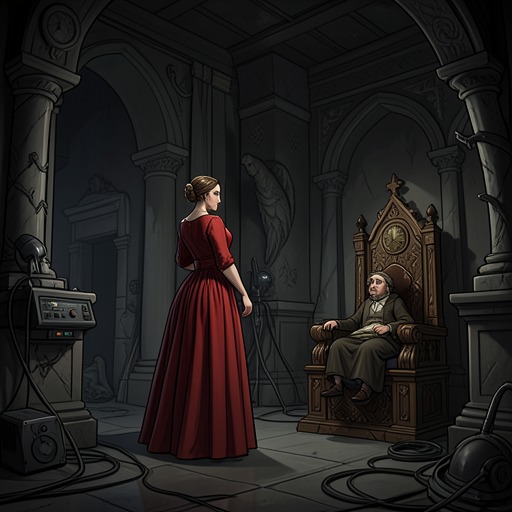
REThe goblin metaphor is the narrative’s governing image of social degradation and resistance. For Tabitha Moore, “goblin” names the person whom others place beneath ordinary human recognition: the poor, fat, isolated girl from the Lower Park whom classmates ridicule, exclude, and treat as an object rather than a person. Yet the same word also becomes the foundation of Tabitha’s authorship and her determination to rewrite the life that once seemed fixed.
Definition and Social Meaning
The metaphor takes shape from Tabitha’s memory of adolescence and adulthood. She recalls being thirteen, friendless, visibly poor, and marked by yellowed T-shirts, an unkempt appearance, and the stigma of living in the Lower Park. “Trailer trash” is not merely an insult in this account; it is a social position that makes her feel permanently inferior. As an adult, she remembers pursuing unsuitable relationships because she feared ending up alone, abandoning teaching, losing her publishing contract after two books, working at the Safety plant to escape educational debt, and eventually becoming a county clerk. The accumulated disappointments turn the imagined goblin into a compressed figure for a life shaped by shame, isolation, and unrealized ability.
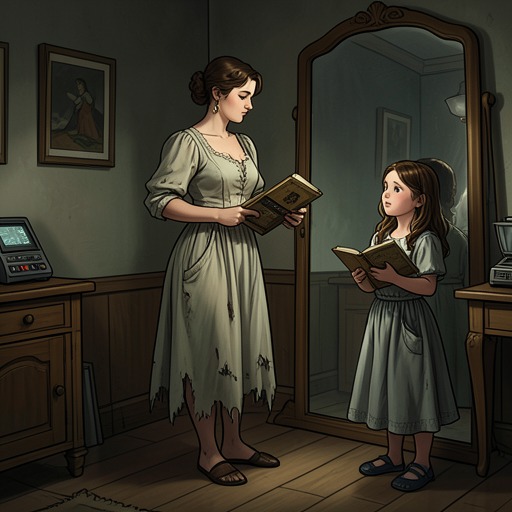
Tabitha’s most painful memory is that the goblin identity outlasted ordinary bullying. She had one genuine close friend, Julia, a gifted woman fifteen years younger who later died by suicide. The memory makes the metaphor inseparable from grief: Tabitha is not only recalling how she herself was treated, but also the limits of her ability to protect someone she loved. Her return to 1998 therefore confronts her with the prospect of becoming the same rejected girl again and of witnessing her parents’ decline and Julia’s death without being able to alter anything.
From Stigma to Self-Definition
After initially dreading a second passage through adolescence, Tabitha discovers that the goblin identity can be used rather than merely endured. She recognizes that her older self has skills that once seemed ordinary but may be valuable in the past. She can exercise, cook, write with the benefit of later knowledge, and approach the future as a field of choices instead of a record of inevitable failures. Her declaration that she can write her story all over again joins bodily transformation to narrative transformation: changing the girl who is seen by others and changing the story that gives that girl meaning become parallel projects.
The clearest artistic expression of the metaphor appears in Goblina and Goblin Princess. Tabitha plans to revise the books using what she has learned about structure and pacing, hoping to publish before the market becomes oversaturated. The protagonist of her fantasy story begins as “the lowest of the low,” beneath even slaves, and is called a goblin by everyone around her. The character starts with nothing and gradually learns the truth of her world. This structure mirrors Tabitha’s own experience: an identity imposed from outside becomes the starting point for knowledge, endurance, and eventual triumph over the Magi. The goblin is therefore not simply a disguised autobiographical figure; it is a method for converting humiliation into plot.
When Alicia Brooks asks whether the heroine is a goblin, Tabitha answers, “She’s me.” She then makes the identification explicit: “I’m the goblin. I’ve always been the goblin.” The repetition matters because it reaches beyond the fantasy manuscript. Tabitha is acknowledging that the role has organized her understanding of herself across both childhood and adulthood. Her later assertion that the goblin will triumph, followed by her resolved promise that “This time, I will for sure,” turns a history of defeat into a vow attached to a new timeline.
Bullying and the Hierarchy of Personhood
The metaphor also explains why Tabitha distinguishes between the old bullying and the harassment she faces after returning to Springton High School. She says that being called Tubby Tabby was hurtful, but not the deepest injury. The more serious transformation was being called a goblin and feeling that people treated her as though she were no longer human. In her formulation, the goblin is “a concept,” a measure of the lowest point in the social power hierarchy. The insult works by making cruelty appear justified: once Tabitha is classified as less than fully human, exclusion and contempt can present themselves as ordinary social order.
The new harassment is more indirect. Rather than confronting Tabitha openly, students pressure others not to befriend her and spread malicious rumors intended to damage her reputation. Tabitha understands that this is not simply a repetition of the earlier abuse. In the past, she was directly assigned the goblin position; in the present, the same hierarchy operates through social isolation, reputation management, and the control of who is permitted to associate with her. The metaphor thus tracks a change in the mechanism of exclusion while preserving its underlying logic.
Elena Seelbaugh’s response helps expose the tension between Tabitha’s unusually precise analysis and the ordinary language of teenage experience. Elena treats the indirect hostility as part of being a normal teenage girl, but Tabitha sees the difference between casual meanness and a systematic effort to define someone as socially untouchable. Her explanation makes the goblin metaphor analytical as well as emotional: it names the process by which a group creates an inferior category and then organizes its behavior around that category.
Narrative Function and Transformation
The goblin metaphor gives the novel an underdog structure while complicating the idea of victory. Tabitha’s improvement in appearance and physical condition does not erase the social identity that others assigned to her. She explicitly rejects the belief that a changed body would prevent persecution, arguing that the bullies would have found another reason to attack her. This prevents the metaphor from becoming a simple lesson that self-improvement solves oppression. The body may alter how others see her, but the hierarchy can adapt and continue through rumor, exclusion, and collective pressure.
At the same time, Tabitha’s new body and her future knowledge create a gap between external appearance and internal identity. Alicia initially finds it difficult to reconcile the beautiful red-haired girl before her with the underdog who insists she is the goblin. Tabitha’s explanation resolves that apparent contradiction only partially. The metaphor belongs to memory, social history, and self-recognition rather than to visible ugliness alone. The “knockout beauty” can still be the goblin because the term records how she was positioned and how deeply that positioning entered her sense of self.
The image finally joins personal rescue to artistic ambition. Tabitha wants to save Julia, protect Alan Moore and Shannon Moore from themselves, and prevent the chain of suffering that made her first life feel empty. She also wants to rescue her own story by writing it differently. Goblina’s movement from absolute subordination toward triumph provides a fictional model for that project, while Tabitha’s repeated insistence that she is the goblin keeps the fantasy grounded in remembered deprivation. The metaphor’s decisive significance lies in this double movement: it preserves the violence of being reduced to a nonperson, yet refuses to let the oppressor’s category determine the ending.