Germany
ReunionGermany is the homeland Hans Schwarz believes he belongs to without qualification, but it becomes the setting of the political rupture that drives him into exile and destroys his family. The novel’s movement from domestic security to persecution makes the country more than a geographical setting: it is at once a lived home and a national society remade by Nazism.
Homeland and Belonging
Hans’s family has lived in Stuttgart for at least two hundred years, though the absence of records leaves the precise length and origins of that history uncertain. He imagines the Schwarzes’ earlier past across a wide geography, but regards those unanswered questions as less important than the certainty that Germany is his country and home. His sense of identity is layered: first Swabian, then German, and only then Jewish. He understands Jewish ancestry as a fact of descent, not as a reason to feel foreign.
That belonging is reflected in the family’s everyday life. Hans’s mother goes to the synagogue once a year on Yom Kippur, while his father observes certain customs out of consideration for others rather than religious belief. His father also rejects Zionism, seeing a claim to Palestine after two thousand years as likely to lead to bloodshed and insisting that, as a Stuttgarter, he has a stronger connection to his own home. The family’s attachment to Germany is therefore not simply an abstract patriotism: it rests on generations of residence and on an understanding of themselves as part of the country’s local and national life.
Nazism and the Rupture of Belonging
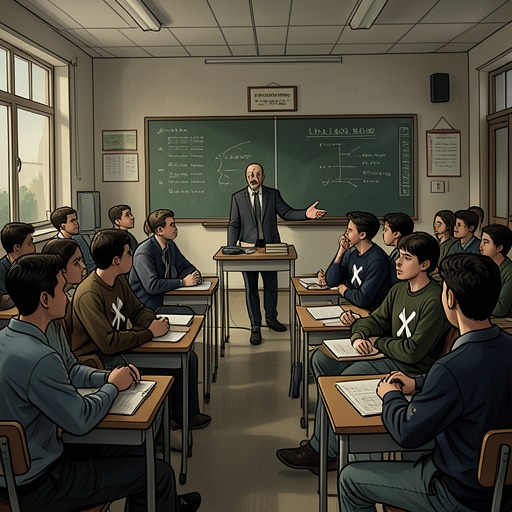
The rise of Adolf Hitler overturns the security Hans had taken for granted. In a letter to Hans, Konradin von Hohenfels presents Hitler as the figure who will determine Germany’s future and says he believes Hitler can rescue the country. He accepts that the emerging Germany will have no place for Hans for a time, while imagining that Hans might later return. The letter makes the political division between the boys explicit: Hans’s departure is not a rejection of a country he never loved, but the consequence of a future in which his Jewish identity is made incompatible with belonging.
The threat becomes concrete outside Hans’s father’s medical surgery, where a Nazi places a notice warning Germans to avoid Jews. Hans’s father responds by putting on his officer’s uniform and decorations, including the Iron Cross, First Class, and standing beside the Nazi. A crowd gathers; its initial silence gives way to muttering and then hostile jeers directed at the Nazi, who leaves and is not replaced. The scene briefly places the father’s service and public dignity against the attempt to mark him as an outsider. It does not restore the family’s safety: a few days later, while Hans’s mother is asleep, his father turns on the gas, and both parents die.
Exile and the Afterlife of Germany
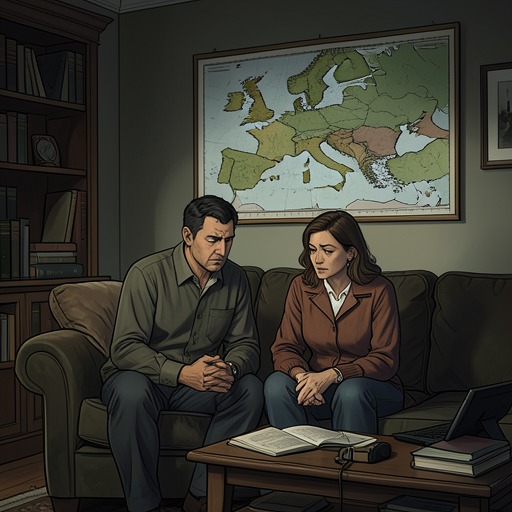
Hans survives by leaving Germany for America. The departure preserves his life but breaks the future he had imagined in the country he called home. The larger account describes Germany as devastated, its honour in shreds, while Hans’s family history gives that national catastrophe an intimate measure: the country that had seemed continuous and secure has become the place where his parents are lost and his own belonging is forcibly severed.
The rupture continues in Hans’s later relation to German culture and to Germans. After his parents’ deaths, he avoids meeting Germans where possible and does not open a German book, not even one by Hölderlin; he says he has tried to forget. When he encounters Germans who had been imprisoned for opposing Hitler, he verifies their past before accepting them, aware that a stranger might have participated in the murder of people he loved. Even with proven opponents of Hitler, he pretends that speaking German is difficult for him. Germany remains present in the language and literature he refuses, as well as in the memory of the home from which he was driven.