Memory, Trauma, and Forgetting
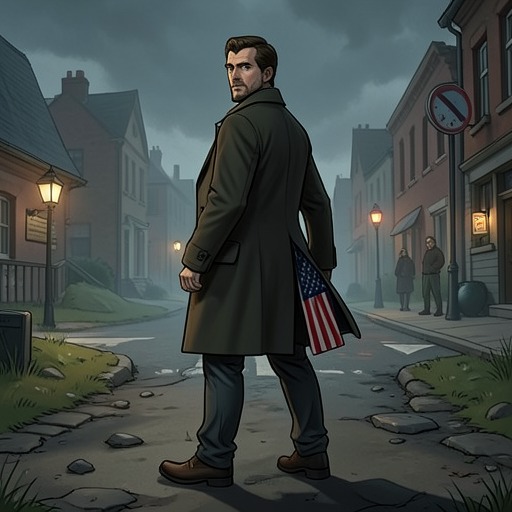
ReunionMemory, Trauma, and Forgetting is the struggle between Hans Schwarz’s deliberate retreat from his German past and the memories that continue to shape his life. The past arrives first as a recollection of meeting Konradin von Hohenfels, then as an unhealed wound associated with his parents’ deaths and Germany, and finally as a school memorial list that compels Hans to confront the fate of his closest friend. The ending makes memory both an injury and a form of knowledge: Hans has tried to forget, but the name he avoids is the one he must ultimately read.
Memory as a Continuing Presence
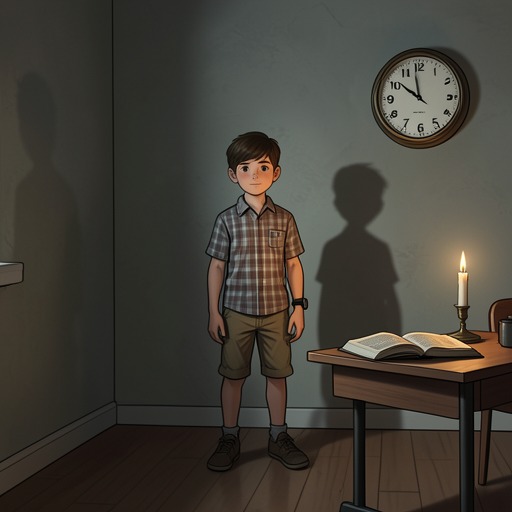
Hans places the beginning of his relationship with Konradin in February 1932, when he was sixteen and attending the Karl Alexander Gymnasium in Stuttgart. He remembers the day and hour of their first meeting, calling Konradin the source of his greatest happiness and greatest despair. The precision of that recollection contrasts with his description of the years that followed: more than a quarter-century and over nine thousand days, much of them experienced as empty or without hope. Memory does not simply preserve the past intact; the remembered encounter remains sharply available against a long stretch of time that Hans otherwise describes as drained of meaning.
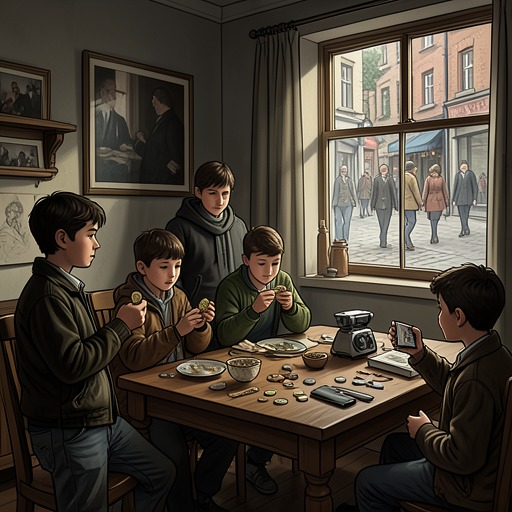
That contrast makes the school more than a setting. Hans identifies it as a famous institution founded in 1521, but the emotional force of his recollection lies in the remembered classroom and the schoolmates who would later die in the Second World War. The scene links a personal beginning—the moment Konradin entered Hans’s life—to a history whose losses were still to come. In retrospect, the meeting carries knowledge that the boy Hans could not yet have possessed: friendship would become inseparable from grief, and the people remembered as classmates would be divided by war and death.
Family Loss and the Refusal of Germany
The deepest break in Hans’s relation to Germany is bound to his parents. A Nazi was stationed outside his father’s medical practice with an antisemitic notice. Hans’s father, a veteran of the First World War, put on his officer’s uniform and decorations, including the Iron Cross, First Class, and stood beside the man displaying it. A crowd gathered; its hostility turned against the Nazi, who eventually left and was not replaced. The episode gives Hans a memory of his father’s public defiance, but it does not provide a rescue or reconciliation: a few days later, while Hans’s mother slept, his father turned on the gas, and both parents died.
Afterward, Hans says he avoided meeting Germans where possible and did not open a German book, not even one by Hölderlin. He describes his effort as an attempt to forget, but also acknowledges that the wound has not healed. The language itself remains available to him; he can still speak German, though he dislikes using it and presents difficulty as a protective façade when speaking to Germans. He makes exceptions for men imprisoned for resisting Adolf Hitler, checking their histories before trusting them. Even then, their own sense of guilt and his effort to conceal how readily he can speak German show that contact does not dissolve his guardedness. Germany is not merely a place he has left; reminders of it reopen a history he is trying to keep at a distance.
Recollection Interrupted by the Present
A meeting with a man from Württemberg brings the distance between exile and memory into focus. Hans asks what happened to Stuttgart and learns that three-quarters of the city was destroyed. He then asks about the Karl Alexander Gymnasium. In the exchange that follows, Hans laughs, but cannot explain the laughter even to himself. When the other man insists there is no joke, Hans repeats that there is not one. His response remains opaque rather than offering a release: the past has surfaced, but he cannot make it intelligible to someone who does not share its private weight.
The school’s later appeal gives that buried connection a concrete form. It arrives unexpectedly with a small book of names and asks Hans to contribute to a war memorial for former pupils killed in the Second World War. He initially wants to discard it, rejecting the dead as people to whom he has no connection and insisting that he had cut seventeen years out of his life. Yet the appeal identifies him as someone who had once belonged to the school community. His first response asserts separation; the names make that separation difficult to sustain.
The Names and the Delay of Recognition
Hans reads the appeal and learns that four hundred boys had been killed or were missing. He proceeds through the names in alphabetical order while deliberately avoiding H. Several entries revive different degrees of recollection: Fritz Adalbert’s name belongs to a former classmate he can scarcely remember; Karl Behrens is also familiar only as a name; Kurt Frank recalls a boy he liked and pities; Hugo Muller returns as a dim and indistinct image. The list does not restore every dead boy equally. It makes visible the gap between a person’s past life and the fragment that survives in another person’s memory.
The names Bollacher and Schulz provoke a different response. Hans remembers them clearly because they had composed an antisemitic poem directed at him; he judges them deserving of death, while his qualification of that judgment keeps its moral unease in view. He then completes the list without reading names under H and discovers that twenty-six of the forty-six boys in his class died for das 1000-jährige Reich. The count transforms individual entries into a collective record of loss, but it does not settle Hans’s personal question. After putting down the list, he waits, works, makes phone calls, and dictates letters, yet cannot leave it alone or make himself look up the name that haunts him.
The Unopened Letter H
At first Hans considers destroying the book. He asks himself whether knowing would matter, since he believes he will never see Konradin again whether his friend is alive or dead. But the possibility that the door might open and Konradin might walk in remains present to him. Hans is listening for a footstep even as he tries to decide that the answer is irrelevant. The delay turns the act of reading into the scene’s central conflict: the list is at once an official record, a reminder of the past he rejected, and the possible end of uncertainty about his friend.
Hans takes hold of the book and nearly tears it up, then stops. Trembling, he opens it at H and reads that Konradin von Hohenfels was implicated in the plot to kill Adolf Hitler and executed. The revelation joins the school memorial to Hans’s private history: the absent friend is not simply another name among the dead, and the list discloses both the manner of his death and his opposition to Hitler. The ending does not claim that memory heals Hans or restores what exile and death have taken. Instead, it shows the limit of deliberate forgetting. After decades of avoidance, the name is finally read, and the history Hans tried to cut out of his life returns with the force of an answer.