The Miller's Daughter Marries the King
RumplestiltskinThe Miller’s Daughter Marries the King is the turning point that lifts the miller’s daughter from her father’s household into queenship, while carrying forward the danger created by the third spinning bargain. The king rewards the gold he demanded by marrying her, but that reward cannot erase the promise she made to the dwarf: the first child she has as queen.
From the Miller’s Household to the King’s Chamber
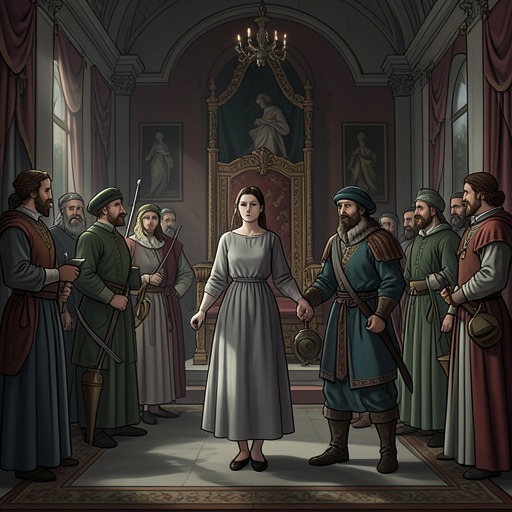
The miller’s daughter begins as the beautiful, clever child of a miller whose house stands beside his mill. Her father’s pride becomes the cause of her peril when he boasts to the king that she can spin gold from straw. The king, already eager for wealth, summons her and locks her in a palace chamber with a spinning wheel and a heap of straw, demanding that the work be finished by morning on pain of death.
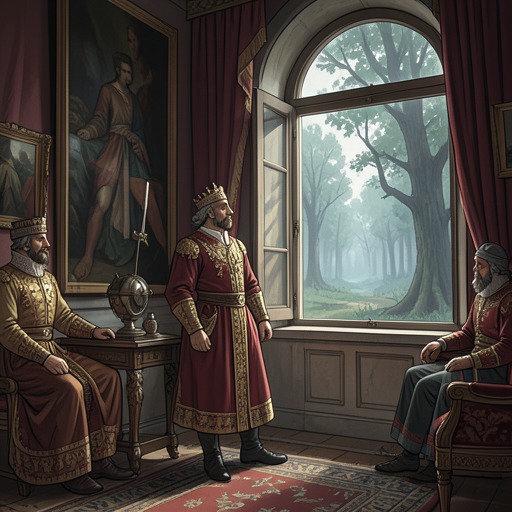
Unable to fulfil the claim her father made, she accepts the little man’s help in exchange for her necklace. After the king sees the gold, his greed rises rather than abates: he shuts her away again with another task. She gives the helper her ring in return for a second night’s work. The king then brings her to a still larger heap, promising that if she spins it all that night, she will become his queen.
The Third Task and the Marriage
By the third task, the miller’s daughter has no possession left to offer. The dwarf names a more consequential price: the first little child she may have when she is queen. She agrees because she sees no other way to complete the king’s demand, though she thinks the promised event may never come. The wheel turns to the familiar song, and the dwarf again transforms the straw into gold.
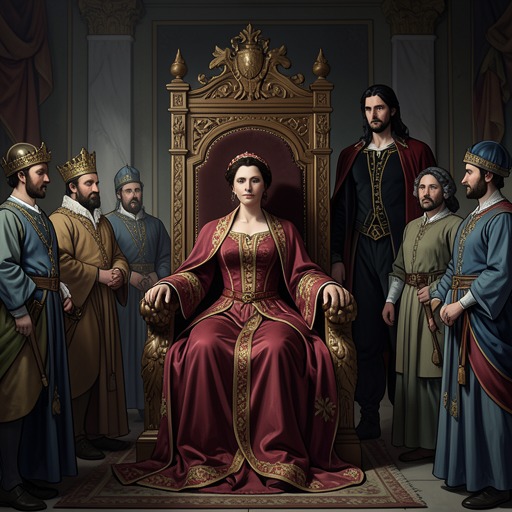
In the morning, the king finds the gold he wanted and keeps his word. He marries the miller’s daughter, and she becomes queen. The sequence makes the marriage both an ascent in rank and the immediate condition that gives the dwarf’s bargain its force: the king’s reward places her in the position specified by the promise.
Queenship and the Unsettled Promise
At the birth of her first child, the queen is glad and has forgotten the dwarf and what she agreed to. The marriage has thus brought her the royal status promised by the king, but it has not settled the cost of her earlier rescue. One day, while she sits playing with her baby, the dwarf enters her room and reminds her of the bargain.
She grieves and offers him all the wealth of the kingdom if he will release her from it, but he refuses. Her tears eventually soften him, and he grants her three days to discover his name; if she succeeds, she may keep her child. The wedding’s apparent happy resolution therefore opens into a new contest, in which the queen must defend her child against the consequence of the bargain that made her queenship possible.
Significance of the Marriage
The marriage joins two sharply different forms of exchange. The king’s demands turn straw into royal wealth and culminate in his promise of a crown through marriage; the dwarf’s help first costs the queen’s necklace and ring, then reaches beyond property to claim her future child. Gold brings the king’s satisfaction and the miller’s daughter’s elevation, but it does not free her from the price of producing it.
The change in status also changes the stakes without changing the original vulnerability. As a miller’s daughter, she is confined by the king’s command and dependent on the dwarf’s labor; as queen, she has a child to protect, yet her former promise still binds her. The marriage is consequently not a final release from danger but the hinge between the repeated spinning trials and the queen’s struggle to keep her firstborn.