The Third Spinning Test
RumplestiltskinThe Third Spinning Test turns the miller’s daughter’s magical rescue into a perilous exchange: the King offers her queenship for another night’s work, and the dwarf demands her future first child when she has no possession left to give. His spinning wins her the throne, but the promise outlasts the gold and becomes a claim on her baby; only a reprieve and the discovery of the dwarf’s name finally break its hold.
Background and Escalating Demand
The test follows two earlier nights in which the miller’s daughter, trapped by the King’s demand to spin straw into gold, has relied on the dwarf’s help. For that labor she gave him her necklace and then her ring. Each success strengthens the King’s appetite: after seeing the second heap transformed, he is still unsatisfied, takes her to a yet larger heap, and makes the work due that very night.
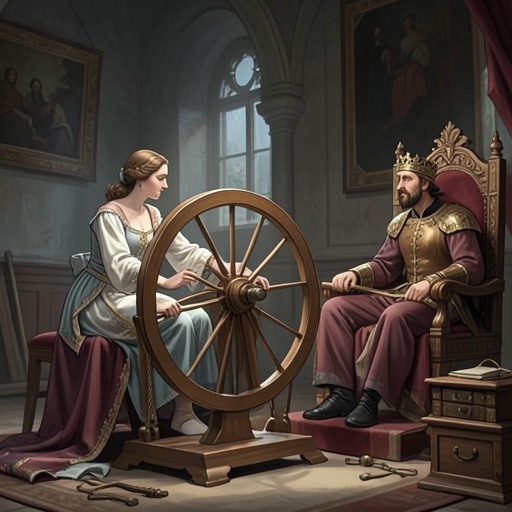
The King attaches a new reward to this final task. If the miller’s daughter succeeds, she shall be his queen. The offer converts an already coercive test into a route from the miller’s household to royal status, but its terms are set by a ruler who has repeatedly confined her and demanded work under threat. The promise of elevation does not give her control over the test or its danger.
The Child as Payment
When the dwarf appears, the miller’s daughter says that she has nothing left to offer. The earlier bargains had cost her ornaments; this time the dwarf names a different price: the first little child she may have when she is queen. She agrees because she knows no other way to complete the task, while thinking that such a child may never exist. Her assent secures immediate help, but the payment is deferred until a future the bargain itself makes possible.
The exchange thus changes the stakes of the spinning. The straw becomes gold, and the gold satisfies the King, but the dwarf’s promised return is not another object or service: it is the queen’s first child. The tale places the rapid, visible conversion of straw into royal wealth beside a promise whose cost cannot be settled on the night it is made.
Gold, Marriage, and Deferred Consequence
The dwarf spins the larger heap into gold to the same song as before. In the morning, the King finds everything he wanted and is forced to keep his word: he marries the miller’s daughter, who becomes queen. The third test therefore succeeds on its immediate terms, fulfilling the King’s offer while making the child clause newly consequential. The queen’s rise and the dwarf’s claim originate in the same success.
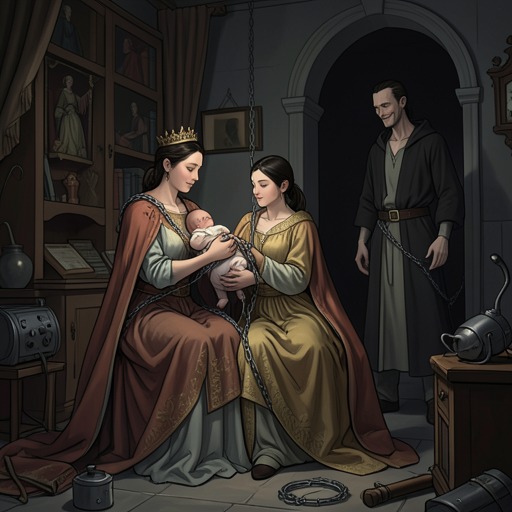
At the birth of her first child, the queen is glad and has forgotten the dwarf and what she promised. The delay separates the bargain from the spinning scene, but does not cancel it. One day, while she is sitting with her baby, the dwarf enters and reminds her of the agreement. A night’s work for gold has become a demand made in the child’s presence.
Reprieve and Narrative Significance
The queen grieves and offers the dwarf all the wealth of the kingdom if he will release her child; he refuses. Her riches, secured by the spinning that made her queen, cannot buy her out of the claim. At last her tears soften him, and he grants her three days to discover his name. The original bargain is not simply erased: its outcome is made conditional on solving a naming challenge within that period.
The test’s structure rests on two sharply different kinds of value. The King measures the straw by the gold it can yield, while the dwarf’s price moves from the queen’s necklace and ring to a child she has not yet had. The promise makes the final spinning more than a repetition of the earlier trials: it gains the queen her rank and plants the danger that later threatens her family. The naming condition carries that danger into the next stage of the story, where information, rather than another payment, offers her a way to keep her child.