The Queen's Bargain for Her Child
RumplestiltskinThe Queen’s Bargain for Her Child is the escalating exchange at the heart of the miller’s daughter’s rise to queenship: a promise made to secure magical help later becomes a threat to her firstborn, and a three-day name challenge gives her a way to keep the child. The sequence links the king’s appetite for gold, the dwarf’s demands, and the queen’s resourcefulness, while making clear that the bargain is neither freely chosen nor easily escaped.
From Royal Demand to Repeated Exchanges
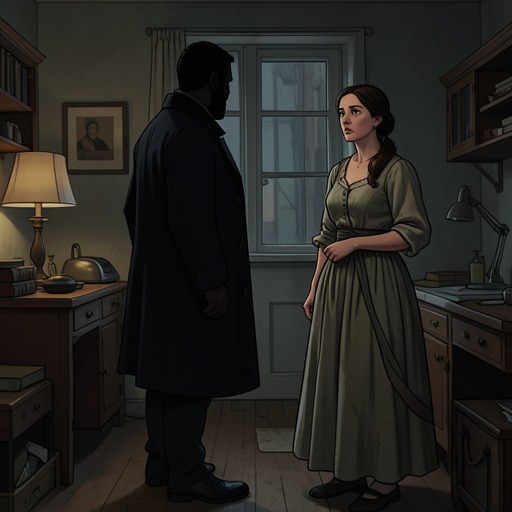
The crisis begins with the miller’s boast that his clever, beautiful daughter can spin gold from straw. The king, already fond of money, tests that claim by locking her in a palace chamber with a heap of straw and a spinning wheel, ordering her to finish by morning on pain of death. She denies that she can perform the feat, but the locked door leaves her without a way out. When a little man offers to do the work, she gives him her necklace in return; his wheel turns, and the straw becomes gold.
The result does not end the king’s demands. Astonished and pleased by the gold, he becomes more eager for gain and confines her again with a fresh task. The miller’s daughter trades her ring for the dwarf’s help a second time. After the king sees the next glittering heap, he takes her to a still larger one and raises the stakes once more: if she spins it that night, she will become his queen. Each successful transformation benefits the king, while the cost of obtaining it falls on the daughter.
The First Child as the Price
By the third task the daughter has no necklace or ring left to offer. The dwarf names a different payment: she must give him the first child she has when she is queen. She agrees because she knows no other way to get the work done, telling herself that the eventual circumstance may never arise. The promise is thus made under immediate pressure and on uncertain terms, in exchange for completing the king’s demand—not as a considered gift freely separated from the danger surrounding her.
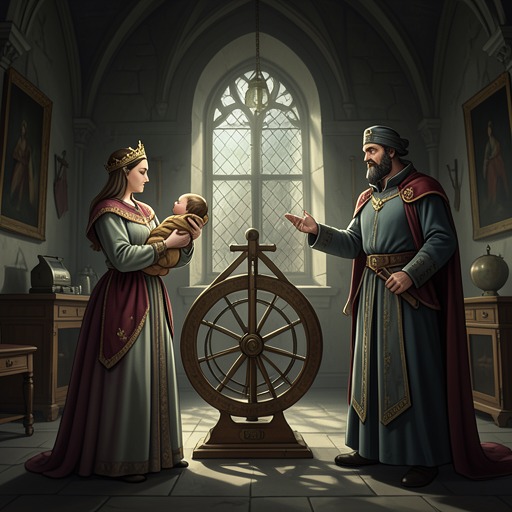
The dwarf spins the third heap into gold, and the king, finding that she has fulfilled his condition, keeps his word and marries her. She becomes queen, but the reward also brings the promised condition within reach. At the birth of her first child she is delighted and forgets the dwarf and her agreement; the obligation returns only when he comes into her room as she sits playing with the baby and reminds her of it. The domestic moment turns the old bargain into a present claim on the child.
The Reprieve and the Name Challenge
Grieving over the threat, the queen offers the dwarf all the wealth of the kingdom if he will release her from the promise. He refuses that offer. Only when her tears soften him does he alter the immediate terms: she has three days to tell him his name, and if she succeeds she may keep her child. The reprieve does not erase the original bargain; it makes the child’s safety depend on a new condition and gives the queen a limited interval in which to meet it.
The queen spends the first night recalling unusual names and sends messengers throughout the land to find more. On the first day she tries familiar possibilities, including Timothy, Ichabod, Benjamin, and Jeremiah, but the dwarf rejects each one. On the second day she tests comic names such as Bandy-legs, Hunchback, and Crook-shanks, without success. The sequence makes the challenge a contest of knowledge: neither wealth nor pleading has changed the dwarf’s claim, but finding the one name he keeps from her can satisfy the condition he himself has set.
The Name Discovered and the Claim Defeated
On the third day a messenger reports a discovery made while climbing a high hill among the forest trees. Near a small hut, a dwarf had been dancing on one leg beside a fire and singing about the feast he would make, ending with the words that his name was Rumpelstiltskin. The report supplies what the queen’s own guesses could not: not another name to try at random, but the particular name the dwarf had disclosed in private.
When the dwarf returns to claim the child, the queen arranges the encounter before her court, seated on her throne while the nurse stands beside her with the baby in her arms. The dwarf chuckles at the prospect of taking the child home to his hut in the woods and asks the queen for his name. She first offers John and Tom, then Jemmy; after he rejects them, she names Rumpelstiltskin. He cries that a witch must have told her and, in a rage, stamps his right foot so deeply into the floor that he must grasp it with both hands to pull it free. He makes his way off without the child. The nurse laughs, the baby crows, and the court jeers at the defeated visitor. The agreement’s threat is ended not by a counterpayment, but by meeting the condition of the reprieve with knowledge of the name he had revealed.