The Search for the Dwarf's Name
RumplestiltskinThe Search for the Dwarf's Name is the queen’s attempt to discover the name of the supernatural helper who has come to collect her first child. It transforms the tale’s escalating bargains into a contest of information: with the child at stake, the queen must turn a chance report from a messenger into the knowledge that releases her from the dwarf’s claim.
The Stakes of the Search
The crisis begins with a promise made when the queen was still the miller’s daughter. The King had locked her in a chamber at his palace and ordered her to spin a heap of straw into gold by morning, under threat to her life. Unable to do the impossible task, she accepted the dwarf’s help in exchange for her necklace; when the King demanded more gold, she surrendered her ring for a second night’s work. For the final, larger heap, she had nothing left to offer, so she agreed that the dwarf could have the first child she might bear as queen.
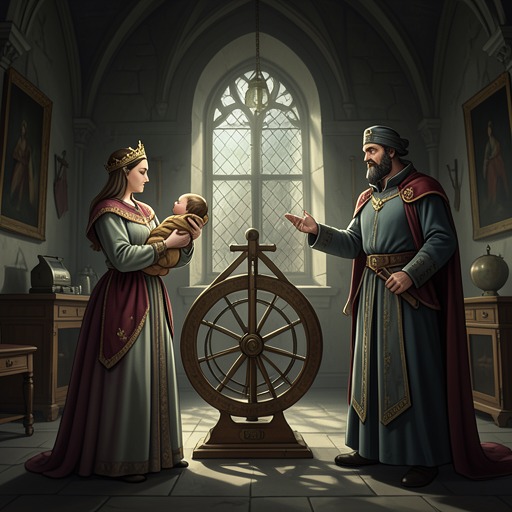
The dwarf’s spinning had fulfilled each immediate demand, but the payments had changed in kind and scale: jewelry first, then the future child. After the King kept his promise to marry the miller’s daughter, she became queen and gave birth to a baby. She was glad and had forgotten the bargain when the dwarf appeared in her room as she played with the child, reminding her of what she had agreed to give. The name search therefore answers a particular threat, not a general riddle: the queen needs a way to keep the child without paying the debt on which her rise to queenship was founded.
The Three Days and the Failed Guesses
The queen grieves and offers the dwarf all the wealth of the kingdom if he will release her from the promise. He refuses that offer at first, but her tears soften him enough to grant three days’ grace. His condition is precise: if she tells him his name before the time runs out, she may keep her child. The search is thus bounded by a deadline and a rule, and success depends not on bargaining for a new payment but on identifying the one fact the dwarf has withheld.
She lies awake through the night thinking of every odd name she has heard and sends messengers across the land to find more. On the first day she tests names including Timothy, Ichabod, Benjamin, and Jeremiah. The dwarf rejects each one with the same answer: none is his name. On the second day she tries comic descriptions such as Bandy-legs, Hunchback, and Crook-shanks, but these also fail. The successive lists show the limits of guessing from familiar names or from the dwarf’s appearance; even a large store of possibilities gives the queen no reliable route to the answer.
The Messenger’s Discovery
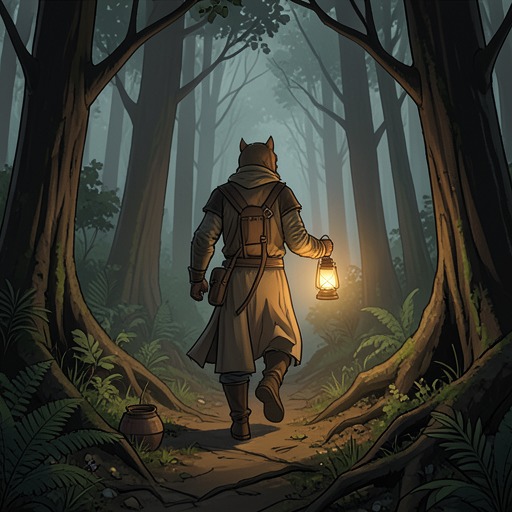
The decisive information comes from a messenger returning on the third day. He reports that he has travelled for two days without hearing any other names. The previous day, while climbing a high hill among the trees of the forest, he came upon a little hut. A fire burned outside it, and around the fire a dwarf danced on one leg, singing about the feast he would make, the brewing and baking he would do, and the stranger he expected to bring the following day.
The song gives the search what the earlier lists could not: not another name to try at random, but the dwarf’s own declaration of what he expects and who he is. Its final line identifies him as Rumpelstiltskin. The messenger’s report also links the private threat against the queen’s baby to the dwarf’s plans at his hut in the woods. Until this discovery, she knows that he intends to claim the child; now she has evidence of the identity he assumes no one will learn.
Recognition and Release
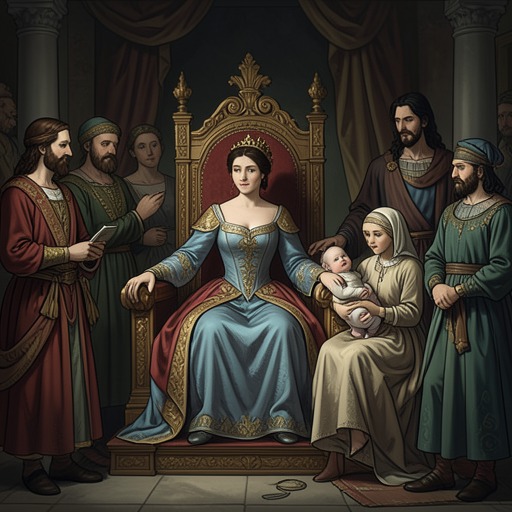
Armed with the information, the queen stages the final encounter before her court. She sits on her throne and calls the courtiers to witness the exchange; the nurse stands beside her holding the baby, as though the child is ready to be surrendered. The arrangement places the threatened child in view while the queen controls the public guessing scene. The dwarf, meanwhile, chuckles at the prospect of taking the baby home to his hut in the woods and asks the queen for his name.
She first offers John, then Tom, then Jemmy. Each false guess allows the dwarf to maintain the appearance that the secret is still his. When she finally asks whether his name is Rumpelstiltskin, he cries that a witch must have told her. His reaction confirms that the messenger’s song has disclosed the answer: the queen has not merely guessed correctly but pierced the secrecy on which his claim depended. In rage he stamps his right foot so deeply into the floor that he has to seize it with both hands to pull it free.
The dwarf then makes the best of his way off. The nurse laughs, the baby crows, and the court jeers at him for taking so much trouble for nothing, sending him away with a mocking good-morning and a merry-feast wish. The child remains with the queen, while the dwarf’s expected feast and journey with a stranger come to nothing. The search ends not in a new bargain but in the collapse of the old one: knowledge of the hidden name reverses the power created by the queen’s desperate promise.
Narrative Function
The episode is arranged as a progression from an imposed deadline to exhausted guesses, then from a messenger’s observation to public recognition. Its three-day structure gives the queen repeated opportunities to fail, while the messenger’s journey supplies the crucial change in her prospects at the last moment. The names on the first two days are plentiful but ineffective; the third day’s brief report matters because it comes from a specific place and scene and preserves the dwarf’s own words in a song.
That song also answers the earlier spinning refrain. The dwarf’s repeated work songs accompanied the conversion of straw into gold, making his help seem dependable while the queen’s obligations accumulated. The later rhyme does not perform magic: it exposes the secret that makes his claim seem unavoidable. In this compressed folktale sequence, the helper who once controlled the wheel and the terms of payment becomes vulnerable when someone else carries his name out of the forest. The queen’s victory depends on hearing and using that information before the three days expire.