Camée Castor (camée du Fondateur)
SatanCamée Castor (camée du Fondateur) is the scarred onyx cameo at the center of a historical and family mystery: a jewel examined in the D’Anjou family, connected by archival clues to an infant found in Missouri, and pursued across continents as a supposedly lost half of an aristocratic pair. Its history is never securely settled. Images, descriptions, and apparent recoveries multiply, but the possibility of counterfeits keeps the object’s identity—and even the location of the genuine stone—in doubt.
Appearance and Identification
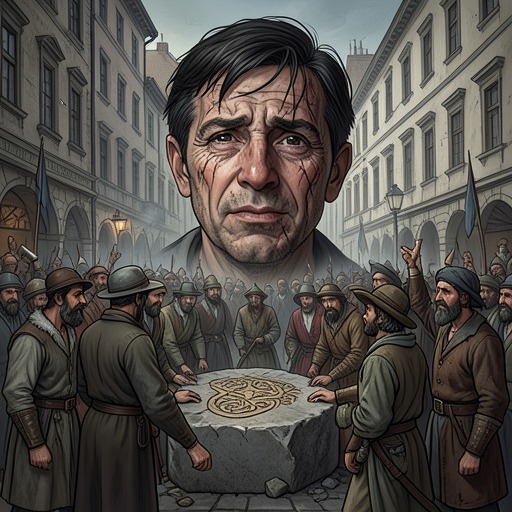
The cameo’s damaged surface obstructs the first attempts to identify its engraved figure. A scratch prevents a clear reading of the image, leaving open whether it represents a mythological figure or a real person. Under a magnifying glass, however, details survive: traces of mythological attributes, the outline of clothing, and the overall style provide clues to the subject and period. The damage is not incidental to the investigation; it is the reason a seemingly visible image remains uncertain.
Régis D’Anjou studies the stone as a lapidary object, consulting European specialists while presenting himself as an enthusiast of gems and engraved stones and withholding its family connection. Their assessments convince him that it is Italian in workmanship and dates at least to the eighteenth century, perhaps the seventeenth. He concludes that the figure is one of the mythological twins Castor and Pollux and infers that the jewel must once have had a counterpart.
A later exhibition in Paris gives this inference a striking visual confirmation. Among photographs of missing cameos and an old engraving, Régis recognizes an image resembling the family stone beside a representation of the Founder’s cameo without its scratch. Displayed together, the pair shows the Dioscuri standing opposite one another, each holding a horse by its bridle and a spear, and wearing an egg-shaped cap topped with a star. The exhibition record describes the stones as five-layer onyx, with a dark upper layer. It also states that the pair had belonged to the collection of the Duke of Orléans, later the Regent, before the Revolution separated them. One remained in a private French aristocratic collection; the Castor cameo disappeared under circumstances attributed, tentatively, to Revolutionary upheaval.
Historical Provenance and the Founder
Régis’s inquiry begins with questions the family cannot answer: whether the stone came directly from its original owner, passed through several hands, was sold or stolen, and how it reached America. In the 1960s, he consults an obscure eighteenth-century catalogue at the National Library of France. It records a pair of Castor and Pollux cameos in the Duke of Orléans’s collection but does not establish what happened to them afterward. The royal inventory compiled after the arrest and execution of Louis XVI does not list the jewels. Régis considers whether the king’s brothers carried them out of France or whether they passed to another prince or émigré family in Germany or England, but these remain possibilities rather than documented stages in the stone’s journey.
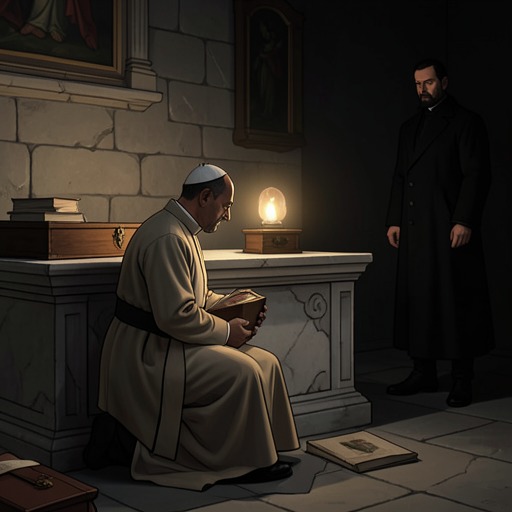
A separate clue places a cameo in the Founder’s story much earlier than Régis can explain. In a journal entry dated June 11, 1999, he records finding a damaged manuscript account of a living infant discovered near Saint Louis in 1842, held by a young woman who had frozen to death beneath the snow. A silk purse containing a finely made cameo was pinned to the baby’s swaddling clothes. The account offers evidence linking the Founder to a cameo from birth; a copy of the Founder’s baptismal record, discovered in his safe, had already established his American origin in Florissant, near Saint Louis. Régis had searched Jesuit archives for further information about the priest who signed the record, first without success in Montreal and later through renewed archival research. The manuscript makes the stone a material clue to the Founder’s beginnings, though the surviving evidence does not by itself prove every stage of its later provenance.
From the Family Stone to Cuba
The cameo’s modern history is marked by repeated movement and disputed identification. After the events at the World Trade Center, Isabelle tells Loïc that the family cameo has been found in New York and sent to Quebec intact, apparently having survived explosions, fire, and the collapse of the towers. The news seems to restore the family’s object, but it soon becomes one of several competing claims rather than a conclusive resolution.
In Cuba, Rodrigo Lerbier tells Loïc of a cameo that reached him after Ramondo Cardoso, an emigrant who had returned clandestinely to Cuba, died by a strange combustion. Cardoso had worked as a secondhand dealer in Kansas City for about twenty years, which provides a possible explanation for his possession of the stone; Rodrigo cannot explain how it had travelled from Ground Zero to Cardoso. At Cardoso’s burned home, Rodrigo sees the cameo on the floor and cries out when he touches it: the stone is burning hot. Its physical heat links the jewel to the scene of Cardoso’s death and gives it an alarming presence beyond its value as an antiquity.
Rodrigo believes the stone concentrates ashé, supernatural spiritual energy, and imagines that it might be used to increase the power of Santería if kept in a sacred place. His divination, however, turns the prospect into a warning. In a vision, Chango identifies the stone with evil and describes its power as capable either of transforming reality or destroying someone who cannot control it. The warning makes the cameo not merely an object sought by collectors, but a dangerous force within the novel’s supernatural strand.
Rodrigo keeps the stone in a Yoruba shrine, first in Havana and later in a separate room at his residence and workshop in Cárdenas, where he makes tourist jewelry from shells and small stones. He confines the cameo in a high, gold-colored monstrance and treats it as a source of peril. When it glows like an ember and gives off smoke, his fear breaks through his religious roles: though a Yoruba priest, he instinctively makes the sign of the cross. Soon afterward, the shrine is broken into. The cameo, temporarily hung on the wall as it had been in Havana, is gone; nothing else has been stolen or damaged. Rodrigo tells Loïc that it has disappeared again.
Copies, Claims, and the Unresolved Original
Rodrigo offers Loïc a small, blurry photograph. Its subject resembles the Founder’s cameo closely enough to unsettle him, but not clearly enough to establish identity. Loïc asks for better photographs and admits to Laurence that he is not entirely sure the pictured stone is genuine. The possibility of a counterfeit remains open until the object itself can be examined. Their conversation also leaves the direction of the apparent connection unsettled: Loïc wonders whether his passage near the shrine stirred the cameo, whether its burning triggered his own altered state, or whether energy moved both ways.
The uncertainty deepens when Charles de Castelmont examines a sharp photograph of the cameo he received from New York in 2003. By enlarging the old scratch, he sees that it is recent and apparently imitated. He concludes that the D’Anjous received the same counterfeit he did, and that the New York authorities sent out two false stones in response to rival claims. In an earlier act of self-congratulation, Charles had arranged to claim the recovered jewel in his own name, presenting an agent’s credentials and a photograph of the matching Pollux cameo retained by his family. He did not know that John Robbart had arranged for two counterfeits to be made and that officials had sent them to the French and Quebec claimants.
That revelation returns the provenance question to its beginning. The stone sent to Charles and the one sent to the D’Anjous cannot authenticate one another, and a photograph of a scratch can itself reproduce evidence of age without proving that the underlying object is old. The cameo’s apparent survival of the World Trade Center collapse therefore does not establish that either returned stone was genuine. Nor does Rodrigo’s photograph settle whether the Cuban object was the lost Castor, a copy, or another stone in the chain of substitutions. The unresolved distinction between original and imitation is the object’s defining narrative function: the cameo promises to make family history visible, yet every new image or recovery creates another gap between likeness, ownership, and proof.