Pollux Cameo from the Castor and Pollux Pair
SatanThe Pollux Cameo from the Castor and Pollux Pair is the surviving counterpart to the missing Castor cameo that Régis D’Anjou connected with Le Fondateur. Identified through a Paris exhibition and an eighteenth-century catalogue, it gave the family stone a documented European history—but did not settle whether the stone associated with Le Fondateur was authentic, or how it had crossed the Atlantic. The two cameos thus become both a material pair and the center of a continuing dispute over provenance, identity, and substitution.
Identification and Physical Description
Régis D’Anjou’s investigation began with a practical obstacle: an old scratch on the family stone obscured the engraved figure. Under a magnifying glass, details of mythological attributes, clothing, and style offered clues, but not a certain identification. He studied lapidary work systematically and consulted European experts, presenting himself as a gem and engraving enthusiast without disclosing the family connection. Those inquiries led him to date the stone to at least the eighteenth century, perhaps the seventeenth, and to judge it Italian in workmanship. He came to suspect that its figure was one of the mythological twins Castor and Pollux, and reasoned that the cameo must once have had a companion.
The exhibition in Paris supplied the identifying comparison. Its information card described the pair as five-layer onyx with a dark upper layer. Viewed together, the cameos showed the Dioscuri standing opposite one another: each held a horse by the bridle and carried a spear, and each wore an oval cap topped by a star. The matching composition made the stones legible as a pair, rather than merely as two separately attributed antiques. The card also stated that the pair had belonged to the Regent’s collection before the French Revolution and had later been separated.
The Pair and Its Dispersal
Régis D’Anjou had already encountered a brief reference to the Castor and Pollux pair in an obscure eighteenth-century catalogue consulted at the Bibliothèque nationale de France. The entry placed the cameos in the collection of the Duke of Orléans, later the Regent, but did not trace their subsequent ownership. He considered whether the stones might have passed into the royal collection after the Regent’s death, but the inventory of royal property made during the Revolution did not mention them. He also wondered whether members of the royal family who fled France might have taken them abroad, or whether the cameos had been given or entrusted to another family among the émigrés.
The Paris exhibition narrowed the uncertainty without resolving the whole chain of custody. According to its account, the pair was separated after the Revolution: one cameo entered the private collection of an unnamed family of the old French aristocracy, while the Castor cameo disappeared in circumstances the organizers could not establish. They presumed it had been lost amid revolutionary upheaval. Since the missing member was identified as Castor, the other cameo in the pair was Pollux. Its survival established that at least one stone remained traceable through a private collection; the unnamed owner and the missing stone’s route remained gaps in the record.
Régis D’Anjou’s Discovery
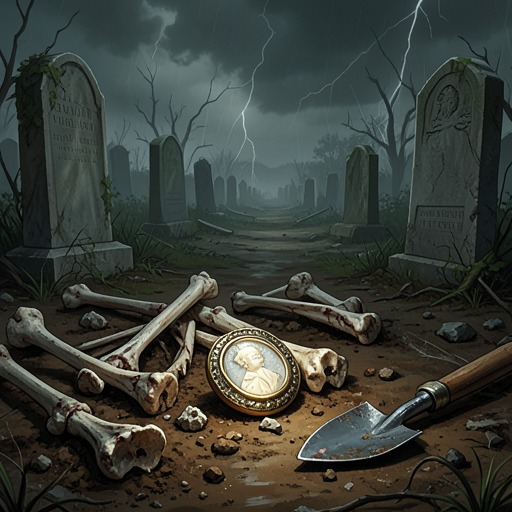
Régis D’Anjou had pursued the question for decades, beginning his research in the 1940s and consulting written sources and specialists during travels in Europe. At the Paris exhibition, photographs of cameos lost from aristocratic collections caught his attention. One image resembled the stone he knew from Canada; beside it was an old engraving of the cameo said to have disappeared, which he recognized as Le camée du Fondateur, shown without its scratch. Seeing the images together brought back his earlier examination of the stone, freshly exhumed from an ancestor’s grave.
He concealed the strength of his reaction from his French companion, saying only that the image recalled the Canadian cameo and that he had wondered whether its figure might be one of the mythological twins. His companion, Victor Bourdieu, immediately saw the possible importance: if the family stone were the missing member, its appearance in North America might be explained by some route through England. Bourdieu urged him to alert the exhibition’s organizers. The encounter gave Régis D’Anjou a firm identification for the pair and a powerful lead for his family research, but the exhibition’s labels did not prove that the damaged Canadian stone was the original Castor.
Provenance, Substitution, and Unresolved Identity
The family’s connection to a cameo was older than Régis D’Anjou’s research. Le Fondateur had told Marthe that he kept a valuable stone in his safe, that it troubled him because it came from the United States, his country of origin, and that he feared it as a malignant object. He had hidden it in his scapular, sewn into his clothing, and wanted to be buried with it. Later records connected the founder’s American beginnings with a baby found alive near St. Louis, Missouri, in 1842, with a cameo in a silk purse pinned to the child’s swaddling clothes. The account of that discovery supports the family’s association between the founder and a cameo from infancy, but it does not by itself establish that the object was the surviving Pollux stone—or authenticate the family stone as the missing Castor.
That distinction became crucial after a cameo was reported at Ground Zero. The FBI learned of two claims, one from France and one from Canada, supported by similar photographs; both named people initially treated as possible September 11 victims, although neither appeared on the lists of the dead or missing. The competing claims intensified the confusion around the missing stone, but did not establish a link to the Pollux Cameo. Later, Charles de C... examined a photograph of a cameo he had received from New York in 2003 and found that its familiar scratch appeared recent and imitated. He concluded that he and the D’Anjou family had received matching counterfeits. The revelation returned the question to its starting point: the Pollux Cameo remained the documented surviving counterpart, while the authenticity and present whereabouts of the original Castor associated with Le Fondateur were still uncertain.