Blackthorne’s war manual
ShōgunBlackthorne’s war manual is a developing record of military knowledge that Blackthorne teaches to Yabu’s officers, with the stated aim of improving the forces of Yabu and Toranaga. Its importance lies not only in the strategies it preserves but in the work that makes them portable: spoken instruction is interpreted, recorded, checked, and revised until it becomes a precise reference. Blackthorne sees that knowledge as both a weapon in Japan’s coming conflict and a possible safeguard against foreign conquest.
Commission and Purpose
The manual begins as a practical request from Yabu. Seeking to understand how battles are fought in Europe, he asks for detailed instruction in European strategy. Blackthorne agrees to explain what he knows and offers to train men as well as describe methods. Yabu’s interest is concrete: the knowledge is meant for military use, not detached study. If Blackthorne’s information proves useful, Yabu promises to raise his salary from the two hundred and forty koku granted by Toranaga to five hundred after a month.
This commission arrives amid preparations to make firearms more decisive in Japanese warfare. Yabu has secured five hundred European muskets, twenty cannon, and large quantities of ammunition, and imagines a selected body of five hundred trained samurai supporting twelve thousand conventional troops. He knows that the proposed force challenges the warrior code: guns have long been regarded as dishonorable beside sword combat, the practice associated with bushido. The war manual belongs to this same reconsideration of warfare. It supplies knowledge that could help turn weapons from isolated novelties into part of an organized military system, though the evidence does not specify that the manual itself contains a complete plan for Yabu’s projected regiment.
Making Military Knowledge into a Book
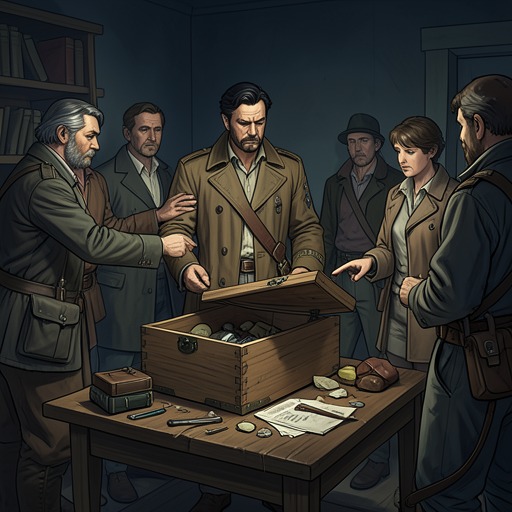
The manual takes shape through sustained teaching. Blackthorne is ordered to concentrate on training and instruction, even as he tries to keep learning himself so he can fulfill his promise to Yabu. He trains in the morning and spends afternoons, sometimes late into the night, discussing warfare with Yabu, Omi, Igurashi, Naga, Zukimoto, and other officers. The sessions cover how Europeans and Japanese fight, on land and at sea. Scribes take extensive notes rather than leaving the lessons to memory.
The written record develops through repeated checking. After twelve days and roughly a hundred hours of detailed explanation, the scribes read their notes back, revise them, and check them again. The manual is still described as forming, but Blackthorne regards its emerging contents as exact and lethal. Its authority therefore rests not on a single act of authorship: Blackthorne supplies instruction, Mariko translates for him and Yabu, and the scribes make the lessons into a text that can be reviewed. The process shows how expertise moves between languages and people before it can become an instrument of command.
Knowledge as a Strategic Resource
The manual’s method of preservation recalls Blackthorne’s earlier understanding of navigation. In his youth, his teacher Alban Caradoc taught him that sailors beyond familiar waters depended on rutters: compact books recording courses, depths, seabed, winds, currents, storms, safe harbors, and the means of reaching and leaving them. Such guides could make dangerous routes usable, but they were vulnerable to copying errors and deliberate misinformation, and their usefulness still depended on a pilot’s experience. Portugal and Spain guarded knowledge of overseas routes as national treasures while their Dutch and English rivals sought it.
That history gives the war manual a wider significance without making it the same kind of book as a rutter. Both embody practical knowledge that can alter who is able to act: information gathered through experience becomes more powerful when recorded and made available to others. Blackthorne has also demonstrated this way of thinking in his explanation of a Mercator map, drawing the world in sand so his listeners could understand its known coastlines and vast unexplored regions. Across navigation, geography, and warfare, knowledge is not merely description; it changes the limits within which people can plan.
Intended Effects and Moral Tension
Blackthorne’s lessons draw partly on Friar Domingo, who had studied Japanese military practice as well as warfare in the New World and the Philippines. Domingo had taught him how Japanese armies fought and how their methods might be countered. Blackthorne now passes that understanding to Yabu’s circle, extending the transmission from the imprisoned friar through the foreign pilot, Mariko’s interpretation, and the Japanese officers’ notes. The manual’s contents are not itemized, so its specific formations or tactics cannot be reconstructed from the account; its scope is established through the broad discussions of land and sea warfare and the stated effort to explain European methods in detail.
Blackthorne understands the work as dangerous to more than Yabu’s immediate opponents. He thinks it could help Toranaga and Yabu’s enemies and could also threaten Portuguese and Spanish ambitions to conquer Japan. At the same time, he distinguishes those prospective conquerors from English and Dutch traders, whom he imagines arriving peacefully. His confidence that the manual could prevent conquest depends on giving its knowledge time to spread. Thus the book’s projected protection is inseparable from the military advantage it gives its Japanese recipients: the same lessons intended to strengthen local forces may be lethal to rival powers.
Significance
Blackthorne’s war manual makes the novel’s struggle over knowledge tangible. Like the guarded rutters that expose or conceal sea routes, it converts skilled experience into a record with political and military consequences. Its formation is collaborative but unequal: Blackthorne teaches, Mariko enables communication, and scribes preserve and refine the material for officers who can put it to use. The account presents the manual as an emerging instrument rather than a finished volume, yet its significance is already clear. In a society where firearms trouble inherited ideals of honorable combat, a carefully recorded body of foreign military knowledge may help determine who can adapt—and who will command the next war.