The Lady
ShōgunThe Lady is the name Blackthorne gives the new fighting ship he resolves to build after learning that Mariko chose his life over the Erasmus. Still only a plan at the close of the evidence, the vessel gathers his grief, his renewed purpose, and Toranaga’s maritime ambitions into one project: a ship imagined as both a memorial to Mariko and a weapon against the Black Ship.
Origin in Mariko’s Letter
Mariko’s message reaches Blackthorne in a sealed scroll. Written in Latin, it tells him that she loved him and believed the Erasmus doomed whether he remained aboard or not. She explains that she might sacrifice the ship to protect her Church, but that her deeper reason was to save his life. She asks him to forgive her for conceding the vessel to his enemy, insists that he can build another, and says she has bequeathed him the money needed from her personal estate. Her appeal turns the loss of his ship into a choice with a human consequence: Blackthorne is alive because Mariko valued his life above the most prized part of it.
The letter offers more than consolation. Mariko directs Blackthorne toward a future he can make for himself: another ship and another life. She imagines him taking the next year’s Black Ship and surviving, while her Christian faith hopes for reunion in heaven and her Japanese spirit hopes to be with him in whatever form brings him joy. The two beliefs remain side by side in her message, as do love and sacrifice. Blackthorne’s shipbuilding plan begins as an answer to that intimate legacy, not simply as a replacement for lost property.
Design and Construction
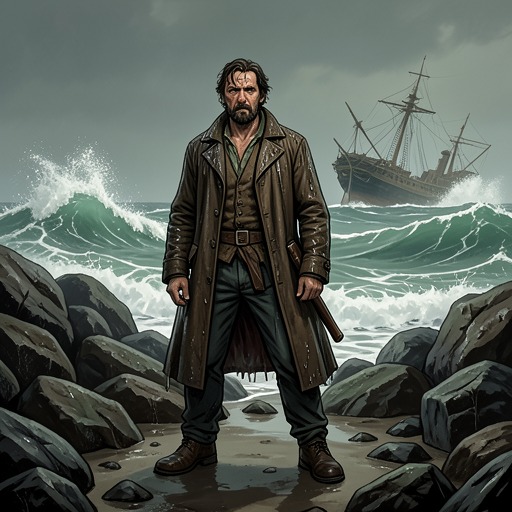
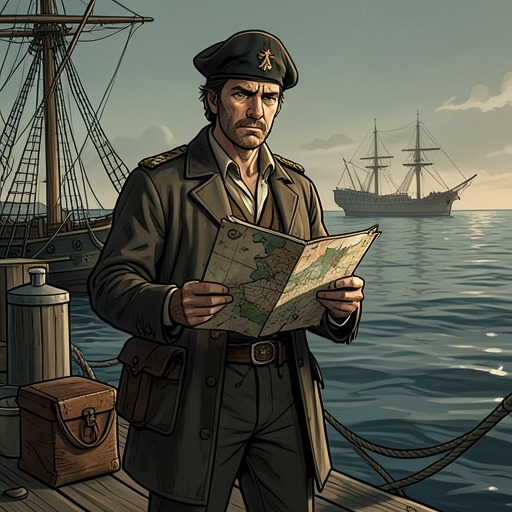
When Toranaga asks whether a new ship is possible, Blackthorne immediately imagines one on a smaller scale than the Erasmus. He first estimates roughly ninety to a hundred tons, then settles on ninety: he has never independently designed or supervised a complete ship, although Alban Caradoc trained him as both a shipwright and a pilot. He compares the intended size to Francis Drake’s Golden Hind and reckons that he could carry twenty cannon. The sudden thought of the cannon makes him turn toward the wreck and ask how quickly its guns can be recovered.
Blackthorne sets out a demanding list of requirements: forty carpenters, blacksmiths, oak for the timbers, iron and steel, a forge, and a master craftsman. He asks Toranaga to provide men to help and says the ship can be built in six months from the laying of the keel. Toranaga wants it sooner. The exchange makes the project concrete while also exposing its limits: Blackthorne can supply the design and skill, but construction depends on resources and speed that only his powerful patron can command.
Toranaga promises all the men and money needed at once, and offers Blackthorne his choice of seamen from Kwanto. Material from the wreck may also help: Blackthorne sees the possibility of salvaging part of the keel, some ribs, and the many nails, while the remaining keel could furnish bindings and braces. Toranaga says his samurai have already recovered objects from the shallow water at low tide and brought them to camp. The new vessel is therefore imagined as a combination of fresh labor and materials wrested back from the ruin of its predecessor.
A Secret Naval Purpose
Toranaga does not treat the ship as a private consolation. He specifies that it must be a fighting ship and asks whether it could fight the Black Ship. Blackthorne judges that this may be possible by the following year, though he also raises the threat of war. Toranaga says that the attempt should proceed whether or not war comes, and identifies the Black Ship as their prey. He presents the plan as a secret between himself and Blackthorne, even as Blackthorne warns that the priests may soon expose it.
The secrecy gives the proposed ship a political as well as military function. Toranaga’s promise of immediate resources and a selection of Kwanto seamen ties Blackthorne’s practical work to Toranaga’s power; the ship is to serve an ambition that reaches beyond replacing the Erasmus. Toranaga acknowledges the danger of another tidal wave or typhoon, but says that this time both men will be watching. That assurance places the project under the sign of vigilance rather than confidence: the ship may be pursued amid war and natural hazards, and its opponents may learn of it.
The Name and the Unfinished Future
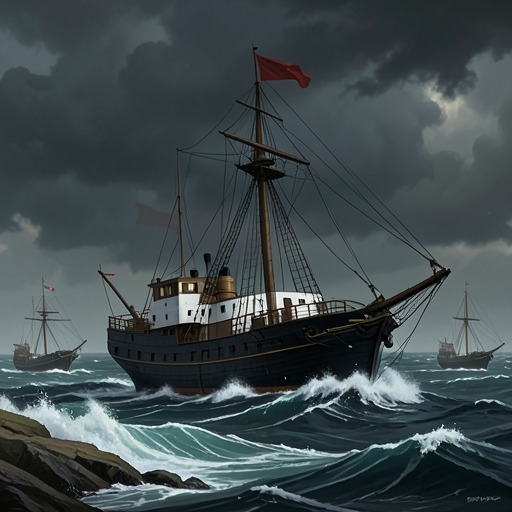
As Toranaga leads him toward camp, Blackthorne’s thoughts race from salvage to design. He imagines a sleek, sharp-nosed floating battle platform, miniature beside the Erasmus, with a jutting bowsprit and a figurehead modeled on Mariko’s slanting eyes and high cheekbones. He wants the ship trim and perfect like a Yoshitomo sword, yet dangerous enough to take a prize many times its own weight and drive the enemy out of Asia. These are Blackthorne’s projected qualities, not a completed vessel: the evidence records a design taking shape in his mind, not the ship’s construction or performance.
His vision reaches beyond the immediate contest. He imagines sailing the vessel up the Thames to London, with gold aboard and the seven seas behind it. Then he gives it its name: The Lady. The name makes Mariko present in a future she cannot share, while the act of building gives Blackthorne a task after the destruction of the Erasmus. His last transformation is not from sailor into successful shipbuilder—the outcome remains unresolved—but from a man fixed on the wreck to one already planning keel, guns, crew, and voyage. The Lady is, at this point, a promise: that the life Mariko saved can be made into something new.