Alice Pagett’s healing miracles
ShrineAlice Pagett’s healing miracles are the reported recoveries associated with Alice’s return to hearing and speech and with six further alleged cures at St. Joseph’s Church. They become a test of competing kinds of authority: medical investigators are charged with deciding whether a recovery can be explained, while the Church reserves the judgment of whether it is a miracle. The later return of the cured people’s illnesses, after Alice’s death, gives that distinction a devastating consequence.
Alice’s recovery and the meaning of a cure
When Alice regained the ability to hear and speak after seven years, Father Andrew Hagan accepted that her change was real but recognized that the medical profession would not necessarily call it miraculous. Specialists had found no physical malformation in her ears or throat and had attributed her deafness and muteness to a psychological cause. The examination following her recovery found no new physical change in those organs; it reinforced the view that her former condition had psychological origins. In medical terms, the evidence pointed to a change in the condition of her mind, not the repair of damaged anatomy.
Father Andrew Hagan nevertheless considered the change potentially miraculous in a broader sense: an emotional, perhaps spiritual, experience might have enabled Alice’s suppressed senses to function normally. His uncertainty was about the cause of that change—whether it arose from within Alice or from divine agency—not whether she had recovered. His reflection draws on Lourdes, where recorded cures were subjected to strict medical scrutiny, while the Church also recognized a less measurable transformation: pilgrims’ renewed faith, inner peace, or ability to face illness. In this view, a cure may be one form of miracle, but spiritual renewal is another, and clinical records cannot settle the latter.
Investigation and competing jurisdictions
The Church’s public position remained provisional. Bishop Caines acknowledged a series of extraordinary cures associated with the grounds of St. Joseph’s, but stressed that the six cases were alleged cures requiring full investigation. The Church had also reached an agreement to purchase the adjacent field, bringing the site of the reported events within the practical scope of its activity at St. Joseph’s.
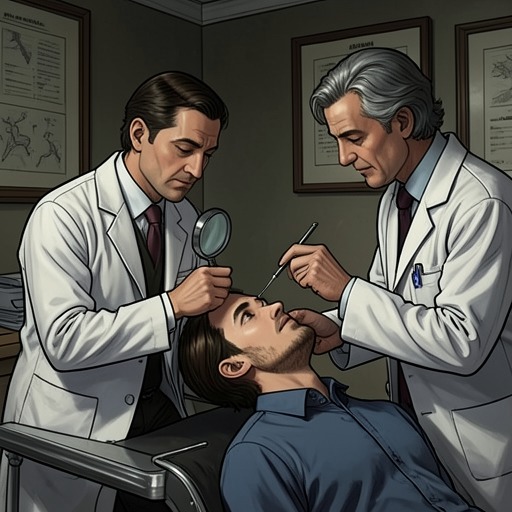
The proposed process separated medical assessment from religious interpretation. A specially formed medical bureau, expected to include at least twelve physicians, would review each person’s records, consult their general practitioner and hospital, conduct its own examination, and maintain a case dossier. Its findings would pass to the International Medical Committee, which would make a recommendation. The committee’s remit was not to decide that a cure was divine: it was to determine whether the recovery was medically inexplicable given the current state of science. The final decision on whether a cure should be declared miraculous belonged to Bishop Caines and his advisers.
The criteria made the distinction concrete. Investigators would ask whether a cure was sudden, unexpected, complete, and lasting; whether the illness had been serious and objectively established by tests; and whether prior treatment could have contributed to the recovery. Confirmation might require three or four years. A condition attributed to mental disorder would not qualify under the stated criteria, a particularly consequential rule in Alice’s case because her original deafness and muteness had been understood as psychological. The procedures therefore did more than test the claims: they defined which kinds of recovery the Church’s medical process could recognize.
The cures’ limits and aftermath
The scrutiny of Alice’s earlier infirmity underscored the tension. Findings reported by Monsignor Delgard found no discernible damage to her auditory nerves, middle-ear structures, or vocal cords, and no lasting signs of an earlier infection. The conclusion supported the long-standing psychological explanation of her condition, even as Alice’s return to hearing and speech remained striking. The same evidence could establish that her senses were functioning again without resolving what had prompted the change.
The wider claims also remained unsettled. Bishop Caines declined to judge them before the investigations were complete, and the committees’ work was framed as a process of testing individual cases rather than validating the whole series at once. This cautious procedure contrasts with the rapid public naming of the cures as miracles: attention and belief could gather around the claims before the evidentiary process had reached a conclusion.
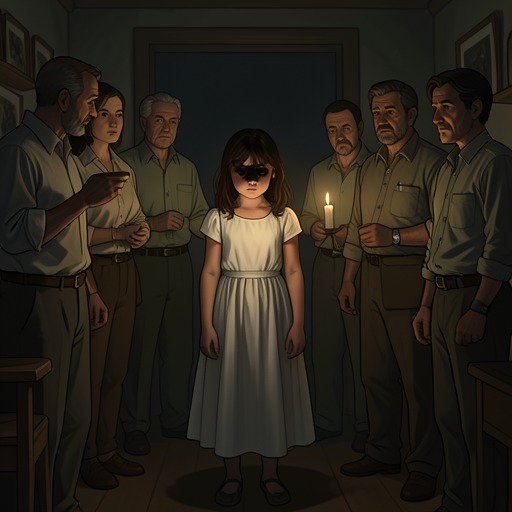
After Alice died during the disaster at the shrine, people she had previously cured discovered that their illnesses and infirmities had returned, as though her death had cancelled the cures. The reversal makes the reported healings appear dependent on Alice’s continuing presence, while leaving their mechanism unexplained. It also turns the language of cure against itself: what had seemed lasting was not lasting, and the event that once drew pilgrims as evidence of healing became inseparable from the loss of those recoveries. The miracles remain a contested category in the novel, caught between observable change, institutional standards of proof, spiritual interpretation, and an aftermath that unsettles every claim of permanence.