Alice’s Claimed Marian Apparition
ShrineAlice’s Claimed Marian Apparition is the vision of the Virgin Mary that Alice Pagett said accompanied her sudden return to hearing and speech, and that helped turn a local recovery into the Banfield Miracle. The novel keeps the apparition’s status unsettled: Alice’s experience is reported as a claim, while the cures, the medical explanations, and the spiritual meaning attached to them are examined and disputed by different witnesses and institutions.
The Vision and Alice’s Recovery
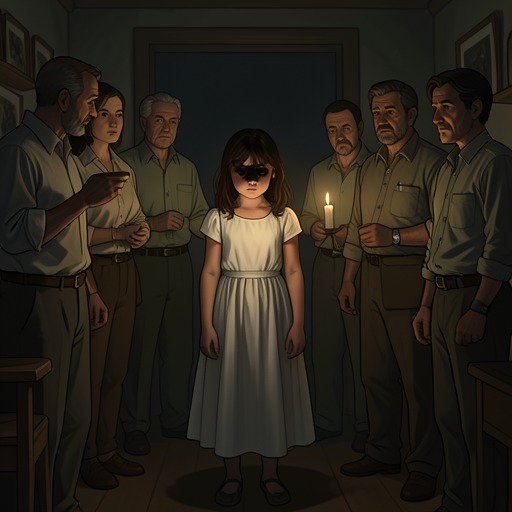
Alice had been unable to hear or speak for seven years. Specialists had found no physical malformation in her ears or throat and had regarded her condition as psychological in origin. After the reported vision, she could hear and speak again. Her recovery made her an unusually compelling case, but it did not by itself establish that a Marian apparition had occurred. From the medical perspective, the change could be understood as a change in the mind’s effect on the body; from Father Andrew Hagan’s perspective, the unanswered question was whether that change had been self-induced or divinely caused.
The distinction matters because the reported apparition and the observable recovery are not the same kind of evidence. Alice’s renewed hearing and speech could be documented and investigated, while the vision depended on her account and could not be settled by medical examination alone. Later, Monsignor Delgard described the medical team’s findings as confirming that Alice’s ears and throat showed no damage that explained the former disability. The Church’s stated criteria also treated infirmity attributable to a mental disorder as grounds for rejecting a cure as miraculous. Thus the evidence that helped explain Alice’s earlier deafness complicated the religious interpretation of her recovery.
Competing Interpretations
The apparition acquires meaning through the explanations people place around it. Father Andrew Hagan considered the possibility that Alice had undergone a profound emotional or spiritual experience, even while acknowledging that a psychological account did not resolve whether the cause was divine. The analogy to Lourdes offered a model in which a reported vision could draw the sick and curious to a site, but also in which religious significance might lie in renewed faith rather than in cures officially recognized as miraculous.
Other participants approached the claim through different interests and standards. George Southworth presented the events as a possible opportunity for Banfield’s rebirth and for its people to recover belief, while acknowledging that he could benefit if the village prospered. Rodney Tucker was more plainly interested in the commercial opportunity. Their competing purposes do not prove that either man believed or disbelieved Alice; they show how quickly the apparition could become part of an argument about the village’s future. Southworth and Tucker wanted Gerry Fenn to write further about what would become known as the Banfield Miracle, giving the press a role in shaping the public meaning of Alice’s experience.
Church Inquiry and Authority
The Church did not endorse Alice’s account as established fact. Bishop Caines said that the matter required thorough investigation under strict guidelines, and stressed the danger of proclaiming miracles that could later receive a scientific explanation. As news spread, he expected people to visit in large numbers whether or not St. Joseph’s Church was formally declared a shrine. He argued that the Church had to control the situation from the beginning, making public management inseparable from the investigation of the claim.
The proposed process separated medical judgment from religious judgment. A specially formed medical bureau would examine the six alleged cures, consult patients’ doctors and hospitals, conduct its own examinations, and keep case dossiers. Its findings would go to the International Medical Committee, which would assess whether a cure was medically inexplicable—not whether divine intervention had occurred. The criteria included whether a cure was sudden, complete, and lasting, and whether the original illness had been objectively established. Only after the medical review would the bishop and his advisers consider the spiritual question. In this framework, Alice’s claimed vision remained distinct from the medical committee’s remit even as it supplied the event with its religious significance.
From Private Claim to Public Spectacle
News coverage rapidly enlarged the audience for Alice’s story. Reports described thousands gathering at St. Joseph’s Church, with a queue of cars and coaches stretching two miles and additional police brought in to control the crowds. A later broadcast estimated that at least two thousand people arrived in the morning and that the number doubled during the day. Some were devout Catholics; others came as sightseers, hoping to see Alice or witness another miracle. A vigil continued after the crowds thinned, as pilgrims waited for the apparition Alice said she had seen.
The reports also show how publicity could harden an uncertain account into a public identity. A broadcaster described Alice as having been proclaimed a miracle worker, while a Church spokesman objected that the media was creating that image and encouraging people to expect miracles from her. On the Sunday service, Alice arrived with her mother and a group of priests and police, distressed and still grieving her father, Leonard Pagett. The crowd made it difficult for her to reach the church, and the Mass was delayed by forty-five minutes. The service ultimately took place amid expectation, but the reports did not describe a new apparition or cure that day.
The Field and the Apparition’s Afterlife
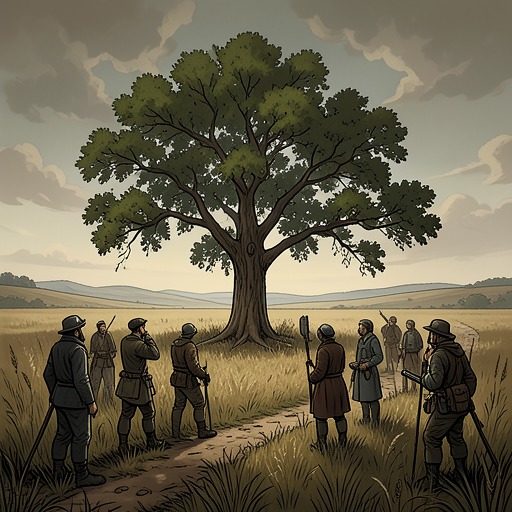
The claimed vision also transformed the adjoining field. Although Bishop Caines had distinguished the field from the church grounds when speaking to reporters, he said that the Church had reached an agreement to purchase it and that its proximity allowed it to be treated as church property. The Church prepared to investigate the alleged cures while also preparing for further visitors. In response to the crowds, an outdoor altar and seating were planned for the field where Alice said she had seen the Virgin Mary. Monsignor Delgard instructed the contractor not to destroy anything there and to build the platform around the tree.
This movement from an individual vision to a managed gathering place captures the claim’s central tension. The apparition is never simply a verified event or a dismissed fantasy: it remains Alice’s reported experience, a possible sign of divine action to some, a question beyond medical measurement to others, and a focus of public curiosity and institutional planning. Its consequences are nevertheless concrete. It draws pilgrims, redirects religious services outdoors, prompts an inquiry into the cures, and makes the field itself part of the dispute over what happened at Banfield and who has the authority to say what it means.