Army witness-suppression policy
StrangersThe Army witness-suppression policy is the combination of military containment and memory control used to keep the Tranquility Motel witnesses from exposing what happened during the July 6 crisis. Its methods range from roadblocks and exclusion of civilian authorities to drugging, restraint, and memory blocks. The policy is presented through both observable actions and recovered fragments of testimony, so its full scope emerges gradually: what first appears to be an emergency response becomes a struggle over who may know, remember, and tell the truth.
Containment and the Official Account
The public explanation was a toxic spill on Interstate 80, involving a truck carrying dangerous chemicals to Shenkfield. According to the Blocks’ recalled account, the Army closed the highway, established a broad quarantine zone, and ordered motel guests to evacuate. The Tranquility Motel remained closed until Tuesday. The crisis was real in the sense that the road was shut and an emergency declared, but the witnesses’ later investigation makes the stated cause increasingly doubtful.
The Army’s conduct around the closure raised questions even before the witnesses found a better explanation. Army units attached to Shenkfield closed a ten-mile stretch of I-80 and established roadblocks before informing the Elko County Sheriff or Nevada State Police. Local authorities complained that the military excluded them from crisis management, quarantine enforcement, and contingency planning. The reported possibility that dangerous material might spread with the wind gave the exclusion serious consequences: civilian officials were kept from independently assessing the danger as well as from exercising their ordinary authority.
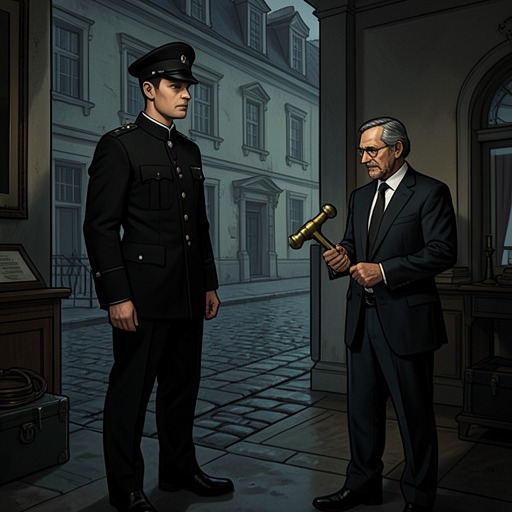
An account in the Elko Sentinel described soldiers wearing a black-circle patch with an emerald-green star. The Army identified them as DERO, a highly trained special-forces organization whose members had combat experience and top-security clearances. Dom Corvaisis and Ginger Weiss reasoned that an ordinary chemical spill did not explain why such a team was needed. Ginger argued that the soldiers’ presence suggested they had been assigned to guard something classified, and Dom concluded that the Army had apparently had advance warning of an incident near the western end of Elko County. These were deductions, not proof of what had happened, but they made the official explanation look less like a complete account and more like a cover story.
The Suppression of Memory
The most direct evidence of memory suppression reaches Dom through a fragmented recollection of treatment at the motel. Men in decontamination suits hold him over a bathroom sink and force him to take an emetic after he has been poisoned. He struggles to vomit before finally doing so. Back in bed, weak and restrained, he is injected with another drug and reconnected to an intravenous drip. The scene recovers suppression not as an abstract scheme but as bodily coercion: Dom is poisoned, treated, immobilized, and kept from acting for himself.
While the men work, Dom hears them discuss the danger that the witnesses’ memory blocks might wear off. One fears that killing the witnesses would leave bodies for reporters to find; the men instead consider a memory wipe the more manageable way to preserve secrecy. The recollection therefore exposes both the policy’s purpose and an internal disagreement over its means. It also suggests that the memory blocks were not simply a spontaneous consequence of trauma: the men speak of them as something imposed and vulnerable to deterioration.
The witnesses’ later experiences support that account without immediately restoring a complete shared memory. Dom and Ginger have no recollection of the toxic-spill evacuation, while the Blocks and the Sarvers initially remember versions of it. When Dom notices the rehearsed, unnatural quality of Faye Block and Ernie Block’s account, he tells them that they seem to have been given the same script. The discrepancy makes memory itself a contested part of the evidence: a fluent recollection may be less trustworthy than a frightening dream or a detail that does not fit the official story.
Competing Strategies and Escalating Stakes
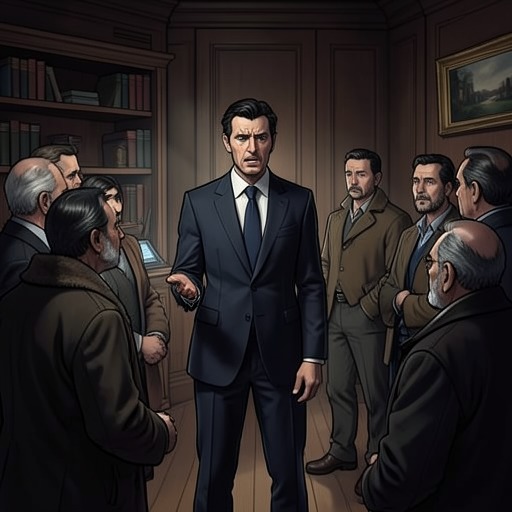
Dom interprets the conspiracy as containing two factions. In his account, Leland Falkirk represents the hard-line officials who initially wanted to kill the witnesses; another group favored wiping their memories and allowing them to continue living. Dom believes the latter group prevailed at first, but he does not consider it benevolent or safe. That distinction matters: survival under a memory block is still a form of control, and the faction that opposed mass killing may have acted to preserve the cover-up rather than to secure the witnesses’ freedom.
The policy remains dangerous because Falkirk is still willing to use lethal force against anyone who might expose the secret. After Pablo Jackson is killed, Dom and Ginger treat the murder as a warning that the more violent faction remains active. Dom’s conclusion that the witnesses cannot simply return to their ordinary lives follows from this renewed threat. The cover-up has moved beyond managing a closed road or controlling an evacuation; it now includes the prospect of killing people who approach the truth.
The conflict reaches a sharper ideological form when Falkirk argues that concealment protects humanity from obliteration. Foster Polnichev challenges the demand to kill the Halbourgs, the Tolks, and the Nevada witnesses merely to contain the story. He considers the possibility that the new powers associated with the crisis are not evidence of a hostile infection and describes the event as potentially momentous rather than monstrous. Falkirk rejects that interpretation, treating even the idea of accommodation as a danger that could cost humanity a war. The suppression policy is thus justified through competing claims about species survival, but the evidence in this exchange does not settle which claim is correct.
How the Cover-Up Begins to Unravel
The witnesses’ recovery depends in part on assembling and testing what they know together. Dom and Ginger read old Sentinel issues, looking beyond the main toxic-crisis coverage for stories that might point to the true source of the event. They identify Thunder Hill as a possible origin and Shenkfield as a misdirection, though they cannot yet explain how an incident there could have affected people more than ten miles away. Their research shows how the policy’s own security measures generate clues: the unusual troops, the sidelined local authorities, and the mismatch between the Army’s explanation and its actions all become material for investigation.
The same process occurs through shared memory. After the witnesses gather again, vivid nightmares recur with similar details: motel beds, restraints, and men in decontamination suits. Dom believes that rebuilding the group and working together places pressure on the implanted blocks. The Sarvers reconsider their shallow recollections of waiting safely in their trailer, and Ned Sarver moves with Sandy into the motel because he fears being isolated if Falkirk comes after them. The return of memory is neither orderly nor harmless; it brings fear and new exposure to danger along with evidence.
Parker Faine’s revelation triggers a further break in the suppression. In the dark truck, Sandy Sarver abruptly recalls jets passing low over the motel, the continuing vibration of the ground and air, and Dom turning toward the diner roof to cry out about the moon. Ernie Block then says that he remembers. The memory arrives through one witness’s account and opens space for another’s recognition, demonstrating how collective testimony can recover what individual minds had been made to lose.
Significance
The policy makes memory a political battleground. The witnesses are not merely missing a past event; their recollections have been shaped to support an official account, while military control of roads, information, and access limits who can challenge that account. Yet the plan is unstable. Nightmares, inconsistencies, newspaper research, anonymous clues, and the witnesses’ reunion supply routes back to knowledge that the memory blocks were meant to contain.
The resulting tension is central to the conspiracy: the authorities describe secrecy as protection, while the survivors experience its methods as poisoning, restraint, manipulation, and the continuing threat of death. Their recovered memories do not immediately resolve what occurred at Thunder Hill or whether the feared danger is genuine. They do, however, expose the cost of allowing military claims of necessity to decide who may remember and speak.