before the journey to Bad Blintz
The Change
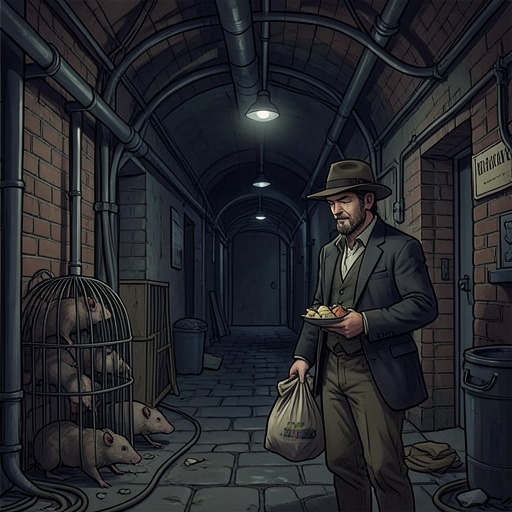
After eating a rat that had fed on magical waste from the [Wizards' University](entity:location-recall-location-wizards-university-7331a61b9b84) dump, [Maurice](entity:character-recall-character-maurice-7005d24c9997) became self-aware. The rats that shared the dump changed too, acquiring speech, learning and the unsettling ability to imagine themselves as more than prey.
Maurice remembered the moment as the beginning of his new mind, though the rats called their transformation the Change. His rule became that he would not eat anyone who could talk, a boundary that separated his new life from the instincts he still carried.
after the Change and before the journey
An Uneasy Rat Clan
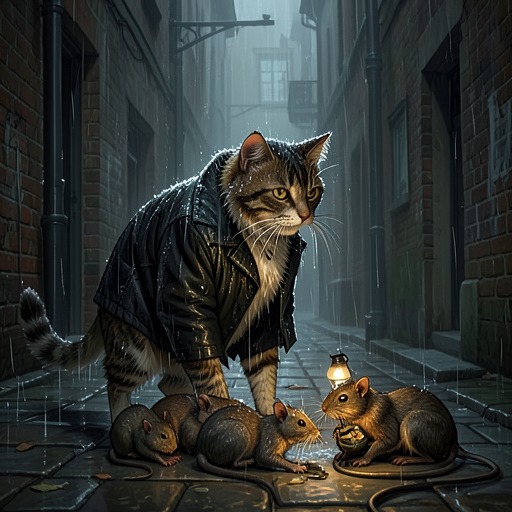
[Dangerous Beans](entity:character-recall-character-dangerous-beans-585e2ab3fcde) began asking what a rat was and what a changed rat ought to do. [Peaches](entity:character-recall-character-peaches-631fd40fed90) helped preserve his new ideas in drawings, while [Hamnpork](entity:character-recall-character-hamnpork-f75d6cce9a02) resisted the very habit of thinking that had unsettled the old order.
The rats took names from words they found on signs and discarded tins. They imagined an island where they might build a life of their own, but [Maurice](entity:character-recall-character-maurice-7005d24c9997) believed that money was the key to survival and used his quick talk to steer the Clan toward his schemes.
before the journey to Bad Blintz
The Rat Piper Scheme
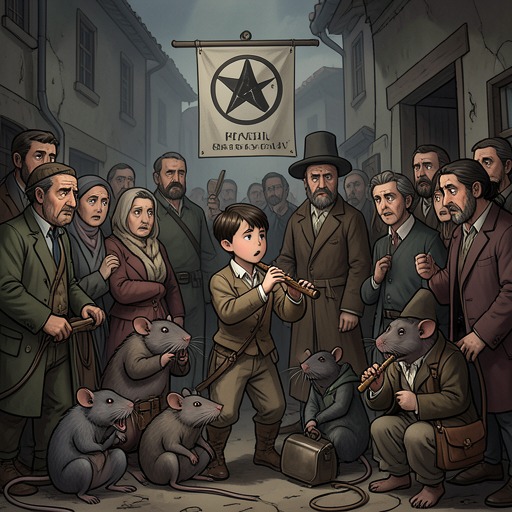
[Maurice](entity:character-recall-character-maurice-7005d24c9997) recruited [Keith](entity:character-recall-character-keith-7cd8cde0bb51), a quiet orphan and skilled musician, to help the rats stage fake infestations. The rats would make a town believe it had a plague, then follow Keith’s music out of sight while the town paid its supposed rescuer.
Maurice justified the deception by telling himself that they took government money and prevented wars. [Peaches](entity:character-recall-character-peaches-631fd40fed90) and [Dangerous Beans](entity:character-recall-character-dangerous-beans-585e2ab3fcde) objected that the trick was dishonest, while Keith cared less about the money than being allowed to keep playing.
on the coach journey toward Uberwald
The Highwayman’s Ambush
A highwayman stopped the mail coach and demanded its money. [Maurice](entity:character-recall-character-maurice-7005d24c9997) hid beneath the seat while [Keith](entity:character-recall-character-keith-7cd8cde0bb51) played the penny whistle, sending rats up the highwayman’s trousers until the robber surrendered in terror.
Maurice tried to turn the encounter into an excuse to take the coach, but [Peaches](entity:character-recall-character-peaches-631fd40fed90) insisted they leave it. They took the highwayman’s horse instead, arguing that stealing from a thief somehow cancelled out, and continued toward the remote region of [Uberwald](entity:location-recall-location-uberwald-2e9528aef819).
after leaving the coach and before Bad Blintz
The Last Swindle
On the journey, [Peaches](entity:character-recall-character-peaches-631fd40fed90) and [Dangerous Beans](entity:character-recall-character-dangerous-beans-585e2ab3fcde) confronted [Maurice](entity:character-recall-character-maurice-7005d24c9997) about continuing the rat-piper trick. They had earned enough money, they said, and wanted to stop before the repeated deception became more dangerous and morally indefensible.
Maurice accepted one final job, promising to split the money three ways with [Keith](entity:character-recall-character-keith-7cd8cde0bb51) and the rats. [The Clan](entity:character-recall-character-the-clan-2af551d4098b) buried its savings outside town and released the highwayman’s horse rather than risk attracting the Watch.
at dawn after the last journey
Approach to Bad Blintz
The group reached a hillside overlooking [Bad Blintz](entity:location-recall-location-bad-blintz-c5b1a623c587), a town with grand buildings, fields and river traffic. [Maurice](entity:character-recall-character-maurice-7005d24c9997) took these signs as proof that it was wealthy and expected the final job to bring in a large sum.
[Peaches](entity:character-recall-character-peaches-631fd40fed90) questioned the town’s name, and Maurice confidently supplied a false explanation about its meaning and its celebrated bath. [Dangerous Beans](entity:character-recall-character-dangerous-beans-585e2ab3fcde) doubted him, while Maurice pressed ahead with the plan to make the town their biggest success yet.
the morning before entering Bad Blintz
The Clan’s New Principles
Before heading into town, [Peaches](entity:character-recall-character-peaches-631fd40fed90) and [Dangerous Beans](entity:character-recall-character-dangerous-beans-585e2ab3fcde) challenged [Maurice](entity:character-recall-character-maurice-7005d24c9997)’s claim that the Clan needed more money. Peaches pointed out that Maurice had reversed the value of gold and silver coins, revealing that he had quietly kept the more valuable silver for himself.
Dangerous Beans proposed that after this last job the rats should share what they had and seek a different life. [Hamnpork](entity:character-recall-character-hamnpork-f75d6cce9a02) reluctantly supported the prospect of an island, while Maurice hid his unease behind jokes and agreed that the [Bad Blintz](entity:location-recall-location-bad-blintz-c5b1a623c587) scheme would be their final one.
before the rats begin their work in Bad Blintz
The Clan’s Thoughts
As the rats settled into an underground cellar, [Dangerous Beans](entity:character-recall-character-dangerous-beans-585e2ab3fcde) explained why he wanted the Clan to use fire: seeing a flame helped them recognize their separateness and their identity as a community. [Hamnpork](entity:character-recall-character-hamnpork-f75d6cce9a02) distrusted the idea, but younger rats were already learning to think about fear and the shadows cast by light.
[Peaches](entity:character-recall-character-peaches-631fd40fed90) recorded the Clan’s emerging principles in a simple rat-readable form. Among them were the ideas that the Clan drew strength from unity, that cooperation was necessary for survival, and that no rat should kill another rat.
during the rats’ first day in Bad Blintz
The Trap Disposal Squad
[Darktan](entity:character-recall-character-darktan-f4fd98c9c5b6) organized the rats into platoons to make a convincing infestation while keeping the Clan’s members safe. Some were assigned to widdle, gnaw and squeak; older rats were sent to cause familiar household trouble; and the [Trap Disposal Squad](entity:organization-recall-organization-trap-disposal-sq-add440ccfc6e) advanced carefully through dangerous passages.
Darktan drilled his recruits on the lesson that the second mouse gets the cheese because the first mouse gets the trap. [Nourishing](entity:character-recall-character-nourishing-4077625ed11d) questioned the slogan, and Darktan made clear that careless confidence could kill a rat in a city whose traps they did not yet understand.
during the Clan’s early days in Bad Blintz
The Book of Mr Bunnsy
The rats’ treasured book, [Mr Bunnsy Has An Adventure](entity:object-recall-object-mr-bunnsy-has-an-adven-53d3da6db592), showed animals in clothes speaking with humans and living in a world without traps or poisons. [Dangerous Beans](entity:character-recall-character-dangerous-beans-585e2ab3fcde) wondered whether it offered a vision of a better future, while others debated how seriously to take its impossible adventures.
[Darktan](entity:character-recall-character-darktan-f4fd98c9c5b6) drew a practical lesson from its illustrations and made a tool belt with pockets for his trap-working equipment. [Peaches](entity:character-recall-character-peaches-631fd40fed90) carried the book and helped Dangerous Beans preserve his thoughts, making the story part comfort and part guide to imagining another kind of life.
the morning the group enters Bad Blintz
Signs of a False Plague
[Bad Blintz](entity:location-recall-location-bad-blintz-c5b1a623c587) looked prosperous from outside, but its market was sparse and its residents were poor. A notice promised fifty pence for every rat tail, and a bread queue showed that food was being rationed.
[Maurice](entity:character-recall-character-maurice-7005d24c9997) saw a lucrative opportunity in the town’s fear of rats. [Keith](entity:character-recall-character-keith-7cd8cde0bb51) noticed the contrast between wealthy-looking buildings and struggling people, while Maurice entered the Rathaus to investigate the food distribution and learned that the town was already in crisis.
later that morning
Suspicious Rat Tails
[Keith](entity:character-recall-character-keith-7cd8cde0bb51) played his flute near the bread queue, drawing a crowd and making the group conspicuous. [Maurice](entity:character-recall-character-maurice-7005d24c9997) hurried him away, but two rat-catchers arrived to display their supposed daily haul of rat tails.
Maurice saw that at least some of the tails were bootlaces with metal aglets, not genuine rat remains. The rat-catchers threatened Keith when he tried to inspect them, and Maurice also noticed their clean boots despite their claims of constant work.
that morning in the town square
Malicia’s Interrogation
A sharp, red-haired girl named [Malicia](entity:character-recall-character-malicia-b3b71b9c41bb) confronted [Keith](entity:character-recall-character-keith-7cd8cde0bb51) and rapidly invented a story about his past. When [Maurice](entity:character-recall-character-maurice-7005d24c9997) spoke, she realized the cat was no ordinary animal and guessed that he and Keith were involved in a rat-piper scam.
Malicia threatened to call the Watch, but her curiosity outweighed her alarm. She recognized that the story did not explain why the town had no ordinary rats and why the rat-catchers were posting suspicious tails.
after Malicia takes them to the kitchen
A Mayor’s Daughter
[Malicia](entity:character-recall-character-malicia-b3b71b9c41bb) brought [Keith](entity:character-recall-character-keith-7cd8cde0bb51) and [Maurice](entity:character-recall-character-maurice-7005d24c9997) to a poorly stocked kitchen and fed them from the scarce supplies. She explained that her father was the mayor, who insisted that his household share the town’s rations in solidarity.
Her talk about unfair chores and shabby clothing revealed her taste for turning ordinary disappointments into dramatic plots. Keith disclosed his name and his life as a musician, but Malicia kept trying to recast him as a hidden prince or mysterious orphan destined for adventure.
later that day
Sardines in the Kitchen
[Sardines](entity:character-recall-character-sardines-198f5acc3ac7) slipped into the kitchen to steal food, wearing his homemade straw hat and preparing to tap-dance. [Malicia](entity:character-recall-character-malicia-b3b71b9c41bb) spotted him and hurled a pan, sending the rat scrambling behind a dresser and into a huge trap.
[Keith](entity:character-recall-character-keith-7cd8cde0bb51) and [Maurice](entity:character-recall-character-maurice-7005d24c9997) helped pull Sardines free before the trap could crush him. The rescue forced Malicia to accept that the rats could speak and think, and she pieced together the truth of the group’s staged infestations.
immediately after Sardines is rescued
A Swindle Confessed
[Malicia](entity:character-recall-character-malicia-b3b71b9c41bb) worked out how the rats and [Keith](entity:character-recall-character-keith-7cd8cde0bb51) had fooled towns into paying for a cure to a plague they had manufactured. Keith admitted the scheme plainly and apologized, while [Maurice](entity:character-recall-character-maurice-7005d24c9997) tried to keep control of the situation with jokes.
The discovery did not make Malicia call the Watch. Instead, she focused on the deeper mystery: there were no living local rats in [Bad Blintz](entity:location-recall-location-bad-blintz-c5b1a623c587), even though the rat-catchers displayed tails and the town believed itself overrun.
during the conversation in Malicia’s kitchen
Bootlace Tails Exposed
[Maurice](entity:character-recall-character-maurice-7005d24c9997) explained that some of the supposed rat tails were bootlaces, whose metal tips were aglets. [Malicia](entity:character-recall-character-malicia-b3b71b9c41bb) admitted she had never examined them closely because she feared catching plague, and [Keith](entity:character-recall-character-keith-7cd8cde0bb51) realized the reward system had helped make the lie seem credible.
Malicia decided to conceal the talking animals from the authorities and help investigate. When sounds came from upstairs, she sent them to hide in the stable loft, turning her appetite for adventures toward a real conspiracy.
the same day beneath Bad Blintz
The Rats Find No Locals
[The Clan](entity:character-recall-character-the-clan-2af551d4098b) explored the undertown and found an alarming abundance of poison, traps and rat bones. [Darktan](entity:character-recall-character-darktan-f4fd98c9c5b6) was especially troubled that [Bad Blintz](entity:location-recall-location-bad-blintz-c5b1a623c587) seemed to have no living ordinary rats at all, despite the signs of old rat tunnels.
[Dangerous Beans](entity:character-recall-character-dangerous-beans-585e2ab3fcde) urged the rats to treat their fears as part of their growing intelligence, while [Hamnpork](entity:character-recall-character-hamnpork-f75d6cce9a02) resented the younger generation’s new questions. [Peaches](entity:character-recall-character-peaches-631fd40fed90) also sensed that Hamnpork was weakening and feared that a struggle over leadership might follow.
during the first day underground
Fresh’s Death
A rat rushed to [Darktan](entity:character-recall-character-darktan-f4fd98c9c5b6)’s squad to report a new trap, and the team found Fresh crushed in a device unlike the familiar traps. The death confirmed that the tunnels were not merely hazardous but designed to punish any rat that moved carelessly toward food or water.
Darktan kept the others from rushing forward and used Fresh’s death as a warning about unmarked passages. The younger rats’ questions about death and what remained after the body was gone revealed how the Change had brought spiritual uncertainty as well as new intelligence.
later that day underground
The Captured Keekee
[Darktan](entity:character-recall-character-darktan-f4fd98c9c5b6)’s team discovered a living local rat caught in a box trap, with evidence that she had survived by eating another rat. [Dangerous Beans](entity:character-recall-character-dangerous-beans-585e2ab3fcde) approached her gently and read fear in her scent, sensing that her terror was not simply a response to being trapped or meeting strangers.
[Hamnpork](entity:character-recall-character-hamnpork-f75d6cce9a02) argued that the rat was only another keekee and could be left to die. [Peaches](entity:character-recall-character-peaches-631fd40fed90) objected that the Changelings had once been like her, and Dangerous Beans decided that she would stay with them rather than be abandoned among the poisons.
during the expedition into the undertown
Hamnpork’s Uneasy Authority
[Hamnpork](entity:character-recall-character-hamnpork-f75d6cce9a02) insisted that he remained the leader, but [Darktan](entity:character-recall-character-darktan-f4fd98c9c5b6)’s knowledge of traps increasingly determined what the expedition could safely do. Their strained exchanges exposed the difference between formal authority and the practical expertise needed to keep the Clan alive.
When Darktan found signs of a large concentration of rats beyond the known tunnels, Hamnpork agreed to investigate. He refused to be treated as frightened or obsolete, even as the hazards beneath [Bad Blintz](entity:location-recall-location-bad-blintz-c5b1a623c587) made the old leader’s limitations harder to ignore.
that evening at the rat-catchers’ premises
The Living Trap Room
In the rat-catchers’ shed, [Malicia](entity:character-recall-character-malicia-b3b71b9c41bb) searched for the secret passages she expected from adventure stories. [Keith](entity:character-recall-character-keith-7cd8cde0bb51) instead noticed the trap-filled workbench and the rat hole that seemed strangely out of place in a rat-catchers’ building.
His suspicion proved right: Malicia touched a concealed lever and opened a trapdoor, dropping Keith into a cellar full of stored food. The hidden hoard showed that someone had been blaming the shortage on rats while keeping supplies for themselves.
immediately after the trapdoor opens
The Hidden Food Cache
The cellar contained sacks of grain, vegetables, meat and sausages, far more food than the struggling town could spare. [Malicia](entity:character-recall-character-malicia-b3b71b9c41bb) concluded that the rat-catchers had stolen the supplies, while [Maurice](entity:character-recall-character-maurice-7005d24c9997) pointed out that their operation also depended on making residents believe rats were responsible.
[Keith](entity:character-recall-character-keith-7cd8cde0bb51) questioned why the shed held wire netting, since dead rats did not need cages. That practical observation shifted the investigation beyond food theft and toward the possibility that the rat-catchers were keeping living animals underground.
that evening beneath the rat-catchers’ shed
The Voice in the Cellars
[Maurice](entity:character-recall-character-maurice-7005d24c9997) followed [Sardines](entity:character-recall-character-sardines-198f5acc3ac7) through the cellars and learned that the rats had found an entrance to a disturbing place. In another dark chamber, a voice entered Maurice’s mind and demanded to know what he was, then tried to pull him closer.
Large rats advanced through the gloom, and the unseen speaker recognized Maurice as a cat and ordered the others to kill him. Maurice escaped through a crumbling wall into a flooded cellar, discovering that the voice could influence minds but did not truly read his thoughts.
that night at the rat-catchers’ shed
Malicia Picks the Lock
[Malicia](entity:character-recall-character-malicia-b3b71b9c41bb) returned with an enormous bag of supplies and opened the rat-catchers’ padlock using bent hairpins. Her certainty came less from practical knowledge than from having read that such tricks worked in stories.
Inside, she was disappointed not to find a dramatic clue or secret passage. Meanwhile, the Clan’s explorations had uncovered signs that many living rats were being held somewhere nearby, and the threat from the mind-speaking voice was growing.
the same evening underground
Darktan Tests the Traps
[Darktan](entity:character-recall-character-darktan-f4fd98c9c5b6) used a clockwork decoy, [Mr Clicky](entity:object-recall-object-mr-clicky-750f573168d1), to test dangerous passages and map the traps his squad encountered. The team found several kinds of poison and evidence of dead rats, confirming that [Bad Blintz](entity:location-recall-location-bad-blintz-c5b1a623c587)’s underground had been turned into a killing ground.
When the squad encountered a rat suffering from a poison that caused prolonged agony, Darktan chose a fast death in a trap rather than let the animal suffer. His hard decision showed that practical leadership sometimes meant acting against the gentler principles [Dangerous Beans](entity:character-recall-character-dangerous-beans-585e2ab3fcde) hoped the Clan could follow.
after the expedition reaches the rat cages
The Caged-Rat Panic
The exploration party opened onto a room crammed with cages full of rats. The imprisoned animals’ noise and fear overwhelmed the Changelings, who had never seen such a vast, concentrated mass of terrified rats.
[Hamnpork](entity:character-recall-character-hamnpork-f75d6cce9a02) demanded that the cages be opened and attacked [Keith](entity:character-recall-character-keith-7cd8cde0bb51) when he tried to intervene. The crowd’s terror began to undo the Changelings’ speech and discipline, showing how quickly a frightened group could become a mindless mob.
during the caged-rat crisis
The Rat-Catchers’ Confession
The rat-catchers entered the cage room and attacked [Malicia](entity:character-recall-character-malicia-b3b71b9c41bb) before overpowering [Keith](entity:character-recall-character-keith-7cd8cde0bb51). [Hamnpork](entity:character-recall-character-hamnpork-f75d6cce9a02) escaped his captor long enough to fight, but the men captured him and decided to put him in the rat pit, where surviving rats were made to fight dogs.
[Maurice](entity:character-recall-character-maurice-7005d24c9997) watched from a drain as the rat-catchers revealed their contempt for the prisoners and their plan to use Keith. He also heard an alien voice guiding the men’s thoughts, a first clear sign that the force behind the rat panic could manipulate people as well as rats.
during the same cellar crisis
Maurice Escapes the Voice
The voice tried to control [Maurice](entity:character-recall-character-maurice-7005d24c9997), but he realized it was using what he saw and heard to guess his thoughts rather than reading his mind. By closing his eyes and thinking deliberately, he broke its hold long enough to escape through flooded passages.
In the dark, Maurice heard his own conscience urging him to help the others. He had spent his life making plans for himself, but the evidence of the cages and the Clan’s danger made his habitual escape route harder to choose.
that night at the stables
Hamnpork in the Rat Pit
At the rat pit, the rat-catchers threw [Hamnpork](entity:character-recall-character-hamnpork-f75d6cce9a02) among frightened rats and lowered [Jacko](entity:character-recall-character-jacko-c535e0aff71f), a terrier, into the enclosure. Hamnpork tried to make the other rats fight together, but panic kept them huddled and helpless.
[Sardines](entity:character-recall-character-sardines-198f5acc3ac7) descended on an elastic cord, caught Hamnpork and helped pull him out of reach. [Darktan](entity:character-recall-character-darktan-f4fd98c9c5b6) then dropped a heavy lamp onto Jacko, landed in the pit and fought the dog at close quarters, proving that a rat could confront a predator instead of merely running.
moments after the rat-pit fight
Darktan’s Escape
[Darktan](entity:character-recall-character-darktan-f4fd98c9c5b6) bit [Jacko](entity:character-recall-character-jacko-c535e0aff71f) in a vulnerable place and used the dog’s pain to scramble over the pit wall. The humans and the other dogs gave chase, and Darktan raced for what looked like a safe gap in the planking.
The gap concealed a trap. Its jaws snapped shut on him, leaving the Clan without its most experienced trap expert just as it needed a leader for the coming fight.
later that night in a cellar
The Tied Prisoners
[Keith](entity:character-recall-character-keith-7cd8cde0bb51) and [Malicia](entity:character-recall-character-malicia-b3b71b9c41bb) were tied up after the rat-catchers caught them. Malicia kept trying to make their situation fit an adventure plot, asking whether Keith had hidden powers or some convenient tool, while Keith insisted that real danger offered no promise of a dramatic rescue.
Their argument exposed the gap between Malicia’s stories and Keith’s experience of ordinary life. When he said he was not a destined hero, she had to confront the possibility that courage and responsibility did not depend on a story guaranteeing success.
while Peaches and Dangerous Beans wait underground
The Lies About Additives
[Maurice](entity:character-recall-character-maurice-7005d24c9997) returned to [Peaches](entity:character-recall-character-peaches-631fd40fed90) and [Dangerous Beans](entity:character-recall-character-dangerous-beans-585e2ab3fcde) and admitted that he had once eaten Additives, a rat who had spoken with difficulty. Maurice had not yet become self-aware at the time, and eating the rat who had consumed magical waste had been what Changed him too.
The confession made Maurice face the source of his intelligence and the guilt he had hidden behind his rule about not eating anyone who could talk. Dangerous Beans did not condemn him; he asked whether Maurice regretted it, and Peaches recognized that the act belonged to a time before Maurice understood what he was doing.
after Maurice returns to the cellar
A Story in the Dark
[Peaches](entity:character-recall-character-peaches-631fd40fed90) read from [Mr Bunnsy Has An Adventure](entity:object-recall-object-mr-bunnsy-has-an-adven-53d3da6db592) to comfort [Dangerous Beans](entity:character-recall-character-dangerous-beans-585e2ab3fcde). The book imagined animals and humans speaking as equals, a vision that seemed painfully distant from the polluted tunnels around them.
[Maurice](entity:character-recall-character-maurice-7005d24c9997) listened to the story and recognized how much the rats hoped to become more than the roles humans had assigned them. His sympathy unsettled him, but it helped persuade him to go looking for [Keith](entity:character-recall-character-keith-7cd8cde0bb51) and [Malicia](entity:character-recall-character-malicia-b3b71b9c41bb) rather than disappear into the night.
later that night
Maurice Chooses the Clan
[Maurice](entity:character-recall-character-maurice-7005d24c9997) admitted that he had always checked whether his prey could talk, but his confession about Additives made clear that his moral rule had grown out of shame as well as principle. [Peaches](entity:character-recall-character-peaches-631fd40fed90) and [Dangerous Beans](entity:character-recall-character-dangerous-beans-585e2ab3fcde) accepted that he regretted what he had done.
Unable to leave the Clan and the humans to face the danger alone, Maurice decided to search for the captives. His choice marked a turning point: he was no longer merely calculating how to escape or how to profit from the crisis.
that night in the cellar where Keith and Malicia are held
Spider’s Manipulation
[Spider](entity:character-recall-character-spider-7482fc8f8c3d) reached [Keith](entity:character-recall-character-keith-7cd8cde0bb51) and [Malicia](entity:character-recall-character-malicia-b3b71b9c41bb) through their thoughts, encouraging them to release the caged rats and to believe that their choices were their own. It made the cruel command feel like a sensible decision, then urged them to forget the danger and follow the story they preferred.
Keith sensed that something was wrong but could not hold on to the thought. Malicia too became susceptible, demonstrating that Spider could exploit exhaustion and distraction to make people mistake its influence for their own judgment.
while Spider draws Dangerous Beans toward it
Peaches Faces the Dark
[Peaches](entity:character-recall-character-peaches-631fd40fed90) and [Dangerous Beans](entity:character-recall-character-dangerous-beans-585e2ab3fcde) became lost in the foul darkness of the tunnels, carrying only a few matches. Dangerous Beans had lost confidence in his ideas after seeing the Changelings flee in panic, and Peaches feared that the rats around them were being directed by something unseen.
When she lit a match, countless eyes appeared in the dark. [Spider](entity:character-recall-character-spider-7482fc8f8c3d) spoke into their minds, presenting itself as the powerful answer to their fear and despair, while Peaches tried to keep a small patch of light alive.
after Hamnpork returns from the rat pit
Darktan Reclaims Leadership
Badly wounded and exhausted, [Hamnpork](entity:character-recall-character-hamnpork-f75d6cce9a02) returned with [Darktan](entity:character-recall-character-darktan-f4fd98c9c5b6) and [Sardines](entity:character-recall-character-sardines-198f5acc3ac7). He asked whether he was still the leader, then died after whispering to Darktan that he needed to know something.
Darktan ordered Hamnpork buried and marked the grave in the old rat fashion, while Sardines urged him to act like a leader rather than wait for others to decide. With [Dangerous Beans](entity:character-recall-character-dangerous-beans-585e2ab3fcde) missing and the Clan in danger, Darktan began to see that the rats needed a guiding idea as much as they needed someone who could dismantle traps.
immediately after Hamnpork’s death
The Bone Rat Story
[Sardines](entity:character-recall-character-sardines-198f5acc3ac7) encouraged [Darktan](entity:character-recall-character-darktan-f4fd98c9c5b6) to let the Clan believe that he had faced the [Bone Rat](entity:character-recall-character-b7406c238951) and returned from the edge of death. The wounds from the trap made the story plausible, and the frightened rats needed a figure they could follow.
Darktan did not fully understand what had happened to him in the trap, but he accepted the responsibility of leading. He realized that [Dangerous Beans](entity:character-recall-character-dangerous-beans-585e2ab3fcde) was the thinker who could help the Clan find its way through questions that could not be solved with tools or force alone.
after Hamnpork’s death in the underground tunnels
The Lost Rules
[Maurice](entity:character-recall-character-maurice-7005d24c9997) found [Peaches](entity:character-recall-character-peaches-631fd40fed90)’s damp drawings in a gutter, their ink running from the page. He recognized the fragments of the Clan’s rules, including the principle that the rats were not like other rats, and feared that the group had abandoned them.
[Spider](entity:character-recall-character-spider-7482fc8f8c3d)’s voice taunted Maurice and directed him toward the rats it controlled. It threatened [Keith](entity:character-recall-character-keith-7cd8cde0bb51) and [Malicia](entity:character-recall-character-malicia-b3b71b9c41bb) as well, trying to make Maurice believe that every possible choice led to danger and that running away was the only safe response.
as Maurice searches for Dangerous Beans
The Rat Army Closes In
Dozens of large rats followed [Maurice](entity:character-recall-character-maurice-7005d24c9997) through the tunnels, advancing whenever he moved and stopping when he turned to face them. [Spider](entity:character-recall-character-spider-7482fc8f8c3d) spoke through their shared awareness, imagining an expanding army of clever rats acting as one.
Maurice considered fleeing for daylight, but Spider taunted him about the friends he would abandon. The pressure brought him closer to the place where [Dangerous Beans](entity:character-recall-character-dangerous-beans-585e2ab3fcde) and [Peaches](entity:character-recall-character-peaches-631fd40fed90) were confronting the hidden power behind the terror.
during Maurice’s search and before the final confrontation
The Rat King Explained
[Keith](entity:character-recall-character-keith-7cd8cde0bb51) and [Malicia](entity:character-recall-character-malicia-b3b71b9c41bb) discussed the stories of rat kings: rats whose tails were knotted together and who supposedly controlled others through their minds. Keith doubted the tales, but Malicia described the preserved specimen in the town museum and the legends surrounding the phenomenon.
Keith connected the rat-catcher’s confession about making a rat king to the Guild’s requirement for a masterpiece. The stories were not merely folklore: they pointed toward a deliberate act of cruelty that had created the real threat under [Bad Blintz](entity:location-recall-location-bad-blintz-c5b1a623c587).
near the climax in the underground cellar
Dangerous Beans Meets Spider
[Spider](entity:character-recall-character-spider-7482fc8f8c3d) spoke to [Dangerous Beans](entity:character-recall-character-dangerous-beans-585e2ab3fcde) as the Big Rat and offered him a share in a future ruled by rats. It claimed that human cruelty had made it powerful and promised revenge against the species that had trapped, poisoned and killed rats.
Dangerous Beans listened carefully rather than accepting the offer at once. He asked what would happen to the weak and to individual rats, forcing Spider to reveal that its vision of unity was really domination by a single mind.
at the climax of the underground confrontation
Dangerous Beans Rejects Spider
[Dangerous Beans](entity:character-recall-character-dangerous-beans-585e2ab3fcde) rejected [Spider](entity:character-recall-character-spider-7482fc8f8c3d)’s claim to represent ratkind. Spider could think for many rats, he said, but it did not think of them; its plan depended on treating the weak as food and using the strong as instruments of revenge.
He affirmed that the Clan could be foolish and frightened yet still choose cooperation and compassion. Spider answered with a blast of mental pain, trying to reduce Dangerous Beans to nothing more than a rat and silence the part of him that could choose.
during Spider’s assault on Dangerous Beans
Maurice Loses Himself
[Spider](entity:character-recall-character-spider-7482fc8f8c3d)’s mental attack overwhelmed [Maurice](entity:character-recall-character-maurice-7005d24c9997) and stripped away the layers of thought that made him self-aware. The cat became a cat again, governed by instinct and driven to attack the rats around him.
For a brief moment, a remnant of Maurice remained deep in his mind. That small surviving voice recognized the knotted tails at the center of Spider and directed the cat to bite there.
at the climax, as the cage room erupts
The Clan Attacks Spider’s Rats
[Darktan](entity:character-recall-character-darktan-f4fd98c9c5b6) led the Clan through the tunnels toward the light and the scent of [Peaches](entity:character-recall-character-peaches-631fd40fed90)’s matches. He rallied the young rats by telling them that the enemy was fear itself and that the Clan could meet it together.
As the confrontation broke into violence, the Clan attacked [Spider](entity:character-recall-character-spider-7482fc8f8c3d)’s controlled rats in disciplined groups. Their formation held against the disorganized attackers, turning the tide of the fight and helping [Keith](entity:character-recall-character-keith-7cd8cde0bb51) and [Malicia](entity:character-recall-character-malicia-b3b71b9c41bb) survive the sudden assault.
at the climax of the battle
Maurice Destroys Spider
The instinct-driven [Maurice](entity:character-recall-character-maurice-7005d24c9997) fought through the mass of rats and tore apart the knot of tails binding [Spider](entity:character-recall-character-spider-7482fc8f8c3d)’s eight rats together. The rat king’s control broke, and the voice that had commanded other minds fell silent.
Maurice then found [Dangerous Beans](entity:character-recall-character-dangerous-beans-585e2ab3fcde) and carried the small white rat through fire and smoke. He collapsed after bringing him to safety, apparently dead, while the Clan and the humans struggled to put out the flames and save the remaining animals.
in the interval after Maurice collapses
Maurice’s Bargain with Death
In a ghostly stillness, [Maurice](entity:character-recall-character-maurice-7005d24c9997) saw [Death](entity:character-recall-character-b309ce745d9e) and the [Bone Rat](entity:character-recall-character-b7406c238951) arrive for [Dangerous Beans](entity:character-recall-character-dangerous-beans-585e2ab3fcde) and himself. Maurice offered two of his remaining lives so that Dangerous Beans could return, insisting that the complicated matter of saving a rat mattered to him even if he could not explain why.
Death accepted the bargain and took only one life from Maurice. Maurice awoke badly injured beside [Keith](entity:character-recall-character-keith-7cd8cde0bb51), while Dangerous Beans also survived, leaving the cat with fewer lives but a stronger bond to the friends he had risked them for.
after the fire and the defeat of Spider
The Rat-Catchers Confess
[Keith](entity:character-recall-character-keith-7cd8cde0bb51) and [Malicia](entity:character-recall-character-malicia-b3b71b9c41bb) confronted the rat-catchers and used their own poison to make the men fear for their lives. The supposed antidote was a laxative, but the threat was convincing enough to make the men confess to stealing food and blaming the shortages on rats.
The rat-catchers admitted that they had bred and imprisoned rats for the pits, selecting survivors to produce stronger fighters for betting. [Bill](entity:character-recall-character-bill-b9067839f38b) also revealed that their Guild initiation required making a rat king, exposing the cruelty that had created [Spider](entity:character-recall-character-spider-7482fc8f8c3d).
during the confession in the rat-catchers’ shed
Darktan Escapes the Breakback
[Nourishing](entity:character-recall-character-nourishing-4077625ed11d) found [Darktan](entity:character-recall-character-darktan-f4fd98c9c5b6) caught in an ancient [Nugent Brothers Breakback Mk. 1](entity:object-recall-object-579383cde87b), its jaws pressing into his body. Darktan forced her to think through the mechanism instead of running for help, even as he drifted toward unconsciousness.
Nourishing identified the spring and gnawed through it, freeing Darktan from the weakened trap. Her actions proved that the recruit he had teased for being bad at widdling could learn under pressure and become a capable member of the [Trap Disposal Squad](entity:organization-recall-organization-trap-disposal-sq-add440ccfc6e).
after Darktan is freed from the trap
The Abandoned Fire Plan
[Darktan](entity:character-recall-character-darktan-f4fd98c9c5b6) recovered enough to return toward the stables with [Nourishing](entity:character-recall-character-nourishing-4077625ed11d). Earlier, he had given her a match and a plan to set the building ablaze if his rescue attempt failed, hoping to make the rat-catchers pay for the slaughter in the pit.
After escaping the trap, he did not carry out that plan. Even with a chance to punish the humans, he turned instead to helping [Hamnpork](entity:character-recall-character-hamnpork-f75d6cce9a02) and the Clan, leaving the match unused and choosing a harder future than revenge.
after the rescue from the rat pit
Hamnpork’s Last Words
[Hamnpork](entity:character-recall-character-hamnpork-f75d6cce9a02) returned to the underground cellar exhausted and gravely weakened. He asked [Darktan](entity:character-recall-character-darktan-f4fd98c9c5b6) whether he was still the leader, then spoke to him privately before dying in the dark.
[The Clan](entity:character-recall-character-the-clan-2af551d4098b) buried Hamnpork and marked his resting place, preserving a rat custom while beginning to adapt it to their new ideas. Darktan accepted that he had inherited the leadership, but he knew he could not guide the Clan through the crisis by strength alone.
the morning after the night of the crisis
The Piper Arrives
The rat piper arrived in [Bad Blintz](entity:location-recall-location-bad-blintz-c5b1a623c587) with a showman’s confidence and a collection of pipes. His agent demanded a steep fee from the mayor, adding invented charges until the town’s shortage of money became another source of pressure.
The piper’s frightening reputation rested partly on stories about children, badgers and disastrous punishments. The mayor feared what might happen if the town refused to pay, while [the piper](entity:character-recall-character-e85512b01d5d) treated the whole encounter as a performance designed to make people respect him.
that morning in the town square
Keith Challenges the Piper
[Keith](entity:character-recall-character-keith-7cd8cde0bb51) called [the piper](entity:character-recall-character-e85512b01d5d) a fraud and challenged him to prove that he could control rats. [Malicia](entity:character-recall-character-malicia-b3b71b9c41bb) tried to strengthen Keith’s position by arguing that stories promised victory to a mysterious orphan, but Keith had made his choice without believing he was destined to win.
He wagered that he could summon rats with a borrowed instrument, while the piper risked his famous pipe. The challenge gave the town a public way to confront the man’s power without simply submitting to his threats.
during the contest in the town square
The Trombone Performance
[Keith](entity:character-recall-character-keith-7cd8cde0bb51) borrowed a battered trombone and played a jaunty tune, learning the instrument as he went. [Sardines](entity:character-recall-character-sardines-198f5acc3ac7) appeared and danced across the cobbles, prompting applause and proving that Keith’s music could draw a rat without a magical pipe.
The piper tried his own instrument, but the rats had blocked their ears throughout the tunnels. When only a clockwork [Mr Clicky](entity:object-recall-object-mr-clicky-750f573168d1) emerged and fell apart at his feet, the crowd laughed and [the piper](entity:character-recall-character-e85512b01d5d) recognized that Keith had won the contest.
after the contest in the square
The Piper’s Secret
The piper explained privately to [Keith](entity:character-recall-character-keith-7cd8cde0bb51) that his pipe used a special note audible to rats, driving them toward the river. His reputation for supernatural feats was largely advertising: remote towns believed extravagant stories because they had never witnessed the supposed events themselves.
Keith took the pipe and insisted that [the piper](entity:character-recall-character-e85512b01d5d) still lead the rats out of town, but this time as a genuine performance that would let the people believe the piper had done his job. He offered to share the fee, turning the contest into a deal in which the piper could keep his standing and the rats could survive.
later that morning
The Rats’ Procession
[The Clan](entity:character-recall-character-the-clan-2af551d4098b) opened the cages and guided the imprisoned rats toward the procession. [Keith](entity:character-recall-character-keith-7cd8cde0bb51) and [the piper](entity:character-recall-character-e85512b01d5d) played together, and the townspeople cheered as a stream of rats followed them out of [Bad Blintz](entity:location-recall-location-bad-blintz-c5b1a623c587) and plunged from the bridge into the river.
The people believed the rats had drowned, but Clan members stayed behind to encourage the swimmers and direct them toward safety downstream. The spectacle gave the piper a successful public exit while allowing the imprisoned rats to escape rather than die.
immediately after the procession
A Different Kind of Rat
The mayor called after [the piper](entity:character-recall-character-e85512b01d5d) to point out that some rats had remained in town. [Darktan](entity:character-recall-character-darktan-f4fd98c9c5b6) answered that the Clan were not rats who followed pipers; they were the rats the town would have to deal with.
[Malicia](entity:character-recall-character-malicia-b3b71b9c41bb) urged her father to listen, explaining that Darktan could help recover money and food and expose the people who had stolen from the town. The mayor struggled to accept that a rat could speak and negotiate, but he allowed the conversation to begin.
the day after Spider’s defeat
The Human-Rat Accord
[Darktan](entity:character-recall-character-darktan-f4fd98c9c5b6) offered the mayor an exchange: the rats would pretend that humans could think if the humans pretended that rats could think. [Maurice](entity:character-recall-character-maurice-7005d24c9997) then laid out the practical advantages of cooperation, including paid vermin control, safer food stores and a new source of business for the town.
[The Clan](entity:character-recall-character-the-clan-2af551d4098b) hesitated at the prospect of becoming a spectacle or a kind of pet. Maurice argued that negotiation could achieve what open hostility could not, and the council began drafting a real agreement, with laws, responsibilities and committees rather than a storybook reconciliation.
during the council meeting
The Town Council Debate
At the Rathaus, councillors objected that talking to rats would make [Bad Blintz](entity:location-recall-location-bad-blintz-c5b1a623c587) a laughing stock. The mayor countered that [Malicia](entity:character-recall-character-malicia-b3b71b9c41bb) had uncovered evidence of stolen supplies, and the Watch brought in food and money taken from the rat-catchers’ operation.
[Sardines](entity:character-recall-character-sardines-198f5acc3ac7) supplied information to [Sergeant Doppelpunkt](entity:character-recall-character-sergeant-doppelpunk-22058c5b0a77), who treated the rat as a useful witness rather than a pest. [Maurice](entity:character-recall-character-maurice-7005d24c9997) presented the prospect of a town that could prosper by working with the Clan, and the council’s resistance began to give way to practical curiosity.
later in the council meeting
The Lucky Town Proposal
Morris described a town where mice were employed to protect grain stores and drive away common pests. Their work could promote handicrafts, create a famous mouse clock, and attract a steady stream of tourists, giving residents a reason to value mice rather than hunt them
near the end of the council meeting
Stories Become a Map
Marisya returned with the tattered remnants of "The Adventures of Monsieur Bons," collecting the pages that had fallen into the sewer after the book was lost. The rats recognized this book, which had helped the dangerous bean imagine another life
through the remainder of that day
The Agreement Takes Shape
The parliament and the rats negotiated detailed rules for their common life. They discussed theft, law and order, the power of the rat officials, and the consequences of harming rats; Morris pushed the discussion forward, while the mayor tried to maintain order in the parliament
during a private conversation in the mayor’s office
The Mayor and Darktan
The mayor asked Daktan, since the rats have already gained so much power, why didn't they poison the well or burn down the houses. Daktan replied that destruction would not solve the problem: the rat tribe would eventually have to live together with humans. Both leaders understood the heavy burden
after the agreement is drafted
A New Rat Leader
Dakutan thought about the cost of the new order, which included explaining to the rat tribe that their officials might have to deal with other rats and enforce rules. Nevertheless, he concluded that cooperation could make mouse arenas, traps, and poisons no longer dominate their lives
after the council negotiations
Keith and Malicia’s Future
[Keith](entity:character-recall-character-keith-7cd8cde0bb51) and Marysia crossed the town as the agreement was taking shape. Keith accepted the formal position of rodent hunter among the residents, complete with a set of clothes, a hat with feathers, and a stipend for buying the flute
the days and years after the agreement
Bad Blintz’s New Order
After the agreement was reached, Baderbunz gradually established a town life shared by humans and mice. Tourists come to watch mice ring the town bell, buy souvenirs and books, and learn the rules that allow humans and mice to live together; at the same time, the mouse
later, downstream from Bad Blintz
The Next Stupid-Looking Kid
Later, Morris left Bad Brinzing on a barge, arriving at another prosperous town. He observed the people of the town until he found a young man carrying his belongings on a stick. He then followed him along the road