Before the Otis family arrives
The Haunted Estate Sale
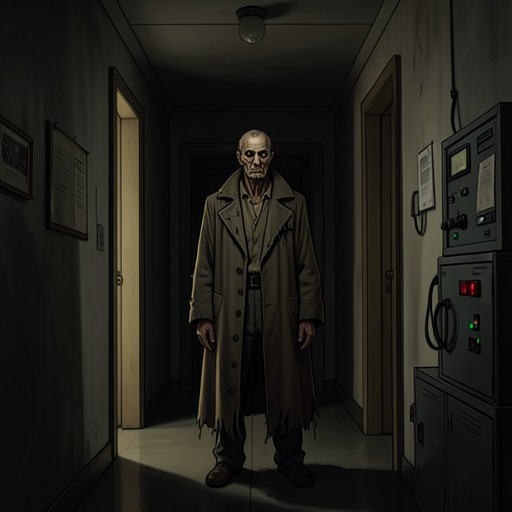
When [Hiram B. Otis](entity:character-recall-character-hiram-b-otis-e71452c9834a) buys [Canterville Chase](entity:location-recall-location-canterville-chase-83a5155355a6), [Lord Canterville](entity:character-recall-character-lord-canterville-949ab60ba39f) warns him that the house is haunted. The ghost has appeared for centuries, often before a family death, and its history has frightened members of the Canterville household and driven away servants.
Hiram treats the warning as a quaint superstition, insisting that no ghost could withstand modern American practicality. His purchase sets the story’s cultural collision in motion: an ancestral English haunting is about to meet a family that refuses to be afraid.
A few weeks after the purchase
The Otises Arrive
At the close of the season, Hiram, [Mrs. Otis](entity:character-recall-character-mrs-otis-e4270103b52b), Washington, Virginia, and the twins travel to their new home. Their drive begins in bright summer weather, but clouds gather and the atmosphere turns ominously still as they enter the estate.
[Mrs. Umney](entity:character-recall-character-mrs-umney-5e5192bed937), the old housekeeper retained at Lady Canterville’s request, welcomes them into the Tudor house. The contrast between the family’s lively confidence and the estate’s uneasy quiet prepares the ground for the haunting that follows.
The Otises’ first evening at Canterville Chase
The Bloodstain Revealed
In the library, [Mrs. Otis](entity:character-recall-character-mrs-otis-e4270103b52b) notices a red stain near the fireplace and asks for it to be removed. [Mrs. Umney](entity:character-recall-character-mrs-umney-5e5192bed937) explains that it is the blood of Lady Eleanore de Canterville, murdered there by her husband, [Sir Simon de Canterville](entity:character-recall-character-sir-simon-de-canter-3ee7d47b0eb2), in 1575; she says his body vanished and his guilty spirit still haunts the house.
Washington dismisses the story and scrubs away the stain with Pinkerton’s detergent. Lightning and thunder immediately shake the room, and Mrs. Umney faints, but Hiram treats the episode as a matter of weather and household inconvenience.
The mornings after the arrival
The Stain Returns
The bloodstain reappears each morning after Washington removes it, even when Hiram locks the library overnight. The family gradually accepts that the stain cannot be explained by ordinary cleaning, and Hiram begins to doubt his certainty that ghosts do not exist.
The stain changes color from red to vermilion, purple, and even emerald green. The shifting hues amuse the family and provoke bets, but Virginia alone is distressed by them, hinting at her unusual sympathy for the ghost’s sorrow.
One o’clock on a night soon after the stain returns
The Chain-Rattling Ghost
After the family has gone to bed, Hiram hears chains and footsteps in the corridor. He opens his door and sees Sir Simon, an aged and terrifying figure burdened with manacles and rusty chains.
Instead of fleeing, Hiram offers him a bottle of Tammany Rising Sun Lubricator and politely recommends that he oil the chains. He leaves the product on a table and returns to bed, turning the ghost’s carefully staged entrance into a comic failure.
Immediately after Sir Simon meets Hiram
Pillow and Escape
Sir Simon stands in offended silence, then smashes the bottle and flees down the corridor, groaning and glowing green. At the staircase, the twins appear and throw a pillow at him.
He escapes through the wainscoting by using his supernatural powers, but the encounter leaves him shaken. For the first time in his long career, his victims have answered his terror with casual annoyance rather than fear.
That night after the first encounter
A Ghost’s Wounded Pride
In a secret chamber, Sir Simon remembers the people he once terrified, from the Dowager Duchess to servants and aristocrats whose lives he claims to have ruined. He takes pride in his celebrated ghostly performances and cannot comprehend why the Otises refuse to respond as proper victims should.
Their offer of lubricant and the twins’ pillow strike him as intolerable insults. He resolves to take vengeance, though his confidence is already undercut by the family’s utter lack of reverence for his craft.
The following Sunday night
The Armored Apparition
After several quiet days, a crash in the hall brings the family downstairs. They find old armor toppled from its stand and Sir Simon sitting in a chair, rubbing his injured knees after being overwhelmed by the weight of his own suit of mail.
The twins shoot pellets at him while Hiram covers him with a revolver and orders him to raise his hands. Sir Simon escapes through the family, extinguishing Washington’s candle as he passes, but the episode leaves him more humiliated than frightening.
Immediately after the armored apparition
The Remedy for Laughter
At the top of the staircase, Sir Simon tries to recover his authority with his famous demonic laugh. [Mrs. Otis](entity:character-recall-character-mrs-otis-e4270103b52b) comes out in her dressing gown and offers him Dr. Dobell’s tincture, assuming he is unwell.
He considers turning himself into a black dog, but approaching footsteps make him hesitate. He vanishes with a groan instead, while the family’s matter-of-fact concern reduces another carefully prepared haunting to an awkward household incident.
A later stormy night
The Imitation Ghost
Sir Simon prepares an elaborate attack, intending to frighten Washington and [Mrs. Otis](entity:character-recall-character-mrs-otis-e4270103b52b) before tormenting the twins. As he approaches Washington’s room, however, he encounters a grotesque figure with glowing eyes, a blazing mouth, and a weapon, and flees in terror.
At dawn he discovers that the apparition is a dummy assembled from a bed-curtain, a sweeping brush, a cleaver, and a turnip. Its placard identifies it as the “[Ye Otis Ghoste](entity:object-recall-object-ye-otis-ghoste-3e57b6cb2ef6),” an imitation designed to expose the ghost’s own vulnerability to fear.
Dawn after the imitation ghost prank
The Unfulfilled Oath
Furious at being tricked, Sir Simon swears that violence will follow when Chanticleer crows twice. A distant rooster crows once, but never gives the second call he expects.
Sir Simon waits for hours, then consults his books of chivalry and discovers that the omen has not been fulfilled. The failed oath adds another indignity to his mounting list of defeats, and he retreats to his coffin until evening.
The next several weeks
The Lubricated Haunting
Exhausted by the household’s resistance, Sir Simon decides that he must continue his appointed appearances even if no one appreciates them. He removes his boots, walks carefully, and finally uses the lubricant he once rejected, stealing the bottle from Hiram’s room.
His precautions do not spare him from the twins’ traps. He trips over strings and falls on a butter-slide, suffering injuries that turn the work of haunting into an exhausting struggle for survival.
One night after the butter-slide fall
The Water Jug Trap
Determined to restore his dignity, Sir Simon dresses as Reckless Rupert, the Headless Earl, and prepares to visit the twins’ bedroom. When he throws open the door for a dramatic entrance, a heavy jug of water falls on him, drenching him and narrowly missing his shoulder.
The twins’ hidden laughter sends him fleeing. He catches a severe cold, and the experience convinces him that even his most celebrated disguises cannot make the family respect or fear him.
September 19
The Final Humiliation
Sir Simon goes to the entrance hall in the guise of Jonas the Graveless, amusing himself by making satirical remarks about the Otises’ photographs. Two figures suddenly leap from a dark corner and shout “Boo” in his ear.
He bolts toward the staircase, where Washington waits with a garden syringe. Hemmed in, Sir Simon escapes through an unlit iron stove and returns to his room filthy and despairing. After this, he undertakes no more nocturnal expeditions.
After September 19
The Ghost Withdraws
The twins continue to wait for Sir Simon and scatter nutshells in the passages, but he refuses to appear. Hiram resumes work on his history of the [Democratic Party](entity:organization-recall-organization-democratic-party-a724097eda1d), [Mrs. Otis](entity:character-recall-character-mrs-otis-e4270103b52b) hosts a clam-bake, and Virginia rides with [Cecil, Duke of Cheshire](entity:character-recall-character-cecil-duke-of-chesh-8dfa3091454c), who is visiting during the last week of his holidays.
Believing the ghost has left, Hiram writes to [Lord Canterville](entity:character-recall-character-lord-canterville-949ab60ba39f). The family’s ordinary routines return, but Sir Simon remains in the house, wounded and still intent on recovering his influence over the Canterville lineage.
During Cecil’s visit
The Unattempted Vampire
Hearing that Cecil is staying at the estate, Sir Simon plans to frighten him in the role of the Vampire Monk. The performance once terrified an aristocratic woman into a fatal apoplexy, and Sir Simon hopes to prove that he still holds power over the family connected to the young duke.
His fear of the twins prevents him from leaving his room. Cecil sleeps peacefully, and Sir Simon’s intended return to terror remains only a plan, another sign that his old identity has become impossible to sustain.
A few days later
Virginia Finds Sir Simon
After riding with Cecil on Brockley meadows, Virginia tears her habit and takes the back stairs to avoid being seen. Passing the open [Tapestry Chamber](entity:location-recall-location-tapestry-chamber-7c8bf2cca91b), she looks inside and finds Sir Simon seated by the window, watching autumn leaves fall and appearing deeply dejected.
Though her first impulse is to flee, Virginia feels pity for him and speaks to him gently. Their encounter begins a relationship unlike the ghost’s confrontations with the rest of the family, grounded in attention rather than mockery or fear.
During Virginia’s first conversation with Sir Simon
A Confession of Loneliness
Virginia says her brothers will soon return to Eton, so Sir Simon will no longer be tormented by them if he behaves himself. He rejects the suggestion, insisting that rattling chains and groaning through keyholes are his reason for existing, then admits that he has not slept for three hundred years and is desperately tired.
He also admits that he killed his wife, though he calls the murder a private family matter and complains that her brothers starved him afterward. Virginia condemns the killing but responds to his weariness with compassion, offering him a sandwich even though he can no longer eat.
During the conversation in the Tapestry Chamber
The Paints and the Stain
Virginia rebukes Sir Simon for calling her family vulgar and dishonest, pointing out that he stole paints from her box to restore the bloodstain. He has taken her reds, green, and yellow, leaving her with colors suited only to gloomy moonlight scenes.
Sir Simon defends the theft by saying genuine blood is hard to obtain and argues that color is a matter of taste. Their exchange makes the persistent stain less a mere supernatural nuisance than a trace of the history and guilt he has never escaped.
Later in the conversation in the Tapestry Chamber
The Garden of Death
Virginia tells Sir Simon he should emigrate to America, where a family ghost might be valued. He answers with a cutting remark about American manners, but then confesses that he is lonely and cannot sleep, asking her not to leave him.
He describes a garden beyond the pinewoods where the dead lie beneath flowers and a yew tree, and says that death must bring peace. Virginia recognizes the place as the Garden of Death, understanding that Sir Simon longs not for another haunting but for release from his endless existence.
Immediately after Sir Simon describes the Garden of Death
The Prophecy Explained
Sir Simon asks Virginia about the old verse painted on the library window. She recites the Canterville prophecy, which speaks of a golden girl, prayer from a sinner, an almond blossoming, and a child’s tears bringing peace to the house.
He explains that she must weep for his sins and pray for his soul, since he has neither tears nor faith. If she remains pure and gentle, the angel of death may show mercy, though she will have to pass through frightening visions and wicked voices.
Immediately after the prophecy is explained
Virginia Leads the Ghost Away
Virginia declares that she is not afraid and will ask the angel for mercy. Sir Simon takes her hand, and the tapestry’s huntsmen and carved creatures warn her to turn back, but she closes her eyes and follows him.
At the far end of the room, Sir Simon speaks words she cannot understand. The wall fades into a black cavern, a bitter wind sweeps around them, and the wainscoting closes behind them, leaving the [Tapestry Chamber](entity:location-recall-location-tapestry-chamber-7c8bf2cca91b) empty. Virginia has entered the danger foretold in the prophecy to help the ghost find peace.
About ten minutes after Virginia leaves the Tapestry Chamber
Virginia Disappears
When Virginia does not come down for tea, [Mrs. Otis](entity:character-recall-character-mrs-otis-e4270103b52b) initially assumes she is in the garden. As the hours pass and Virginia remains missing, the household searches the house and grounds in rising alarm.
Hiram remembers that he allowed gypsies to camp in the park and rides to find them, while Washington and the servants search the district. The family’s earlier amusement at the haunting gives way to genuine fear for Virginia’s safety.
That evening and night
The Search for Virginia
Hiram reaches the gypsies’ camp and finds that they have left suddenly, but their fire and plates remain. He sends people to search the area, wires the county police, and rides toward Ascot and Bexley in pursuit of any clue.
Cecil, frantic with worry, follows Hiram on his pony despite having been told to stay behind. At the station and on the common, no one has seen Virginia; the gypsies are found and questioned, but she is not with them. The search returns to [Canterville Chase](entity:location-recall-location-canterville-chase-83a5155355a6) without an answer.
At midnight that night
Virginia Returns at Midnight
After the exhausted searchers return home, the family gathers in grief, and Hiram tells them that nothing more can be done until morning. As midnight sounds, thunder shakes the house and unearthly music fills the air; a panel opens at the top of the staircase and Virginia steps out, pale and carrying a small casket.
Her family rushes to embrace her, while Cecil kisses her and the twins celebrate. Virginia says she has been with the ghost, that he is dead, and that he gave her beautiful jewels before he died.
Immediately after Virginia returns
The Secret Chamber
Virginia leads the family through the opening in the wainscoting and down a secret corridor. Behind an old oak door they find a low chamber with a grated window, where a gaunt skeleton is chained to an iron ring and stretched toward a trencher and a mould-covered ewer placed just beyond its reach.
The empty trencher and the remains reveal how Sir Simon died: he was chained and left to starve. Virginia kneels to pray beside him, and the hidden truth transforms the ghost’s history from a tale of supernatural mischief into one of imprisonment and suffering.
During the discovery of the secret chamber
The Almond Tree Blossoms
One of the twins looks through the small window and sees that the old, withered almond tree has blossomed in the moonlight. The unexpected bloom fulfills the sign in the Canterville prophecy and confirms that Virginia’s intervention has brought a change to the house.
Virginia says that God has forgiven Sir Simon. The flower, her prayer, and the ghost’s release together mark the end of his restless existence and the arrival of peace at [Canterville Chase](entity:location-recall-location-canterville-chase-83a5155355a6).
Four days after Virginia returns
Sir Simon’s Funeral
A funeral procession leaves [Canterville Chase](entity:location-recall-location-canterville-chase-83a5155355a6) late at night, with [Lord Canterville](entity:character-recall-character-lord-canterville-949ab60ba39f) as chief mourner and Virginia beside him. Hiram, [Mrs. Otis](entity:character-recall-character-mrs-otis-e4270103b52b), the children, and [Mrs. Umney](entity:character-recall-character-mrs-umney-5e5192bed937) follow the hearse, and the Reverend Augustus Dampier conducts the service beneath the old yew tree in the [Canterville churchyard](entity:location-recall-location-canterville-churchya-653855e5a6da).
Virginia lays almond blossoms on Sir Simon’s coffin as the moon emerges and a nightingale sings. The burial gives public and familial dignity to the man whose remains had been hidden and neglected, while the flowers preserve the sign of his release.
The morning after the funeral
The Jewels Disputed
Before [Lord Canterville](entity:character-recall-character-lord-canterville-949ab60ba39f) leaves for London, Hiram raises the question of the jewels Sir Simon gave Virginia. He argues that they should be treated as Canterville heirlooms and returned, citing their great value and his belief in Republican simplicity.
Lord Canterville refuses, maintaining that the jewels belong to Virginia because Sir Simon gave them to her and their existence was unknown to the family. He also points out that Hiram bought the house and its contents, so the ghost’s property had passed with the sale.
Spring 1890
Virginia’s Marriage
[Lord Canterville](entity:character-recall-character-lord-canterville-949ab60ba39f) persuades Hiram to let Virginia keep the jewels as a remembrance of Sir Simon. By the time Virginia marries [Cecil, Duke of Cheshire](entity:character-recall-character-cecil-duke-of-chesh-8dfa3091454c), the ruby necklace and the rest of her jewels have become widely admired.
Virginia receives the coronet associated with her new rank, though Hiram remains uneasy about her marriage into the aristocracy. His theoretical objections to titles yield to pride as he walks her down the aisle, and the union links the American family to the English world they had once treated with amused skepticism.
After the honeymoon
The Secret Kept
The Duke and Duchess return to [Canterville Chase](entity:location-recall-location-canterville-chase-83a5155355a6) and visit Sir Simon’s grave. The inscription bears his initials and the verse from the library window, while Virginia lays roses on the tomb before they enter the ruined abbey.
Cecil asks what happened when she was alone with the ghost, but Virginia refuses to tell him. She explains that Sir Simon taught her what life and death mean and why love is stronger than both; Cecil accepts her silence, asking only for her heart and trusting that she may tell their children someday.