Before the main story, during Oedipa’s affair with Pierce
The Tower Vision
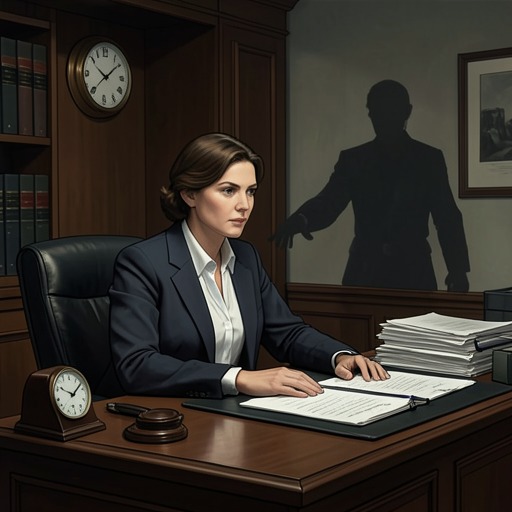
Oudipha and Pierre saw the painting "Tapestry of the Earth" by Remedios Varo while traveling in Mexico: a trapped girl weaving a tapestry containing the entire world. The image made her realize that perhaps she could not escape her cage, because the tower seemed everywhere, not
Before the main story, during Mucho’s employment as a used-car salesman
The Car Lot Years
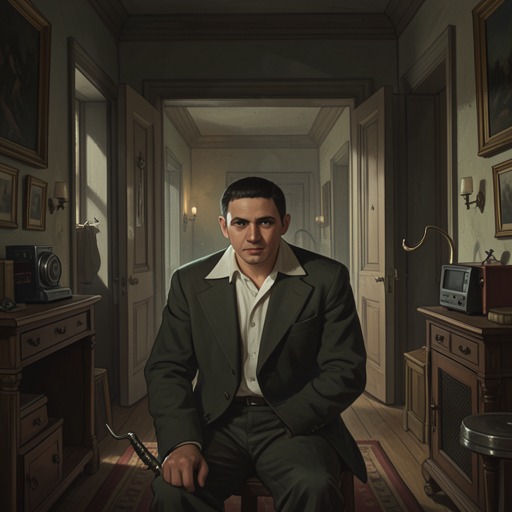
Mu Qiao sold used cars for two years, painfully immersed in the life traces left by the owners: ashes, fragments, and personal items embedded in the old, worn-out cars. In his view, each transaction meant people exchanged one damaged self for another, a ritual that was both ordinary and terrifying
During World War II, before he became Oedipa’s therapist
Hilarius’s Camp Past
In [Buchenwald](entity:location-recall-location-buchenwald-85536a275fcb), [Dr. Hilarius](entity:character-recall-character-dr-hilarius-19a434048d7c) participated in experiments aimed at making prisoners insane, using methods including drugs, hypnosis, shock shows, and manipulation of perception. Later, when he spoke about this work, he said he had tried to make a nervous prisoner appear less cruelly treated than a
1577
The Dutch Revolt
During the [Dutch Revolt](entity:event-recall-event-dutch-revolt-40608c5650c8) against Spanish rule, William of Orange entered [Brussels](entity:location-recall-location-brussels-4d1364f23b86) at the invitation of an eighteen-member committee. This group, composed of radical Calvinists, challenged the existing political order, deposed Leonard I, the hereditary postmaster of Tournai and Taxila, and supported Jan H
1578–1585
Tristero’s First Campaign
Hernando Juan de [Tristero](entity:organization-recall-organization-tristero-281cedc0c2e3) Caravilla launched a guerrilla campaign against Jan Hinkert, repeatedly attempting to assassinate the postmaster of Orange. As a Spaniard, he received little support in the Low Countries, dominated by Protestants; as political control changed, his life was
Late sixteenth century
The Secret Network Forms
Tristram established a secret postal network to hinder and attack the Tuen and Taxis postal routes. His followers wore black clothing, bore a silent postal horn as a symbol, and were associated with a dead badger; some believe the name of the badger is related to the word "T
Before the events of The Courier’s Tragedy
The Lost Guard Massacre
In the story of the drama, the missing guard of Fajo -- a squad composed of elite knights -- disappeared near the border of Squamulia. Soon after, the kind Duke Fajo was poisoned to death. This disappearance became one of the gradually revealed crimes in the plot. Later, it was
1943
The Battle of Lago di Pietà
During the advance towards Rome, a group of American soldiers were trapped along the shore of Lake Pieta. German forces fired from the cliffside at them, and the soldiers ultimately all died, failing to escape successfully and leaving no records of their final days. The bodies and equipment were thrown into the lake
Early 1950s
The Bones Become Charcoal
tony yagawa served with an italian unit that fought alongside the german army in the area around lake pieta. later, he and his accomplices returned to the lake to recover the bones of american soldiers who had drowned. the bones were sold through an intermediary, passing through a trading company
Around 1845 and the decades that followed
The Postal Monopoly Tightens
The United States reduced postage rates and implemented laws that pushed many independent postal operators out of the market. Later, Mike Falopian studied this history and viewed it as a power struggle: the government controlled delivery, serving the public while also effectively suppressing alternatives
1849–1850
Tristero’s American Migration
According to a account later compiled by Oudipha and Emery Bots, many members of the Tristram group fled to the United States during the political reaction wave between 1849 and 1850. They arrived in a country where the private postal industry had been
During the French Revolution
The Tristero Schism
A translation was passed to Ginsberg Kohn, describing the split that occurred during the [French Revolution](entity:time-recall-time-7fe2af46abc5) involving Tristram. One faction wanted to help the Tourny-Taxi family when they were in trouble; the opponents believed this proposal betrayed Tristram's longstanding resistance to the family
Spring, shortly before the novel opens
Pierce’s Death
Pierce Infrarati died in spring, leaving a large California heritage, including real estate, company shares, and a collection of unusual stamps. The law firm handling his affairs did not find his will until later
One summer afternoon, at the opening of the novel
Oedipa Named Executor
one summer afternoon, Oedipa returned home from a Tupperware party, and received a letter informing her that Pierce had designated her as executor of his estate. The attorney who drafted the will, [Metzger](entity:character-recall-character-metzger-2ccba42dff8c), would serve as a co-executor; if litigation arose, he would also serve
About a year before the estate letter
The Last Call from Pierce
Odipia remembered a morning call from Pierce. He first imitated several funny accents, including a Transylvanian official and a Gestapo officer, and only then returned to his usual imitation of the Shadow Ace accent. She tried to remind him that their relationship had ended, but Pierce urged her to
The evening Oedipa receives the estate letter
Mucho’s Radio Crisis
Mucho came home from [KCUF](entity:location-recall-location-kcuf-53ed811261ae) upset about his conflict with program director Funch, who wanted to censor his conversations with young callers. His distress echoed an earlier crisis over the car lot, whose discarded belongings had made him feel that people’s lives were being casually exchanged and erased.
When Oedipa asked for help with the will, Mucho admitted that he could not manage even their taxes and directed her to their lawyer. His inability to support her leaves Oedipa to face the estate alone.
Three in the morning, shortly after the estate letter
Hilarius Seeks a Test Subject
[Dr. Hilarius](entity:character-recall-character-dr-hilarius-19a434048d7c) called Oedipa in the middle of the night and asked her to join his LSD study of suburban housewives. She refused, explaining that she did not know what his pills contained and did not want to be drawn into the experiment.
The call intensified her distrust of the drugs and of the therapeutic relationship. She continued seeing him anyway, partly because she had no clear way to know when she was cured and partly because staying was easier than leaving.
The morning after the estate letter
Roseman’s Advice
Oedipa went to her family lawyer, Roseman, after a sleepless night and learned the basic work required of an executor: inventorying assets, valuing them, collecting debts, handling probate, and distributing the estate. Roseman asked whether she was interested in what she might discover.
His question touched a deeper unease. Oedipa had long felt buffered from life, as if she were waiting inside a tower for someone to offer rescue, and she now wondered whether the estate might expose what had remained outside her understanding.
Before Oedipa leaves for San Narciso
The Tower’s Unanswered Escape
Oedipa remembered how her relationship with Pierce had seemed to rescue her from a private tower, only for the promise of escape to collapse. The image of the embroidered world returned: the tower was not merely a place, and the force keeping her confined seemed to come from everywhere.
She could respond only with instinct, superstition, or some ordinary diversion. That unresolved sense of confinement gives emotional weight to her later effort to discover whether a hidden postal network offers a real alternative to the world she knows.
The next morning
The Journey South
Oedipa left [Kinneret-Among-The-Pines](entity:location-recall-location-kinneret-among-the-p-4d0000fb8787) for [San Narciso](entity:location-recall-location-san-narciso-238bf4d6b8c1) to examine Pierce’s records and meet [Metzger](entity:character-recall-character-metzger-2ccba42dff8c). Mucho accepted her departure without desperation and asked her to look after the oregano in the garden and to hang up if Hilarius called.
The trip took her into a landscape that seemed less like a coherent city than a pattern of roads, housing tracts, and industrial sites. From a hillside, San Narciso’s streets struck her as a printed circuit whose ordered lines hinted at a message she could almost read.
Sunday afternoon, soon after Oedipa arrives in San Narciso
The San Narciso Revelation
Looking down over [San Narciso](entity:location-recall-location-san-narciso-238bf4d6b8c1), Oedipa felt that its streets and houses formed a hieroglyphic pattern, like a circuit board. The revelation suggested that a meaning might be present without yet becoming legible.
The impression faded as she drove past factories and the enormous [Yoyodyne plant](entity:location-recall-location-yoyodyne-plant-2df5bf278dd5). But the possibility of a message concealed in ordinary arrangements stayed with her and shaped how she later interpreted the symbols she encountered.
The first day of Oedipa’s stay in San Narciso
Arrival at Echo Courts
Oedipa checked into [Echo Courts](entity:location-recall-location-echo-courts-23e49853ebc5), a motel marked by a giant artificial nymph and a still pool. Its young manager, Miles, sang in an English accent and introduced his band, the Paranoids, before suggesting that Oedipa wanted to sleep with him.
She rebuffed him and offered to pass a recording to Mucho, who worked in radio. The encounter established the motel’s strange mixture of isolation, performance, and opportunistic sexuality, which would soon become the setting for Oedipa’s affair with [Metzger](entity:character-recall-character-metzger-2ccba42dff8c).
The first night at Echo Courts
Metzger’s Arrival
[Metzger](entity:character-recall-character-metzger-2ccba42dff8c) arrived after searching for Oedipa and revealed that he had once been a child actor known as Baby Igor. He spoke about his appearance and his fear that it concealed something of his past, then prompted Oedipa to watch a film in which his childhood self appeared with a St. Bernard.
The movie, Cashiered, unexpectedly placed Metzger’s past on the television screen. Its staged adventure, combined with his legal work for Pierce, blurred the line between performance and the practical business of the estate.
The first night at Echo Courts
Cashiered’s Changing Reels
As Cashiered played, [Metzger](entity:character-recall-character-metzger-2ccba42dff8c) claimed personal knowledge of the Gallipoli scenes and insisted that the film’s apparent continuity could not be trusted. Oedipa challenged him to bet that Baby Igor and his father would survive, while he insisted she could not know the ending before seeing it.
The film jumped unpredictably among scenes, leaving Oedipa unsure whether its disorder was a technical accident or part of a deliberate seduction. The uncertainty turned the movie into a game about prediction, control, and the possibility that someone else had arranged the sequence.
Later that first night
The Bet and the Affair
Oedipa and [Metzger](entity:character-recall-character-metzger-2ccba42dff8c) made a wager about whether the characters in Cashiered would escape. Their drinking, the band’s music outside, and the changing film reels stretched the night into a confusing performance that seemed to slow time.
After Oedipa layered on her clothes as a comic way of playing Strip Botticelli, a ruptured hairspray can careened around the bathroom and forced them both to take cover. They eventually had sex; when the film returned, Baby Igor and the dog drowned and the father remained to deliver a final farewell. Oedipa had won the bet, but Metzger answered that she had won him.
During the Cashiered viewing
Fangoso’s Advertising Map
A television advertisement for [Fangoso Lagoons](entity:location-recall-location-fangoso-lagoons-5184b8b87132) showed a planned development owned in part by Pierce. The map brought back the same sensation Oedipa had felt when she first looked down on [San Narciso](entity:location-recall-location-san-narciso-238bf4d6b8c1): a pattern that seemed to promise concealed meaning.
The development’s artificial lake and imported wreckage later become the setting for a dispute over human bones. The advertisement thus links Pierce’s commercial world to the history and mystery Oedipa will pursue.
After Oedipa begins corresponding with Mucho from Echo Courts
The Letter’s Misprint
A letter from Mucho carried a government warning that read, “REPORT All Obscene Mail To Your Potsmaster.” Oedipa noticed the misspelling and joked with [Metzger](entity:character-recall-character-metzger-2ccba42dff8c) about the impossible official. He dismissed it as a typographical error.
The odd stamp and its wording later become part of a larger pattern of postal irregularities. At this point, however, the incident remains one more joke in an environment where signs may be meaningless or may be clues.
During Oedipa’s stay at Echo Courts, after she meets Metzger
The Scope Encounter
Oedipa and [Metzger](entity:character-recall-character-metzger-2ccba42dff8c) went to [The Scope](entity:location-recall-location-the-scope-e9b4c91d1935), a bar frequented by Yoyodyne workers and devoted to electronic music. There they met [Mike Fallopian](entity:character-recall-character-mike-fallopian-c84e7010ee57), who explained the [Peter Pinguid Society](entity:organization-recall-organization-peter-pinguid-so-cace26effd98) and its belief that industrial capitalism and communism were linked forms of a larger system of control.
Fallopian’s account of Commodore Pinguid ended with the Confederate officer becoming a California real-estate speculator. The coincidence with Pierce’s career made Oedipa laugh, while the bar’s atmosphere introduced her to political outsiders who would complicate her search.
That night at The Scope
The Underground Mail Clue
At [The Scope](entity:location-recall-location-the-scope-e9b4c91d1935), Oedipa found a bathroom notice inviting people to contact a person called Kirby through [W.A.S.T.E.](entity:organization-recall-organization-w-a-s-t-e-00f4c96c8ae2) and copied a strange horn-like symbol into her notebook. The mark looked like a coded sign rather than a sexual signal.
Fallopian then disclosed that the [Peter Pinguid Society](entity:organization-recall-organization-peter-pinguid-so-cace26effd98) used Yoyodyne’s internal delivery system for private letters, despite the risks and the company’s suspicion. Members were expected to send at least one letter a week through the unauthorized route, making the message on the wall her first concrete clue to an alternative postal network.
After the Fangoso Lagoons outing
The Courier’s Tragedy
After hearing the Paranoids recount the plot, Oedipa and [Metzger](entity:character-recall-character-metzger-2ccba42dff8c) attended a performance of The Courier’s Tragedy at [The Tank](entity:location-recall-location-the-tank-862ec5376670). The play told of the corrupt Duke Angelo, the endangered heir Niccolò, the courier system of [Thurn and Taxis](entity:organization-recall-organization-thurn-and-taxis-43d63e173ebc), and the crimes that shaped the politics of [Faggio](entity:location-recall-location-faggio-aa53e2089fbf) and [Squamuglia](entity:location-recall-location-squamuglia-8edd6b1b16bf).
Its final act transformed the story into a revelation about murdered guards whose bones had been made into ink. The closing verses named Trystero, a shadowy power associated with a stiletto and the muted post horn, leaving Oedipa unsettled by the possibility that the play had echoed her recent clues.
During the final act of The Courier’s Tragedy
The Trystero Name
The play’s final revelation described a miracle in which the murdered guards’ bones and Niccolò’s blood rewrote a false letter into a true confession. Its last lines declared that the former courier now served the stiletto’s Thorn and had been appointed to meet Trystero.
The name hung in the theater after the act ended. For Oedipa, it connected the play’s secret assassins to the muted horn and the postal clues she had already begun collecting, though the connection was not yet proof of a surviving organization.
Immediately after Oedipa sees The Courier’s Tragedy
Driblette’s Theory of Performance
Oedipa went backstage to question the director, [Randolph Driblette](entity:character-recall-character-randolph-driblette-7a7670543886), about the play’s text and its Trystero lines. Driblette resisted the idea that the printed words held the whole meaning, insisting that the play existed in an actor’s mind and in the performance that gave it life.
He admitted that he had added the assassins’ stage appearance himself and refused to explain his choices. His defense of theatrical creation unsettled Oedipa’s search for documentary certainty: a text could be altered, and an apparent clue might originate in a director rather than in an old source.
Soon after Oedipa’s first meeting with Driblette
The Yoyodyne Stockholders’ Meeting
Oedipa attended a Yoyodyne stockholders’ meeting and found herself lost in the plant’s office corridors after the formal business and company songs. She encountered [Stanley Koteks](entity:character-recall-character-stanley-koteks-932bb6cd5a1a), an engineer who resented the company’s rule that employees surrender patent rights to their inventions.
Koteks described the [Nefastis Machine](entity:object-recall-object-nefastis-machine-c1d7020dfc03), which supposedly used a sensitive person’s mental communication with [Maxwell’s Demon](entity:concept-recall-concept-maxwell-s-demon-e5398441f2b2) to move a piston. His account tied the hidden postal clue to a community of frustrated inventors, though it also left Oedipa uncertain whether she had found an underground network or a new form of delusion.
At the Yoyodyne meeting
Koteks Protects W.A.S.T.E.
Oedipa showed Koteks her notebook and asked about the symbol. When she mentioned [W.A.S.T.E.](entity:organization-recall-organization-w-a-s-t-e-00f4c96c8ae2), he corrected her pronunciation and warned her not to ask further, briefly revealing that the name mattered to him.
He gave her an address for [John Nefastis](entity:character-recall-character-john-nefastis-fd9d785c63a7) but then tried to withdraw it. His guarded response convinced Oedipa that the symbol and the inventor’s circle might be connected, even though she still lacked a reliable explanation of what W.A.S.T.E. meant.
During Oedipa’s continuing San Narciso investigation
The Wells Fargo Marker
A historical marker near [Fangoso Lagoons](entity:location-recall-location-fangoso-lagoons-5184b8b87132) recounted a 1853 attack on [Wells, Fargo](entity:organization-recall-organization-wells-fargo-62cd1adb580d) riders by masked marauders in black. The only witness had described the killers as mysterious, and one victim had left a cross-like sign in the dust.
Oedipa wondered whether the mark might be a T and whether the black-clad attackers were related to the assassins in The Courier’s Tragedy. The marker added a possible American history to the pattern, although neither she nor Fallopian could establish its source with confidence.
During Oedipa’s visits to Pierce’s properties
Mr. Thoth’s Ring
At [Vesperhaven House](entity:location-recall-location-vesperhaven-house-9ee1b2d4aaf4), Oedipa met Mr. Thoth, an elderly resident who recalled his grandfather’s stories about riding for the [Pony Express](entity:organization-recall-organization-pony-express-2b88f9e59d7b) and killing supposed Indians. He described a dream in which black-clad attackers used boneblack to disguise themselves, and showed Oedipa a signet ring taken from one of them.
The ring bore the same horn-like device she had copied from [The Scope](entity:location-recall-location-the-scope-e9b4c91d1935). Mr. Thoth’s recollection strengthened Oedipa’s sense of a historical pattern, but the story’s distance from verifiable evidence left room for coincidence and distortion.
A rainy morning after Oedipa meets Mr. Thoth
The Forged Watermark
[Genghis Cohen](entity:character-recall-character-genghis-cohen-a5fbebee2a0f) summoned Oedipa to inspect irregularities in Pierce’s stamp collection. A [Pony Express](entity:organization-recall-organization-pony-express-2b88f9e59d7b) commemorative stamp carried the horn-like device as a watermark, and a [Thurn and Taxis](entity:organization-recall-organization-thurn-and-taxis-43d63e173ebc) stamp displayed the post horn in its corners.
Cohen judged the altered stamp to be a deliberate counterfeit rather than a printing error. Its watermark appeared to mute the old postal emblem, while other forged stamps contained carefully planted mistakes. The discovery made the stamp collection a possible record of a continuing clandestine system.
After Cohen identifies the forged stamps
The Eight-Cent Airmail Stamp
Oedipa told Cohen about the “Potsmaster” misprint on Mucho’s letter and about the matching symbol on Mr. Thoth’s ring and Koteks’s work. The stamps’ errors appeared to span many decades, suggesting either a long-running tradition or a modern construction made to look ancient.
Cohen accepted that the clues pointed to an active organization but cautioned that the government might already know more than they did. Oedipa left with the disturbing possibility that the dead might persist through objects and messages passed from hand to hand.
During Oedipa’s trip to Berkeley
The Nefastis Test
Oedipa visited [John Nefastis](entity:character-recall-character-john-nefastis-fd9d785c63a7) and heard him explain that his machine joined thermodynamic entropy to information theory through [Maxwell’s Demon](entity:concept-recall-concept-maxwell-s-demon-e5398441f2b2). He asked her to concentrate on the portrait of James Clerk Maxwell and try to communicate with the Demon so that a piston would move.
Oedipa watched for a sign but could not tell whether the piston shifted. Nefastis declared that she was not a sensitive, then tried to turn the visit into a sexual proposition. She fled, rejecting both his test and his attempt to exploit her uncertainty.
After Oedipa leaves Nefastis’s apartment
The Fork in the Freeway
Driving toward [San Francisco](entity:location-recall-location-san-francisco-8a14902ce523), Oedipa considered the two kinds of entropy Nefastis had described and the possibility that their resemblance was only a metaphor. She recognized that her own evidence for [Tristero](entity:organization-recall-organization-tristero-281cedc0c2e3) consisted of many coincidences joined by a single word.
She listed the fragments she believed she knew: the network’s opposition to [Thurn and Taxis](entity:organization-recall-organization-thurn-and-taxis-43d63e173ebc), its muted horn, its possible American disguises, and its apparent presence in contemporary California. She could neither prove that Tristero existed nor dismiss it without discarding a growing body of clues.
That evening in San Francisco
The Pin at The Greek Way
Oedipa drifted through [San Francisco](entity:location-recall-location-san-francisco-8a14902ce523) and entered [The Greek Way](entity:location-recall-location-the-greek-way-10bcb7a33376) with a group of tourists. There she noticed a patron wearing a discreet pin shaped like the muted post horn, despite the venue’s theatrical treatment of gay nightlife.
When she questioned him, he explained that the pin belonged to [Inamorati Anonymous](entity:organization-recall-organization-inamorati-anonym-619d227d6db9), a support network for people struggling with love as an addiction. He denied knowing the larger history Oedipa described, but his organization provided another example of isolated people using discreet, informal communication.
That night at The Greek Way
The Anonymous Love Network
[Arnold Snarb](entity:character-recall-character-arnold-snarb-e0fb25faec5d) told Oedipa that [Inamorati Anonymous](entity:organization-recall-organization-inamorati-anonym-619d227d6db9) relied on an answering service rather than meetings. Members stayed anonymous, received help from someone they would not meet twice, and used a telephone number only when the pain of love became unmanageable.
His story showed how a network could connect people while preserving their isolation. Oedipa later told him everything she had found, but he could offer no confirmation that the group had any deeper connection to [Tristero](entity:organization-recall-organization-tristero-281cedc0c2e3).
In the early 1960s, before Oedipa meets Arnold Snarb
The Founder’s Discovery
Arnold recounted the origin story of [Inamorati Anonymous](entity:organization-recall-organization-inamorati-anonym-619d227d6db9): a Yoyodyne executive, automated out of his job, prepared to kill himself but reconsidered after overhearing his wife and the efficiency expert who had replaced him. His attempted suicide gave way to laughter at the absurdity of his situation.
Gasoline had bleached the ink on letters in his pocket, exposing the muted post horn as a watermark. He treated the image as a sign and founded a society of people determined to avoid love, using the horn as its emblem. The account offers a mundane explanation for one group’s symbol without resolving the wider pattern.
Later that night in San Francisco
The Night of the Horns
After Arnold disappeared into the crowd, Oedipa spent the night encountering muted post horns across the city: in chalk, on clothing, in a laundromat, on a bus seat, and in places frequented by outsiders. The signs appeared among people who seemed alienated from ordinary institutions and one another.
She began to imagine a separate world of communication, populated by people who chose not to use the official mail. The repeated symbol could be evidence of a real hidden network, or a pattern her attention had made impossible to stop seeing.
Near dawn after Oedipa’s night in San Francisco
The Letter for Fresno
In a rooming house, Oedipa found a distressed old sailor who asked her to mail a letter to his estranged wife in Fresno. A tattoo of the post horn marked his hand, and he directed her to a mailbox under the freeway.
The sailor’s helplessness moved Oedipa, who held him while he cried and gave him money. She saw the ordinary stamp on his letter had been altered with a tiny black figure, another deliberate disturbance of the official image.
Shortly after Oedipa meets the sailor
The Sailor’s Burning Mattress
The sailor returned to a mattress where he had been sleeping, and Oedipa realized it was likely to be burned with him. She thought of the mattress as a memory store containing the lives, dreams, and suffering of everyone who had slept on it, all of which would vanish when it burned.
The episode made irreversible loss feel physical. Oedipa could not preserve the sailor’s experience, and she could not tell whether his delirium revealed a hidden truth or simply marked his suffering.
The morning after Oedipa meets the sailor
The W.A.S.T.E. Mailbox
Under the freeway, Oedipa found a green box marked with the letters [W.A.S.T.E.](entity:organization-recall-organization-w-a-s-t-e-00f4c96c8ae2) She watched a child drop letters into it, then followed a courier who collected the mail and carried it through [San Francisco](entity:location-recall-location-san-francisco-8a14902ce523) and [Oakland](entity:location-recall-location-oakland-479b7c0dace1).
The courier eventually returned to the [Berkeley](entity:location-recall-location-berkeley-4193e5045bd8) apartment building where Nefastis lived. Oedipa had now seen a functioning private delivery route, a mailbox, and two carriers, although she still could not determine whether the service belonged to [Tristero](entity:organization-recall-organization-tristero-281cedc0c2e3) or to some other underground group.
That evening after Oedipa returns to Berkeley
The Silent Dance
Back at her hotel, Oedipa was swept into a dance among deaf and hard-of-hearing delegates. Couples moved to different rhythms without colliding, apparently coordinated by a shared understanding she could not perceive.
The experience recalled [Jesús Arrabal](entity:character-recall-character-jes-s-arrabal-2e4ef5a4bded)’s idea of an anarchist miracle, a moment when a community could act together without command. Instead of reassuring her, the dance left Oedipa demoralized because she could not name or enter the order that made it possible.
The next day, after Oedipa returns to Kinneret
The Clinic Under Fire
Oedipa drove to the [Kinneret Psychiatric Clinic](entity:location-recall-location-kinneret-psychiatric-72868c7fb4b3) hoping [Dr. Hilarius](entity:character-recall-character-dr-hilarius-19a434048d7c) would tell her that the [Tristero](entity:organization-recall-organization-tristero-281cedc0c2e3) was a fantasy. As she approached, gunshots sounded and Helga Blamm let her into the locked building, explaining that Hilarius had barricaded himself in his office.
Hilarius believed armed fanatics were after him and had damaged the clinic’s switchboard. Oedipa stayed rather than flee, hoping that her presence might calm him and that she might understand whether the persecution was real or imagined.
During the clinic siege
Hilarius’s Buchenwald Confession
From behind his locked office door, Hilarius described his work at [Buchenwald](entity:location-recall-location-buchenwald-85536a275fcb), where he had used psychological techniques to induce insanity in prisoners. He said he had later tried to atone by submitting to Freud and believing that therapy could bring the unconscious into ordinary social life.
His account revealed that his professional confidence rested on a fragile act of faith. Now he feared that people were coming to take him back to Israel for trial, and he insisted that his persecutors could pass through walls and return after every escape.
That evening at the clinic
The Armed Standoff Ends
As police surrounded the clinic, Hilarius grabbed Oedipa and took her hostage, though he seemed to believe she might be an emissary from the people pursuing him. Oedipa secured his rifle, then called for the police to break in rather than continue the siege.
Hilarius surrendered without the dramatic violence he had feared. The police took him for observation, while Oedipa recognized that his breakdown did not resolve her own doubts about whether her evidence of [Tristero](entity:organization-recall-organization-tristero-281cedc0c2e3) was real.
Later that night at KCUF
Mucho’s Transformation
Outside the clinic, Oedipa saw Mucho reporting for [KCUF](entity:location-recall-location-kcuf-53ed811261ae). At a bar afterward, he described hearing music as separable frequencies and voices as patterns that could be aligned across different people until they seemed to form one collective speaker.
He revealed that Hilarius had given him LSD. Mucho believed the drug had ended his recurring nightmare about the car lot and opened him to a boundless shared experience, but Oedipa feared that the experience was dissolving his identity rather than healing him.
That night, after the clinic siege
The Last Conversation with Mucho
Mucho told Oedipa that he could hear the same voice behind people who spoke the same words, as if hundreds of millions of lives could be synchronized into a single chorus. Oedipa recognized that he was no longer relating to the world as the husband she knew.
He offered her his bottle of LSD, but she refused it. She left for [San Narciso](entity:location-recall-location-san-narciso-238bf4d6b8c1) without asking him about the suspicious cancellation on his letter, realizing only afterward that the question would no longer matter in the same way.
After Oedipa returns to Echo Courts
Metzger’s Departure
Back at [Echo Courts](entity:location-recall-location-echo-courts-23e49853ebc5), Oedipa learned that [Metzger](entity:character-recall-character-metzger-2ccba42dff8c) had left with a young woman connected to the Paranoids and had transferred his role as co-executor to another lawyer. His note said the estate matters were handled, but did not acknowledge their affair.
Oedipa accepted that their relationship had been temporary and turned her attention back to the mystery. She also learned that Driblette’s mother would issue a statement, prompting her to wonder whether something had happened to the director.
Two nights before Oedipa learns of it
Driblette’s Death
Oedipa went to meet [Emory Bortz](entity:character-recall-character-emory-bortz-bde55f3d8360) and learned that [Randolph Driblette](entity:character-recall-character-randolph-driblette-7a7670543886) had walked into the Pacific wearing his costume from The Courier’s Tragedy. His death had followed the striking of the set, and Bortz and his students were gathered for a wake.
The news removed Oedipa’s most immediate guide to the performance and its unexplained lines. She wondered whether Driblette had altered the play for a reason connected to [Tristero](entity:organization-recall-organization-tristero-281cedc0c2e3), but no one could tell her what had been in his mind.
At Bortz’s home, after Driblette’s death
The Two Texts
Oedipa compared her paperback of The Courier’s Tragedy with Bortz’s scholarly edition. The two texts differed at the crucial ending: the paperback included the Trystero couplet, while Bortz’s preferred text suppressed its final line and treated the familiar version as a later corruption.
Bortz explained that Driblette had used the more explicit lines in performance, though he could not say why. The mismatch made the printed text unstable and tied the mystery to editorial history, performance, and the choices of people who could no longer be questioned.
During Oedipa’s conversation with Bortz
The Vatican Edition
Bortz showed Oedipa illustrations from a pornographic version of The Courier’s Tragedy said to be held in the [Vatican Library](entity:location-recall-location-vatican-library-dc4b79faff07). He linked the edition to the [Scurvhamite sect](entity:organization-recall-organization-scurvhamite-sect-8e719eb4e741), whose members believed the universe was divided between God’s purposeful order and a blind, mechanical force that drew the doomed toward annihilation.
The sect’s theology offered one interpretation of Trystero: the name could represent the impersonal Other that no appeal to divine order could stop. The explanation added a theological dimension but remained an interpretation, not proof of what Trystero was.
After Bortz explains the editions
Blobb’s Account
Bortz gave Oedipa a historical book that recorded Richard Wharfinger’s use of a commonplace book. In a chapter about [Diocletian Blobb](entity:character-recall-character-diocletian-blobb-df55918cfdd9), a traveler described an attack by black-cloaked riders who seized a [Thurn and Taxis](entity:organization-recall-organization-thurn-and-taxis-43d63e173ebc) mail coach near a lake called the Lake of Piety.
The leader told Blobb to report that Trystero’s couriers could not be stopped. The account offered an older source for the name and the organization, but its theatrical language and uncertain provenance left Oedipa unsure how much to trust it.
1577, as reconstructed by Oedipa
The Brussels Commune
From Blobb’s account and other historical fragments, Oedipa pieced together a possible origin for [Tristero](entity:organization-recall-organization-tristero-281cedc0c2e3). The Committee of Eighteen had displaced the [Thurn and Taxis](entity:organization-recall-organization-thurn-and-taxis-43d63e173ebc) postmaster in [Brussels](entity:location-recall-location-brussels-4d1364f23b86), and [Hernando Joaquín de Tristero y Calavera](entity:character-recall-character-hernando-joaqu-n-de-23185f7ea9bc) claimed that the new officeholder was his cousin and that the post belonged to him by right.
Oedipa’s reconstruction described Tristero’s grievance as both political and personal: the claimed inheritance of an office became the rationale for a covert courier system. Yet the account came together from scattered sources and could not be independently verified in full.
After the Brussels Commune, late sixteenth century
The Network Goes Underground
In Oedipa’s reconstructed history, [Tristero](entity:organization-recall-organization-tristero-281cedc0c2e3) adopted black clothing, a muted post horn, and tactics of obstruction and theft against [Thurn and Taxis](entity:organization-recall-organization-thurn-and-taxis-43d63e173ebc) routes. The network survived as a shadow organization whose power depended on concealment and the uncertainty surrounding its reach.
The history made the contemporary [W.A.S.T.E.](entity:organization-recall-organization-w-a-s-t-e-00f4c96c8ae2) system look like a possible continuation of an old opposition. But the more complete the pattern became, the more difficult it was to tell whether Oedipa had uncovered a real lineage or built one from suggestive fragments.
During Oedipa’s nights in San Francisco
The Post Horn in America
Oedipa continued seeing the post horn among people and places outside the ordinary channels of public life. She found it in a newspaper associated with [Jesús Arrabal](entity:character-recall-character-jes-s-arrabal-2e4ef5a4bded)’s anarchist circle, on clothing worn by groups on the beach, and among the private marks of people who seemed isolated or dispossessed.
The repeated symbol persuaded her that the network, if real, reached beyond the groups she had already met. It also raised the possibility that the horn was an emblem of many separate forms of withdrawal rather than evidence of one coordinated organization.
In the days after her return to San Narciso
Oedipa’s Search Widens
Oedipa consulted libraries, [Genghis Cohen](entity:character-recall-character-genghis-cohen-a5fbebee2a0f), and [Emory Bortz](entity:character-recall-character-emory-bortz-bde55f3d8360) to assemble more of [Tristero](entity:organization-recall-organization-tristero-281cedc0c2e3)’s supposed history. Bortz proposed that the network might have mirrored periods of instability in the [Thurn and Taxis](entity:organization-recall-organization-thurn-and-taxis-43d63e173ebc) monopoly, while Oedipa remained wary of his imaginative reconstructions.
She began avoiding inquiries that might produce further revelations, including questions about the stamp committee and the origins of the paperback. The search was becoming both compulsive and frightening: she feared that the explanation might expand until it absorbed her.
Several weeks into Oedipa’s investigation
Fallopian’s Challenge
When Oedipa visited [The Scope](entity:location-recall-location-the-scope-e9b4c91d1935) again, [Mike Fallopian](entity:character-recall-character-mike-fallopian-c84e7010ee57) asked whether someone might be putting her on. He urged her to separate what she had directly observed from what she had inferred, and to consider whether Pierce had arranged the clues before his death.
Oedipa rejected the suggestion as ridiculous, but the possibility stayed with her. Fallopian’s challenge made the estate itself suspect and forced her to face the alternative that the whole network might be a costly practical joke.
After Fallopian raises the possibility of a hoax
The Tristero Stamp Listing
[Genghis Cohen](entity:character-recall-character-genghis-cohen-a5fbebee2a0f) showed Oedipa a stamp bearing the muted horn and the motto “[WE AWAIT SILENT TRISTERO’S EMPIRE](entity:expression-recall-expression-we-await-silent-tr-528a0041c48c).” An addendum in a stamp catalogue listed it as a [Tristero](entity:organization-recall-organization-tristero-281cedc0c2e3) local post stamp from [San Francisco](entity:location-recall-location-san-francisco-8a14902ce523), and Cohen said a friend had sent it to him.
Oedipa noticed the catalogue’s [Zapf’s Used Books](entity:location-recall-location-zapf-s-used-books-7a76d30307d3) sticker and recognized another link to Pierce’s properties. The clue appeared to confirm a historical Tristero, but its path through a store owned by Pierce also made it possible that the evidence had been planted.
Shortly after Cohen shows Oedipa the catalogue
Pierce’s Estate Encloses the Clues
Oedipa checked Pierce’s asset list and found that he had owned the shopping center containing [Zapf’s Used Books](entity:location-recall-location-zapf-s-used-books-7a76d30307d3) and the surplus store, as well as the [Tank Theatre](entity:location-recall-location-tank-theatre-53147301c43a). She also recognized that Bortz’s college had received substantial support from Pierce.
The discovery made every access route to [Tristero](entity:organization-recall-organization-tristero-281cedc0c2e3) traceable to the estate. Oedipa could not decide whether Pierce had bought or recruited the people who guided her, whether they were acting independently, or whether she was inventing a conspiracy to explain a series of coincidences.
After Oedipa maps the links to Pierce’s estate
The Four Explanations
Oedipa confronted four competing possibilities: [Tristero](entity:organization-recall-organization-tristero-281cedc0c2e3) was a real hidden network; she had imagined it; Pierce had staged an elaborate plot; or she was imagining that plot as well. Each explanation accounted for some evidence while making the rest more troubling.
She hoped that illness would be the answer, but she could not find anyone she trusted to confirm it. Her mounting anxiety brought physical symptoms, insomnia, and lapses in attention, while the inquiry began to feel like a trap with no exit.
Late in Oedipa’s investigation
The Schism Account
Cohen received a translated article describing [Tristero](entity:organization-recall-organization-tristero-281cedc0c2e3)’s internal split during the [French Revolution](entity:time-recall-time-7fe2af46abc5) and the departure of conservative members. The account said that the network later survived in diminished form, handling anarchist correspondence and sending many members to America.
Bortz connected the migration to American postal reform and proposed that Tristero’s members adapted by hiding their deliveries inside or alongside official institutions. The story explained how a centuries-old network might persist, but Oedipa could not establish whether the article was authentic.
After Bortz discusses Tristero’s American survival
The Catalogue of Alterations
Oedipa remembered the deliberate anomalies Cohen had found in the stamps: altered faces, poisonous flowers, a distorted [Pony Express](entity:organization-recall-organization-pony-express-2b88f9e59d7b) rider, a faint smile on the Statue of Liberty, and other tiny changes. Taken together, the alterations suggested a coded presence concealed within official images.
She could not tell whether the stamps were genuine traces of a long underground campaign or carefully prepared props. The more precisely she catalogued them, the more the collection seemed to provide both evidence and a means of manufacturing evidence.
Near the end of Oedipa’s investigation
Lot 49 Is Announced
Cohen told Oedipa that Pierce’s stamp collection would be auctioned and that the altered [Tristero stamps](entity:object-recall-object-tristero-9947c231e2dc) were listed as lot 49. A secretive book bidder had asked to inspect the lot through an agent but refused to reveal his identity.
Cohen suspected that the bidder might be connected to [Tristero](entity:organization-recall-organization-tristero-281cedc0c2e3) and wanted to keep the stamps out of unauthorized hands. Oedipa, increasingly convinced that the auction would force the mystery into the open, decided to attend.
The night before the auction
The Call to Arnold
Oedipa drove on the freeway with her lights off and later called [Arnold Snarb](entity:character-recall-character-arnold-snarb-e0fb25faec5d) at [The Greek Way](entity:location-recall-location-the-greek-way-10bcb7a33376). She told him what had happened to the people who had guided her and begged him to say whether their first meeting had been arranged as part of a practical joke.
Arnold said it was too late, but when Oedipa asked whether it was too late for her or for him, he answered that it was too late for him and hung up. His refusal left her with no corroboration and no reassurance that the network had not been a plot.
After Oedipa’s call to Arnold
San Narciso Loses Its Borders
In the aftermath of the call, [San Narciso](entity:location-recall-location-san-narciso-238bf4d6b8c1) seemed to Oedipa to lose its unique outline and return to the larger American landscape. Pierce was dead, and the town’s factories and roads no longer appeared to be a self-contained world that could explain everything.
She began to think of the estate as something broader than property: perhaps a legacy of America itself, with its hidden routes, outsiders, and accumulated forms of exclusion. The idea enlarged the mystery without resolving whether [Tristero](entity:organization-recall-organization-tristero-281cedc0c2e3) was real.
The night before the auction
The Legacy of America
Walking beside railroad tracks, Oedipa imagined the people absent from official life: squatters, drifters, and others who lived among freight cars, junkyards, billboards, and communication wires. She wondered whether they shared [Tristero](entity:organization-recall-organization-tristero-281cedc0c2e3)’s secret or merely shared its exile.
She considered a will that could distribute some of Pierce’s legacy among people with no recognized claim to it. The thought made inheritance a question of belonging, not just probate, but she could not tell whether her imagined community existed beyond the patterns she had gathered.
Near the end of the novel
The Excluded Middle
Oedipa recognized that every account of her evidence split into alternatives: meaning or coincidence, a real conspiracy or hallucination, a just order or mere accident. The question of whether [Tristero](entity:organization-recall-organization-tristero-281cedc0c2e3) existed had become inseparable from the question of whether the world contained any meaning beyond its visible mechanisms.
She could neither accept one side nor escape the demand to choose. The possibility of an excluded middle—of a reality that did not resolve into either proof or delusion—became the crisis at the center of her investigation.
Sunday afternoon, at the novel’s ending
The Auction Room
Oedipa arrived early at the auction of Pierce’s stamp collection and met Cohen, who admitted that he too had been tempted by the stamps. He told her that the respected auctioneer Loren Passerine would be crying the sale.
Inside the room, men in black watched as Oedipa took a seat near the back. The doors were shut and locked, and the auctioneer prepared to begin. Oedipa waited for lot 49 to be called, without learning whether the secretive bidder was an agent of [Tristero](entity:organization-recall-organization-tristero-281cedc0c2e3) or whether the whole trail had been constructed around her.