Andy Barbour
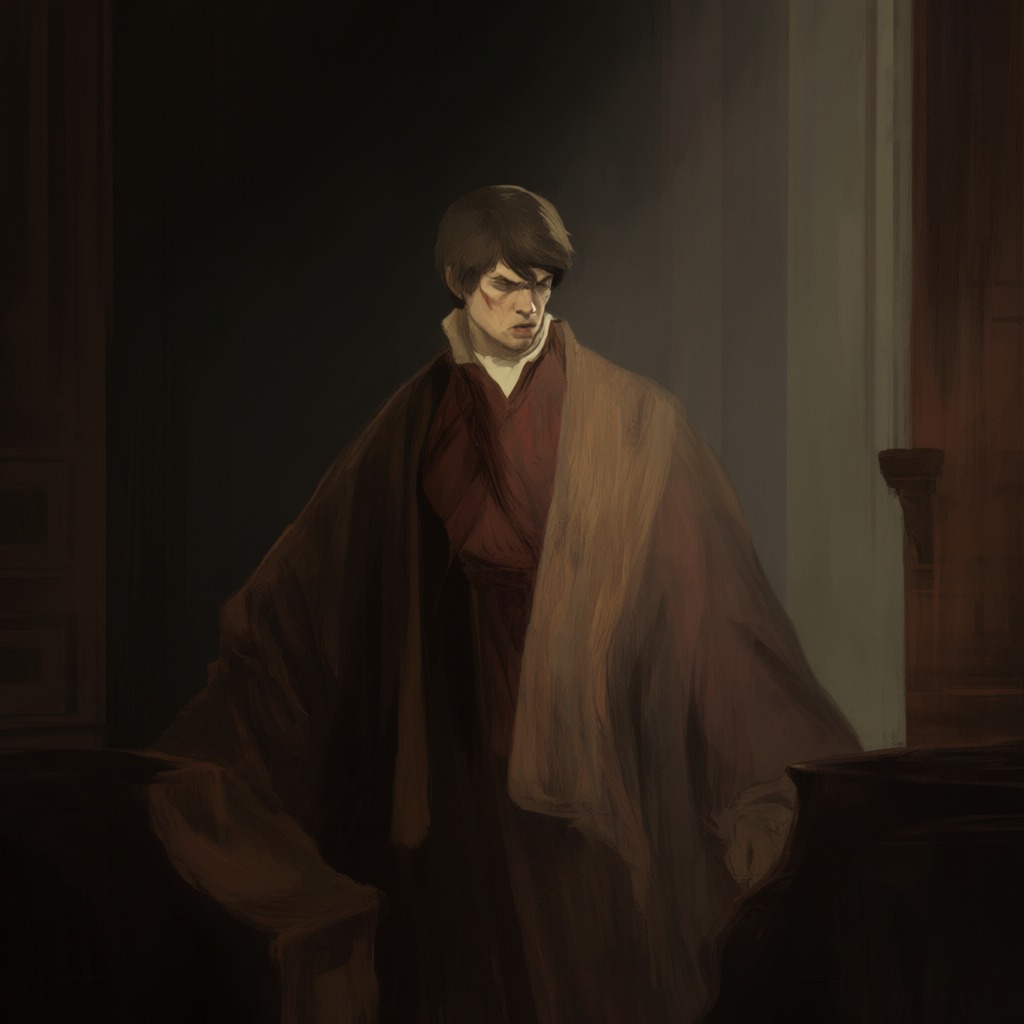
Andy Barbour, the second son of Chance and Samantha Barbour, was Theo Decker's closest childhood friend. A profoundly gifted but socially awkward boy, Andy was marked from an early age by his exceptional intelligence, his physical clumsiness, and his status as a chronic target for bullies. His friendship with Theo, forged in the crucible of shared persecution at school, provided a rare anchor of loyalty and understanding in Theo's chaotic life, and his death in a sailing accident alongside his father stands as one of the novel's most devastating losses.
Identity and Background
Andy was the quiet, asthmatic, and intellectually prodigious child of a prominent Park Avenue family. He was skipped ahead a grade due to high test scores, a decision that proved disastrous, as it threw him into a cohort of older, bigger boys who tormented him relentlessly. He was scrawny, twitchy, and lactose-intolerant, with a penchant for using words like 'noxious' and 'chthonic' in casual conversation, which only further isolated him. Among his more athletic and socially adept siblings—Platt, Kitsey, and Toddy—Andy stood out as a misfit, a "random pastehead who had wandered out onto the lacrosse field by mistake." His only real friend was Theo, whom he met under the traumatic circumstances of being skipped ahead together. Their friendship was built on a foundation of shared suffering, wordlessly passing comic books, and playing elaborate games of Star Trek to cope with their torments.
Life and Plot Trajectory
Andy's life is a study in quiet endurance. He navigates a world that is hostile to his nature, from the bullies at school to the incomprehensible expectations of his father, Chance Barbour, who constantly pressures him to embrace sailing and other manly pursuits. Andy's flat, emotionless voice and his habit of breathing through his mouth due to a chronically blocked nose gave him the appearance of being mildly stupid, a stark contrast to his reality as an AP student in everything. After Theo leaves New York, Andy continues on his academic trajectory, eventually attending MIT for astrophysics. He becomes engaged to a Japanese girl named Miyako, a choice that surprises his mother but reflects his long-standing interest in Japanese culture. His life, however, is cut short when he drowns alongside his father in a sailing accident off the coast of Maine, a death that feels tragically inevitable given his lifelong hatred of the water.
Key Actions and Objectives
Andy's primary objective is simply to survive and find a space where his intellect is not a liability. He excels in his studies, finding solace in the predictable logic of math and science. He is fiercely loyal to Theo, the only person who seems to understand him. When Theo is taken in by the Barbours after his mother's death, Andy is a quiet but steadfast presence, playing chess with him and covering for his absences. He is the one who helps Theo plan his escape from Las Vegas, lending him his cell phone and offering practical advice. His most significant action, however, is his final one: agreeing to accompany his unstable father on a sailing trip, a decision born of familial duty that leads directly to his death.
Relationships and Conflict
Andy's central conflict is with his father, Chance, who cannot accept his son for who he is. Chance's relentless enthusiasm for sailing and his disappointment in Andy's lack of interest create a deep rift between them. Andy's relationship with his older brother, Platt, is one of outright cruelty, with Platt subjecting him to years of sadistic bullying. His mother, Samantha, is a distant and formal figure, though she later admits she never truly saw him for who he was. The only uncomplicated relationship Andy has is with Theo. Their bond is one of mutual recognition and support, a rare safe harbor in a world that seems designed to crush them both. Andy's death is a direct consequence of his inability to refuse his father's demands, a final act of compliance that proves fatal.
Change and Ending
Andy's character arc is one of tragic stasis. He never escapes the shadow of his family or the trauma of his childhood. While he achieves academic success, he remains emotionally isolated and physically vulnerable. His death is a stark illustration of the novel's themes of fate and the cruel randomness of life. He is killed by the very element his father worshipped and he despised: the sea. The news of his death reaches Theo years later, delivered by Platt on a New York street, and it hits Theo with the force of a delayed shock, forcing him to confront his own failures of connection and the permanence of loss. Andy's death, like his life, is a quiet catastrophe, a brilliant light extinguished not by a dramatic explosion but by a slow, cold drowning.
Narrative Role and Evaluation
Andy serves as a foil to Theo and a symbol of the novel's central themes. He represents a path not taken: a life of intellectual purity and moral clarity, but also one of profound vulnerability and isolation. His death underscores the novel's bleak view of fate, where even the most innocent and gifted are not spared. Andy's memory, however, functions as a moral compass for Theo. It is Andy's quiet decency and his memory of Theo's mother that haunt Theo and ultimately push him toward a reckoning with his own life. Andy is the ghost of a better, more innocent self, a reminder of the love and loyalty that existed before the world became a place of fraud, addiction, and violence.