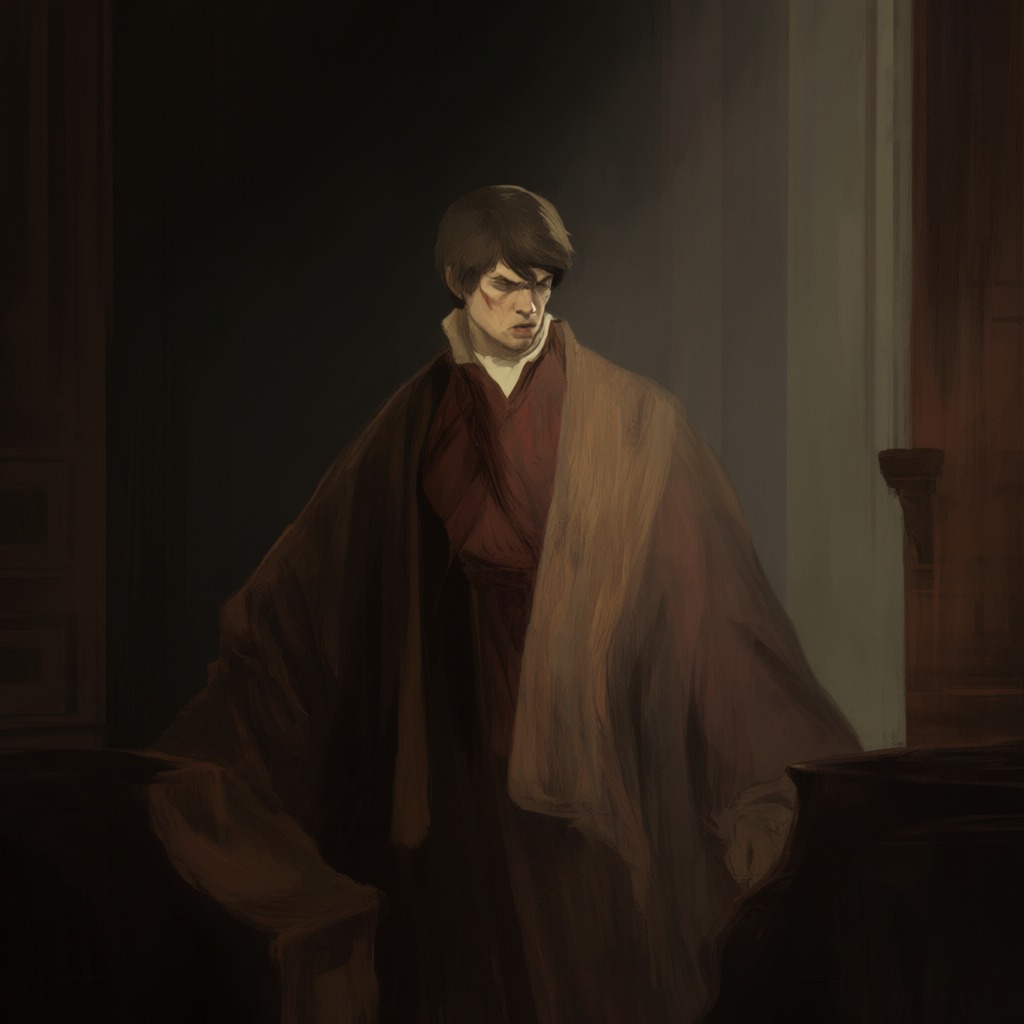
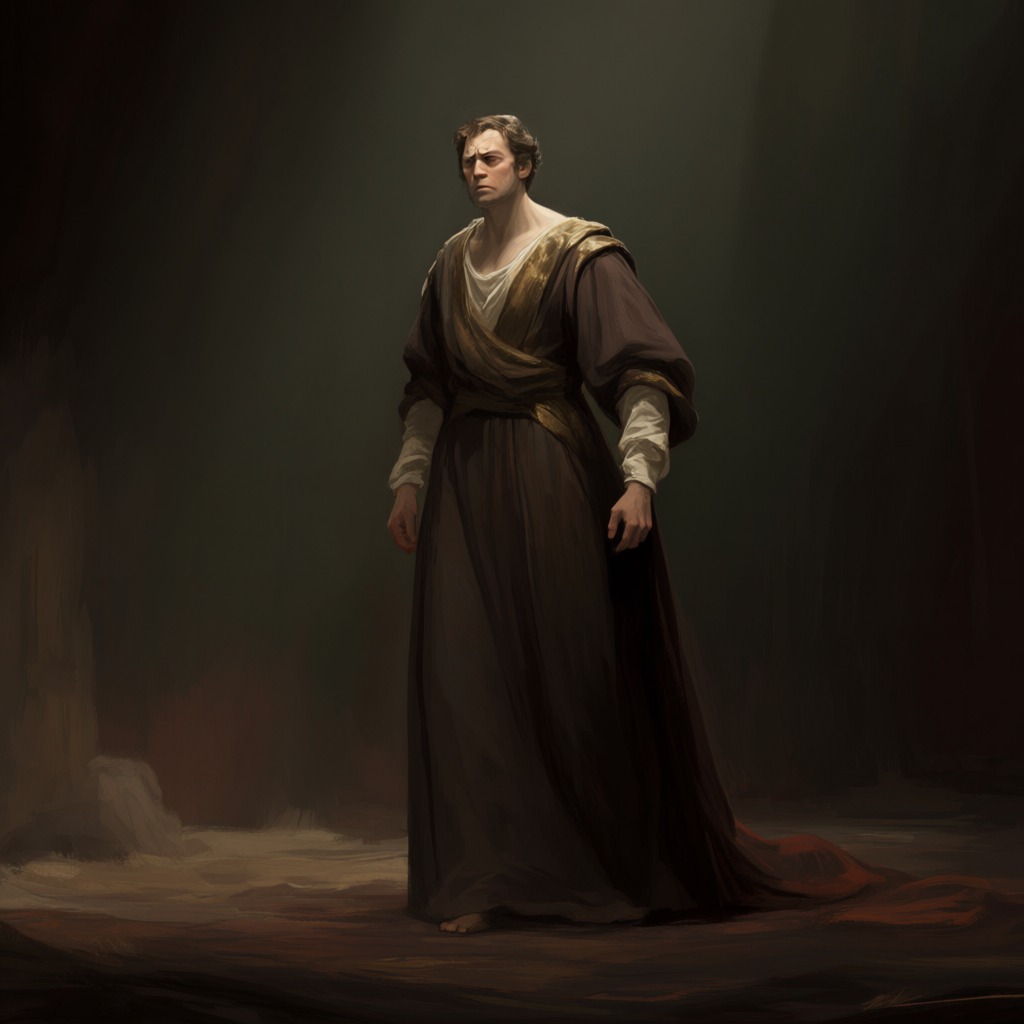
Theodore Decker
Theodore Decker is the narrator and protagonist of Donna Tartt's novel, a boy whose life is permanently fractured at age thirteen when a terrorist bomb at the Metropolitan Museum of Art kills his mother, Audrey Decker, and sets him on a trajectory through grief, orphanhood, art theft, drug addiction, and moral compromise that spans more than a decade. His story is one of survival through deception—both of others and of himself—and of a desperate, lifelong attachment to a single stolen painting, Carel Fabritius's The Goldfinch, which becomes the secret keystone of his identity.
Identity and Background
Theo is the only child of Audrey Decker, a warm, beautiful, and intellectually curious woman from Kansas who worked in advertising, and Larry Decker, a failed actor turned office worker whose alcoholism and abusive behavior made home life precarious. After Larry abandons the family without warning or child support, Theo and his mother grow closer, living on a tight budget in a rent-stabilized apartment on East Fifty-Seventh Street. Theo is a scholarship student at a private school on the Upper West Side, where he has been skipped ahead a grade and struggles socially. His closest friend is Andy Barbour, a fellow gifted student and social outcast. Theo's life is defined by his intense bond with his mother, whom he describes as casting "a charmed theatrical light" that made everything seem brighter in her company.
Life and Plot Trajectory
Theo's life divides sharply into Before and After the museum bombing on April 10th, fourteen years before the novel's opening frame. On the morning of the explosion, he and his mother visit the museum while waiting for a disciplinary meeting at his school. When the bomb detonates, Theo is knocked unconscious. He wakes in the rubble and finds Welty Blackwell, an elderly antiques dealer, dying. Welty gives Theo his signet ring and, in his final moments, presses the painting into Theo's hands, begging him to take it. Theo obeys, walking out of the museum with the painting hidden in a shopping bag. His mother's body is later identified; she died instantly from flying debris. After a brief stay with the Barbour family on Park Avenue, Theo is claimed by his estranged father, Larry, who has resurfaced with his girlfriend, Xandra Terrell, and taken Theo to live in a newly built, nearly empty house in a half-finished subdivision outside Las Vegas. In Las Vegas, Theo meets Boris Pavlikovsky, a wild, multilingual Ukrainian-Australian boy who becomes his closest friend and partner in delinquency. They drink, steal, and experiment with drugs. Larry, a compulsive gambler, dies in a drunk-driving crash after a confrontation with a loan shark named Naaman Silver. Fearing foster care, Theo flees Las Vegas with the painting, traveling by Greyhound bus to New York City, where he turns up at the doorstep of James Hobart, Welty's business partner. Hobie takes Theo in, and Theo eventually goes to work in the antique shop, learning the trade. As an adult, Theo runs the sales end of Hobart and Blackwell, secretly selling heavily restored or outright fabricated furniture as genuine antiques to keep the business afloat and fund his escalating drug habit. He becomes engaged to Kitsey Barbour, Andy's sister, but the engagement is shadowed by his unresolved love for Pippa Blackwell, Welty's niece, and by Kitsey's ongoing affair with Tom Cable. Boris reappears and reveals that he stole the painting from Theo years before, using it as collateral in criminal deals. Together they travel to Amsterdam to recover it, but the retrieval turns violent: Theo shoots and kills a man named Martin in a parking garage shootout. The painting is ultimately recovered by police and returned to the museum, and Theo receives a substantial reward. He spends the following year traveling to buy back the fraudulent furniture he sold, and the novel ends with him in a state of suspended reflection, writing his story in a series of notebooks.
Key Actions and Objectives
Theo's defining action is taking The Goldfinch from the museum, an act he never fully intends but never fully repudiates. For years, his primary objective is survival—first as a traumatized orphan, then as a drug addict and fraudster. He keeps the painting hidden, first in his bedroom in Las Vegas, then in a storage unit in New York, treating it as a talisman and a secret source of meaning. His secondary objective is to maintain the appearance of a normal, successful life: he runs the shop, manages Hobie's finances, and becomes engaged to Kitsey, all while concealing his addiction and his fraud. His deepest, unacknowledged objective is to reunite with Pippa, whom he has loved since their first meeting in the museum. The recovery of the painting in Amsterdam, though violent and traumatic, finally frees him from the burden of secrecy and allows him to begin the slow work of making amends.
Relationships and Conflict
Theo's central relationship is with his mother, whose death leaves him permanently unmoored. His bond with Hobie is the closest he comes to a stable, loving parental relationship; Hobie teaches him the craft of furniture restoration and offers him a home without judgment. His friendship with Boris is intense, chaotic, and formative—they are partners in crime, drinking, and mutual survival, but Boris also betrays him by stealing the painting. His relationship with his father is one of resentment and disappointment; Larry is selfish, unreliable, and ultimately destructive. His engagement to Kitsey is a pragmatic arrangement that satisfies social expectations but lacks genuine passion, and it collapses when he discovers her affair with Tom Cable. His love for Pippa is the novel's great unfulfilled romance; she is the "missing kingdom" he can never reach. The central conflict of Theo's adult life is between his desire to be good and his habitual dishonesty—a conflict that culminates in the Amsterdam shootout and his subsequent confession to Hobie.
Change and Ending
Theo undergoes a profound transformation over the course of the novel. He begins as a frightened, grieving child, becomes a reckless and drug-addicted young man, and finally emerges as someone capable of facing the consequences of his actions. The key turning point is the Amsterdam shootout, where he kills a man in self-defense and loses the painting for good. This event shatters his carefully constructed facade and forces him to confront the moral weight of his choices. In the aftermath, he confesses everything to Hobie, uses the reward money to buy back the fraudulent furniture he sold, and begins a year of solitary travel. The novel ends not with a triumphant resolution but with Theo in a state of quiet, ongoing reflection, writing his story in hotel rooms and airport lounges. He has not fully healed, but he has begun to understand that beauty, loss, and love are inextricable, and that the only way forward is to keep living, keep paying attention, and keep trying to tell the truth.
Narrative Role and Evaluation
Theo is the first-person narrator of the entire novel, and his voice—by turns lyrical, cynical, self-lacerating, and yearning—shapes every aspect of the reader's experience. His unreliability is not a matter of deliberate deception but of limited self-knowledge; he often fails to see his own motivations clearly, and the reader must read between the lines of his confession. His narrative is framed as a written account, addressed to an imagined reader, and it is structured as a retrospective confession that circles obsessively around the central trauma of his mother's death and the stolen painting. Theo functions as a classic picaresque hero—an orphaned outsider who navigates a corrupt world through wit and luck—but he is also a deeply modern figure, haunted by trauma and addicted to substances and secrets. His story is ultimately about the search for meaning in a world governed by chance, and the novel's final, unresolved note suggests that the search itself is the only answer.
The novel's polarized critical reception has often focused on Theo's character arc. While some praised the depth of his portrayal—Booklist noted the novel's "escalating cosmic angst and thriller action" and Stephen King called Tartt "an amazingly good writer"—others were sharply critical. James Wood of The New Yorker argued that the novel's "tone, language, and story belong in children's literature," and the London Review of Books labeled it a "crypto-children's book." The Sunday Times of London dismissed it as "a turkey." Despite this, Michiko Kakutani in The New York Times highlighted its Dickensian qualities, calling it a "glorious, Dickensian novel" that delivers "stay-up-all-night pleasures." The 2019 film adaptation, directed by John Crowley, cast Ansel Elgort and Oakes Fegley as Theo at different ages, with Aneurin Barnard and Finn Wolfhard sharing the role of Boris.