Welton Blackwell
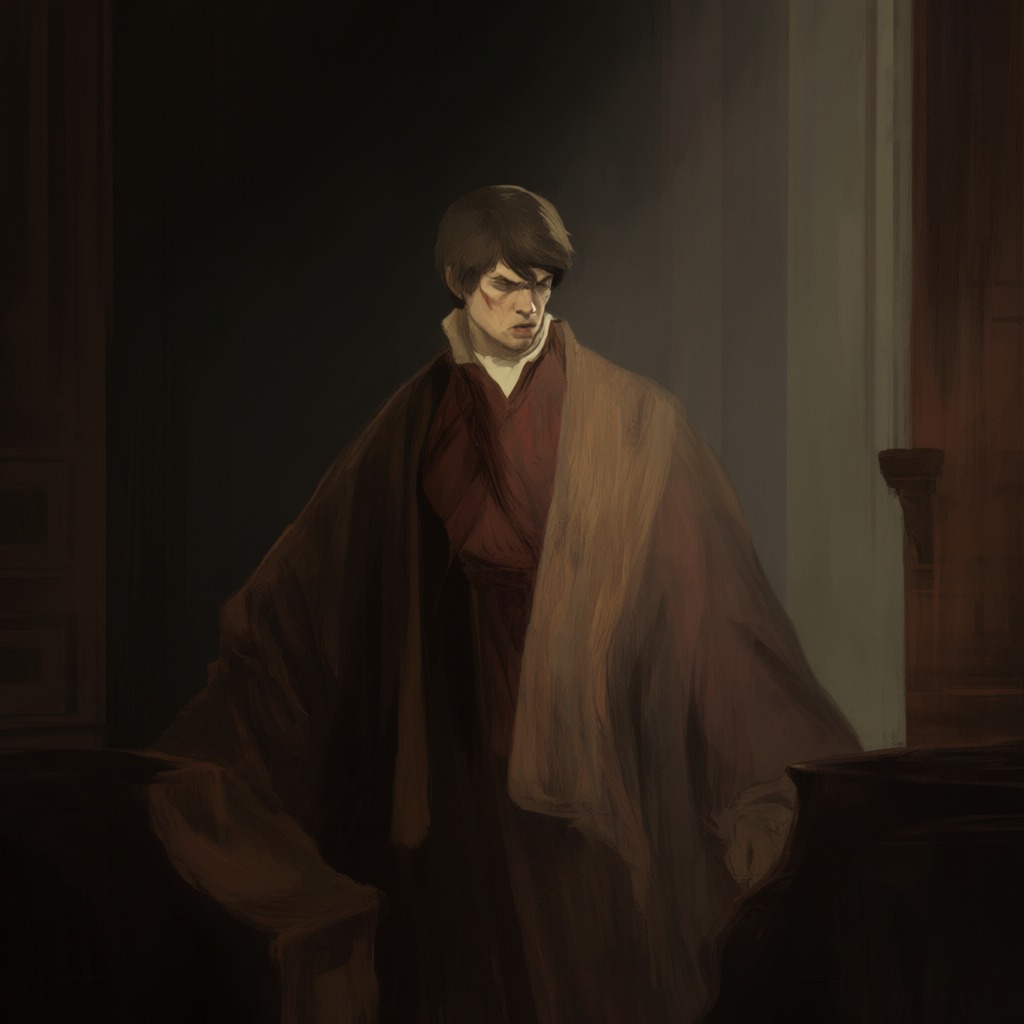
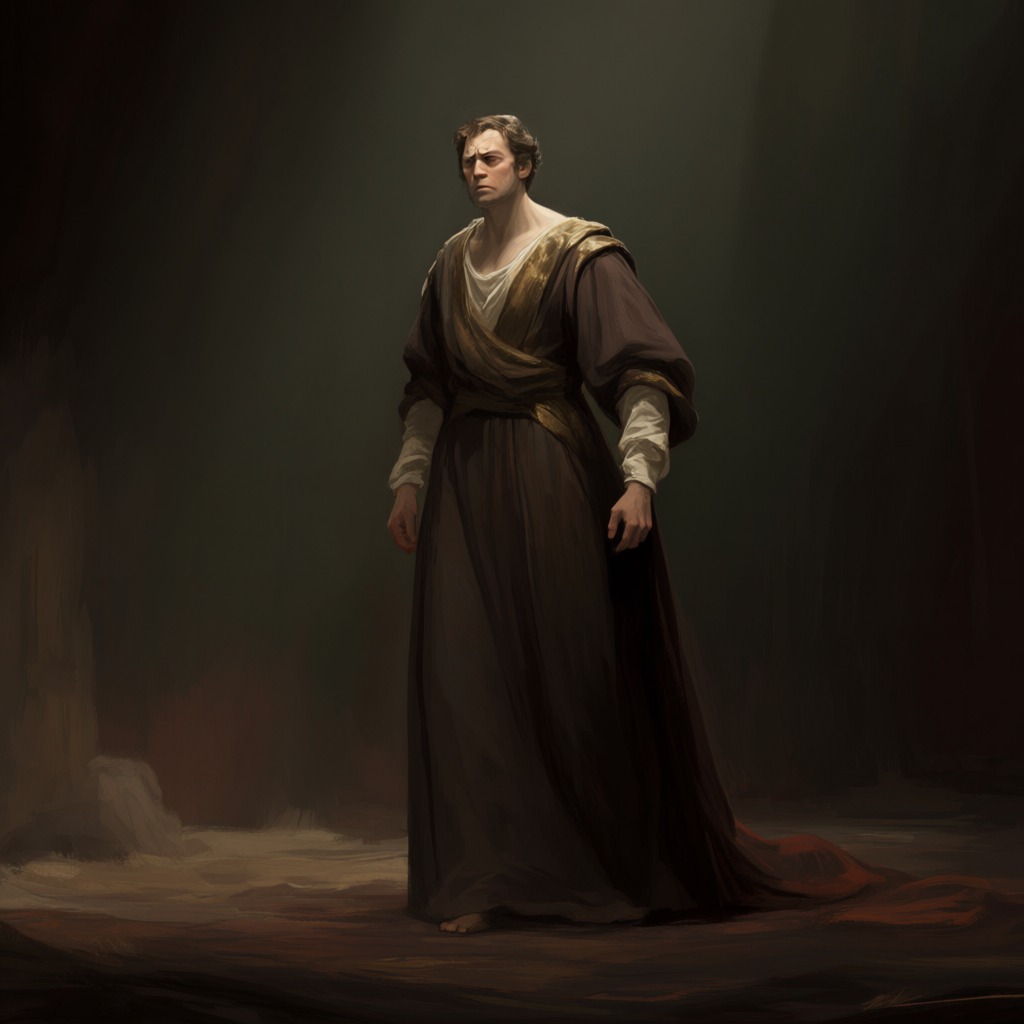
Welton Blackwell—called Welty by everyone who knew him—is the elderly, hunchbacked antiques dealer who dies beside thirteen-year-old Theo Decker in the Metropolitan Museum bombing, but whose dying instructions set the entire novel in motion. A man of extraordinary warmth and a gift for connecting with strangers, Welty was the senior partner of Hobart and Blackwell, the Greenwich Village antiques shop, and the half brother of Pippa Blackwell’s mother, Juliet. His death in the explosion is the catalyst for Theo’s concealment of the painting The Goldfinch, his flight from the wreckage, and his eventual arrival at the home of Welty’s business partner and closest friend, James Hobart.
Identity and Background
Welty was born with a tubercular spine contracted at age six while his parents were in Aswan; the nanny failed to recognize the seriousness of the illness, and he was taken to the hospital too late. The resulting deformity—a hunched back and a pronounced limp—shaped his life. His father, a hard man intolerant of weakness, sent him to America to live with relatives and barely gave him another thought. Despite this rejection, Welty developed a sunny, sociable disposition that made him beloved by clients and friends alike. “The world won’t come to me,” he used to say, “so I must go to it.” He was the eldest of three children fathered by old Mr. Blackwell with different mothers: Welty, Margaret (by Susie Delafield), and Juliet (by a hairdresser). When Juliet’s mother abandoned her, Welty—then in his mid-thirties—invited the six-year-old for a summer holiday and, when she cried at having to leave, cancelled her plane tickets and enrolled her in first grade. He raised her as his own child, though no formal adoption was ever arranged.
Life and Plot Trajectory
Welty’s life intersected with Theo’s only in its final hour. On the morning of April 10th, he brought his niece Pippa to the Metropolitan Museum’s exhibition of Dutch Golden Age paintings, determined that she see The Goldfinch before the show closed. In the exhibition, he stood beside Theo and his mother Audrey as Audrey described the painting’s history—how Fabritius was killed in the 1654 Delft powder magazine explosion, and how almost all his work was destroyed. When the bomb detonated, Welty was thrown across the room and pinned under debris. Theo, coming to consciousness in the wreckage, found him struggling to sit up, his lower half twisted and useless, his head a sticky black horror above one ear. Over the next minutes, Welty drifted in and out of coherence, mistaking Theo for a young musician, speaking of his childhood in Cairo—the green lizard in the palm tree, the striped umbrella at Groppi’s, the villa in Ma’adi that burned—and humming a shapeless tune. He pressed his heavy gold signet ring into Theo’s palm and instructed him to “ring the green bell” at Hobart and Blackwell, telling Hobie to get out of the store because “his father’s sending some guys to beat him up.” As he died, he gripped Theo’s hand with desperate strength, then sank into stillness.
Key Actions and Objectives
Welty’s final actions are the novel’s originating events. By giving Theo his ring and the painting, he inadvertently creates the secret that will define Theo’s adolescence and young adulthood. The ring—a carnelian intaglio engraved with the name “Blackwell” and Greek letters—is the physical proof that Theo was in the gallery with the painting, a connection that later threatens to expose him. The painting itself, which Welty had loved since childhood (a reproduction hung in his Cairo home), he entrusts to a stranger in his last moments, insisting that Theo take it away from the wreckage. This act of trust—or desperation—sets in motion the entire plot: Theo’s concealment of the painting, his years of hiding it, and its eventual recovery through Boris’s machinations.
Relationships and Conflict
Welty’s relationship with Hobie is the deepest and most consequential of his life. Hobie, who had been trapped working for his abusive father, met Welty when Welty hired him to pack furniture from the De Peyster mansion. Welty paid him directly in cash, cutting out Hobie’s father, and when the job was done, offered him a job at the newly opened New York shop. “So we clinked glasses on it,” Hobie recalls, “and I went home, packed a suitcase full of books mostly, said goodbye to the housekeeper, and hitched a ride on the truck to New York the next day. Never looked back.” Welty handled the sales and client relations while Hobie worked in the workshop below; their partnership was a perfect marriage of charm and craftsmanship. Welty’s relationship with his half sister Margaret was strained—she was “quite against Pippa’s mother”—and after his death, Margaret asserted her legal rights as Pippa’s nearest blood relative, taking her to Texas against Hobie’s wishes.
Change and Ending
Welty’s death is the novel’s central catastrophe, but his influence persists. The ring he gave Theo leads Theo to Hobie’s doorstep, where he finds a home and a vocation. The painting he entrusted to Theo becomes the secret that both sustains and torments Theo for years, and its eventual recovery—through Boris’s scheme to claim the reward money—is the culmination of the plot. In the novel’s final pages, Theo reflects on Welty’s photograph as a child in Cairo, standing beneath a reproduction of The Goldfinch, and understands that the painting has connected them across time: “There wasn’t a single meaning. There were many meanings. It was a riddle expanding out and out and out.”
Narrative Role and Evaluation
Welty functions as the novel’s originating figure—the character whose death and dying wish set the entire story in motion. He is a figure of pure goodness in a world of moral ambiguity: generous, perceptive, and incapable of cruelty. His hunchback, far from making him pitiable, becomes a symbol of his ability to see past surfaces; as Hobie says, “He always said his handicap was what made him a good salesman… ‘The sympathetic cripple.’ No axe to grind. Always on the outside, looking in.” His final moments with Theo—the handclasp, the murmured instructions, the gift of the ring—are the novel’s most sacred scene, a transmission of trust and responsibility that Theo will spend the rest of the book trying to honor.