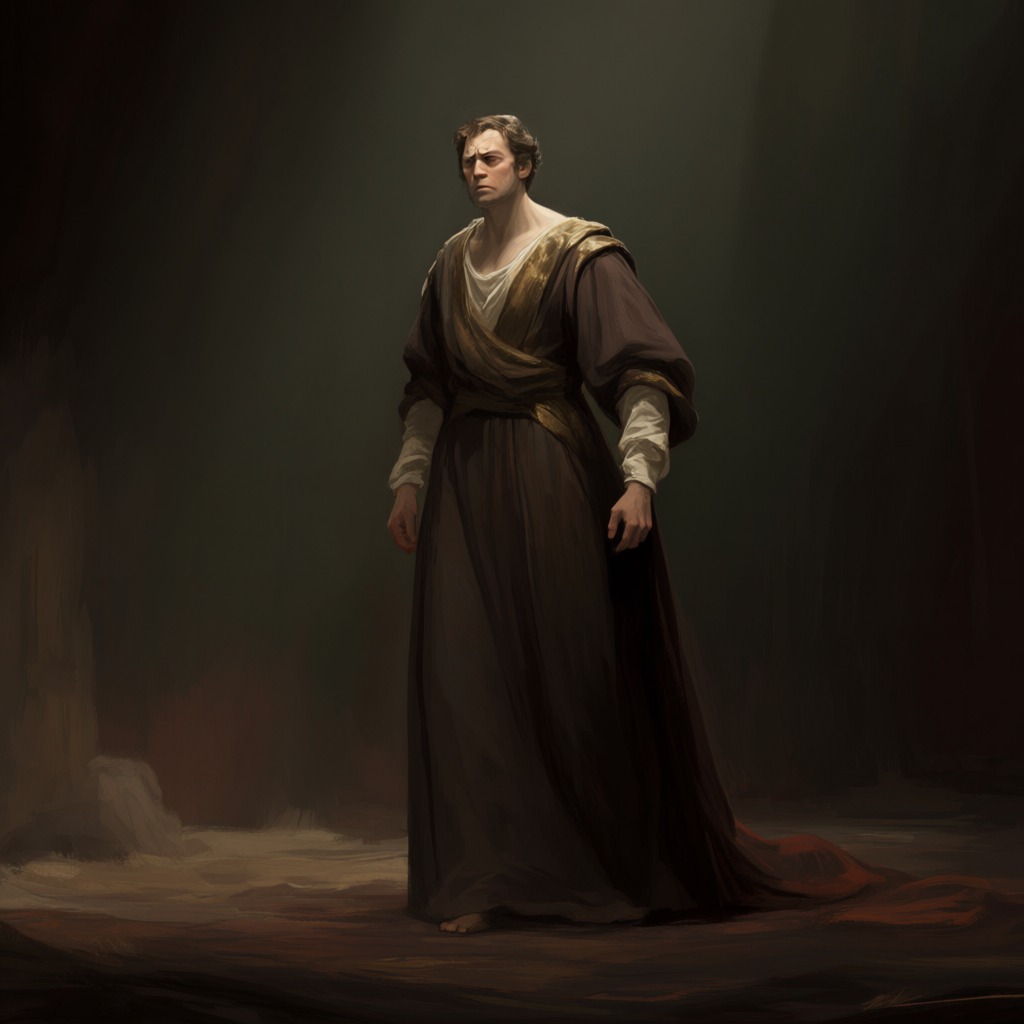
Lucius Reeve
Lucius Reeve is a well-dressed, urbane man of uncertain age and occupation who operates as a high-end swindler and blackmailer in the New York art world. He first appears as a client who has purchased a heavily altered “Chippendale” chest-on-chest from Theo, a piece that Hobie had cobbled together from salvaged antique parts. When Theo tries to buy the piece back at a premium after Reeve discovers the fraud, Reeve refuses, revealing that his interest is not in the furniture but in something far more valuable: the missing Fabritius painting, The Goldfinch.
Identity and Background
Reeve is a man of cultivated tastes and a deep, genuine knowledge of art, particularly Dutch Golden Age painting. He speaks with authority about the Fabritius, describing its “doubleness” and calling it “a joke at its heart,” a quality he identifies in the greatest masters like Rembrandt and Velázquez. He is also revealed to be a career criminal with a long history. Hobie identifies him as a “knocker,” a con artist who preys on the elderly, charming his way into their homes to steal valuables. Under the alias “Lucian Race,” he once ran a fraudulent antiques shop called Chevallet Antiques and was involved in a scheme with a partner named Sloane Griscam (later known as Havistock Irving) to rob old ladies. Hobie and Welty Blackwell had previously given statements against him in court, leading to his partner’s imprisonment, though Reeve himself vanished.
Confrontation and Blackmail
Reeve’s confrontation with Theo is a masterclass in psychological pressure. At a lunch at the Harvard Club, he coolly lays out his knowledge: that Theo was with Welty Blackwell in the gallery when the bomb exploded, that he was the only person to walk out of that room, and that The Goldfinch also walked out. He dismisses Theo’s denials, stating, “You’re a liar… You may think you can bluff your way out of this, but you can’t.” He offers to buy the painting for half a million dollars, threatening to call the FBI’s art-crimes division if Theo refuses. To prove his reach, he shows Theo a news article about a botched DEA raid in Miami where The Goldfinch was rumored to have been used as collateral in a drug deal, a scheme orchestrated by Boris’s associate Horst. Reeve’s threat is not just about the painting; he also has detailed knowledge of Theo’s other frauds, including the sale of fake “Duncan Phyfe” chairs and “important Sheraton” pieces to buyers in Dallas, Houston, and Los Angeles.
Connections and Network
Reeve operates within a network of shady figures. He is closely associated with Havistock Irving, a genealogist and social climber who acts as his informant. Irving, who is also a “knocker” under the alias Sloane Griscam, is a guest at Theo and Kitsey’s engagement party, where he openly taunts Theo about his knowledge of the frauds and his connection to Reeve. Boris later warns Theo that Horst, a powerful figure in the European black market, has a grudge against Reeve and has sent a man named “Martin” after him, indicating that Reeve has crossed dangerous people. This network reveals that Reeve is not an isolated operator but part of a larger, predatory ecosystem within the art and antiques world.
Significance and Role
Lucius Reeve serves as the catalyst that forces Theo’s long-buried secret into the open. He represents the inescapable consequences of Theo’s years of deception and criminality, both in the art world and regarding the painting. His sophisticated, menacing presence contrasts with the more chaotic criminality of Boris’s world, embodying a different kind of threat: one that operates within the bounds of polite society, using knowledge and social access as weapons. His ultimate fate is left ambiguous; after the Amsterdam shootout, Boris mentions that Horst has “Martin after him,” suggesting that Reeve’s own predatory activities have finally caught up with him, leaving him to face a reckoning far more severe than anything Theo could have delivered.