Welty's ring
Welty's ring is the carved gold signet ring that Welton Blackwell pressed into Theo Decker's hand as he lay dying in the museum rubble, instructing him to take it to Hobart and Blackwell and ring the green bell. The ring serves as the physical token that connects Theo to Welty, guides him to Hobie's doorstep, and becomes the secret link that later threatens to expose Theo's possession of The Goldfinch.
Identity and Materiality
The ring is a heavy gold signet with a carved stone, described by Mrs. Barbour as carnelian with an intaglio of a griffin or winged lion. She notes the patina on the stone and the worn-down quality that marks it as an old ring, the kind of classical intaglio Americans picked up in Europe during the Henry James days and had set as souvenirs of the Grand Tour. Inside the band, an engraving reads "Blackwell," along with some Greek letters. The ring's weighty, antiquated quality, its mixture of sobriety and brightness, becomes strangely comforting to Theo; if he fixes his attention on it intensely enough, it has a strange power to anchor him in his drifting state and shut out the world around him.
The Dying Gift
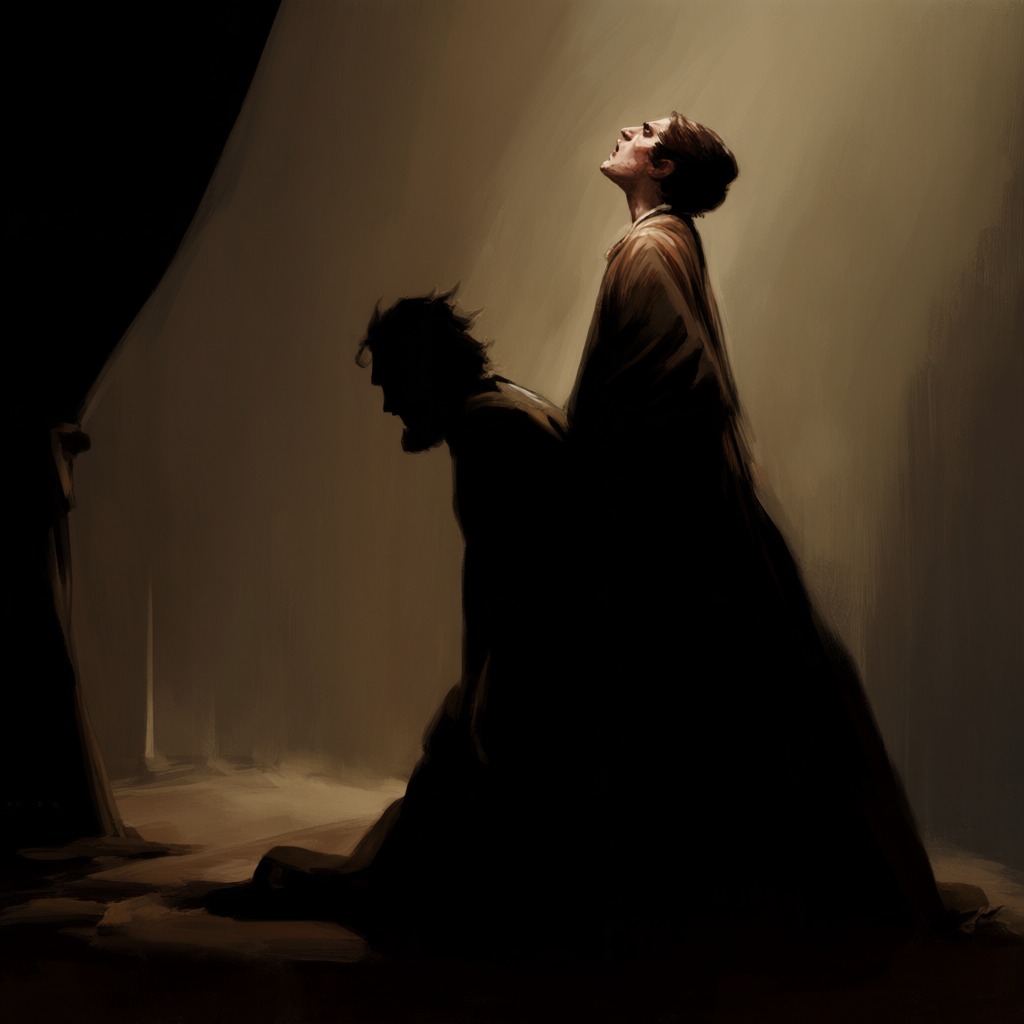
In the wreckage of Gallery 32, after the bomb blast, Welty—his lower half twisted on the ground, his head a sticky black horror above one ear—takes the ring off his own finger and presses it into Theo's palm. "Hobart and Blackwell," he says, in a voice like he is drowning from the inside out. "Ring the green bell." He tells Theo to tell Hobie to get out of the store, that his father is sending some guys to beat him up. Theo, dazed and concussed, accepts the ring and later carries it with him almost everywhere, toying with it in his jacket pocket, sometimes slipping it on his middle finger even though it is too big and slides around.
The Journey to Hobie
Months later, lying in bed at the Barbours', Theo wakes with the sentence "Hobart and Blackwell. Ring the green bell" standing out across his mind like a news crawler. He retrieves the ring from his school jacket pocket, holds it up to the light to look at the inscription, then finds the listing in the White Pages and dials the number. When the phone goes unanswered, he takes the Fifth Avenue bus down to the Village and finds the shop. At the narrow doorwell tucked between numbers 8 and 10, he spots a flash of kelly green electrical tape pasted beneath a button in the wall. He rings the bell, and when Hobie opens the door, Theo holds out the ring on his open palm. Hobie's large, pallid face goes slack; he looks at the ring, then at Theo. "Where did you get this?" he asks. "He gave it to me," Theo says. "He told me to bring it here."
The Link to the Painting
Hobie keeps the ring, slipping it over his little finger and twisting it between thumb and forefinger as he talks. Later, Mrs. Barbour examines the ring under a magnifying glass and reads the Blackwell engraving, which triggers a vague recognition in Theo. The ring is the physical proof that Theo was in the gallery with Welty when the bomb exploded—and therefore with The Goldfinch. As Lucius Reeve later tells Theo, "You were with Welton Blackwell and his niece, you were all three of you in Gallery 32 and you were the only person to walk out of there. And we know what else walked out of Gallery 32, don't we?" The ring, which Hobie had shown to friends and told the story of Theo's arrival, becomes the thread that could unravel everything. Theo realizes that if anyone cared to make the connection, Welty's ring is proof positive that he had been in the gallery with the painting.
Thematic Significance
The ring is a token of transmission—Welty's last act is to send Theo to Hobie, and the ring is the key that unlocks that door. It is also a burden of secrecy: the ring that brings Theo into the safety of Hobie's world is the same object that could expose him. It embodies the double-edged nature of the legacy Welty leaves him: the gift of a new family and the curse of a stolen masterpiece. Theo carries the ring through his darkest years in Las Vegas, and it remains a silent witness to his guilt and his hope, a physical reminder of the dying man who entrusted him with something far more valuable than gold.