Before the 1920s
The Sergeant’s Early Life
[Francis (Frank) McGahern](entity:character-recall-character-francis-frank-mcgah-2aec7be26748) grew up as an only child, raised by a proud and forceful mother. After attending the Latin school at Moyne, he joined the [Irish Republican Army](entity:organization-recall-organization-irish-republican-4bff46a4b2bf) and then entered the new [Garda Force](entity:organization-recall-organization-garda-force-7a639b81f7ab) during the [Irish Civil War](entity:event-recall-event-4cc0e656d516), later becoming a sergeant in the [Garda Síochána](entity:organization-recall-organization-garda-s-och-na-28a6261735a5).
He rarely spoke about his past. His career and public authority gave him a role he could inhabit with confidence, while the secrecy surrounding his earlier life would remain characteristic of his relationships with his children.
Early twentieth century
Susan’s Education
[Susan McGahern](entity:character-recall-character-susan-mcgahern-52e5487da832) and her brother [Jimmy](entity:character-recall-character-jimmy-7097cd16d51d) were exceptionally bright children from a poor mountain home. Susan won a King’s Scholarship and studied as a boarder at the Marist Convent in [Carrick-on-Shannon](entity:location-recall-location-carrick-on-shannon-607870197424), while her family struggled quietly to cover costs beyond the scholarship.
She later attended [Trinity College Dublin](entity:organization-recall-organization-trinity-college-6fb87bbd7d4e), where she and a fellow student excelled, but graduates of Trinity could not then be employed in the National Schools. Susan found a route into teaching through the convent schools and eventually entered the state system.
Early 1920s to 1932
The Long Engagement
As a young sergeant stationed in [Ballinamore](entity:location-recall-location-ballinamore-de99baa1bbc8), [Francis (Frank) McGahern](entity:character-recall-character-francis-frank-mcgah-2aec7be26748) courted [Susan McGahern](entity:character-recall-character-susan-mcgahern-52e5487da832) at the respectable home of her relatives. The couple became engaged, but his transfers and long absences stretched the engagement to seven years; Susan remained in Ballinamore, teaching and helping [Maggie](entity:character-recall-character-maggie-39724c72a859) and [Pat](entity:character-recall-character-pat-781ce3926f99) at their shop.
Francis had dalliances elsewhere, while Susan also had admirers. In May 1932 she returned the [Engagement Ring](entity:object-recall-object-5166ae4079b0). Francis appeared in Ballinamore the next day and pressed her to marry him, turning a gesture of resolve into an immediate change in their future.
August 1932
The Wedding
Susan and Francis married in [Ballinamore](entity:location-recall-location-ballinamore-de99baa1bbc8) after settling practical questions about the ceremony, guests, and honeymoon in their letters. Susan was happy and had even gone on pilgrimage to [Lough Derg](entity:location-recall-location-lough-derg-3ec760ea70c3) to ask for God’s blessing on the marriage.
After their honeymoon, Susan returned to teaching in Lisacarn while Francis remained stationed elsewhere. Their marriage began at a distance, with Susan’s salary helping to support the family and Francis retaining much of his independent life in the barracks.
1934 to the early 1940s
The First Years Apart
[John McGahern](entity:character-recall-character-john-mcgahern-ed7112202877) was born in [Dublin](entity:location-recall-location-dublin-d76fcbad2c3f) in 1934, but his earliest home was a bungalow outside [Ballinamore](entity:location-recall-location-ballinamore-de99baa1bbc8), where Susan lived with the children and [the narrator’s paternal grandmother](entity:character-recall-character-d76853be2308). Francis remained a sergeant in [Cootehall](entity:location-recall-location-cootehall-025fa9e6101d), visiting in his [Blue Baby Ford](entity:object-recall-object-baby-ford-7d8e52065af0) and spending the long school holidays with the family.
The children grew up chiefly in their mother’s care. Their father’s absences and occasional appearances, along with Susan’s patient efforts to keep the household steady, established the emotional pattern that would define their childhood.
Around age three
The Lane to Lisacarn
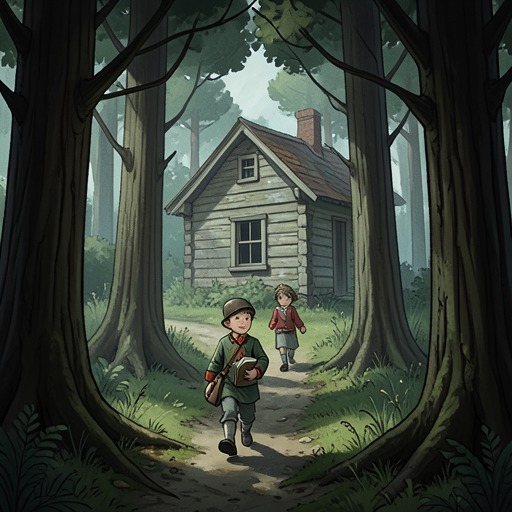
Susan took young [Sean McGahern](entity:character-recall-character-sean-mcgahern-f7832e8f80fa) with her along a flower-lined lane to [Lisacarn School](entity:location-recall-location-lisacarn-7a7b77f7ff40), where she taught. She named the wild flowers as they walked, and in later life he remembered those journeys as moments of profound safety and peace.
At school he was too young to learn much and remembers being carried back to his mother after sitting on a nest of ants. The lane, however, became a lasting image of the close bond between mother and son and of the rural world he would later return to.
Early childhood
The Pram on the Slope
Jealous of the attention given to his twin sisters, [Sean McGahern](entity:character-recall-character-sean-mcgahern-f7832e8f80fa) learned to release the brake on their pram. When he thought nobody was watching, he pushed it down the clinker slope beside the forge; it overturned, though the twins were not hurt.
The narrator’s paternal grandmother had observed him from behind a curtain and made no attempt to stop him. The episode stayed with him as an early glimpse of the cold, calculating conduct he would later recognize in his father.
Early childhood
The Burning Finger
After [Sean McGahern](entity:character-recall-character-sean-mcgahern-f7832e8f80fa) tried to burn paper in the range, [the narrator’s paternal grandmother](entity:character-recall-character-d76853be2308) thrust his finger between the glowing bars, ignoring his cries and Susan’s protest. She believed harsh punishment was the only way to teach him.
The incident revealed the violence in the household before he was old enough to understand it. His mother’s gentleness and his grandmother’s brutality became opposing forces in his earliest memories.
Early childhood
The Forge and the Forbidden Place
Fascinated by the blacksmith’s forge, [Sean McGahern](entity:character-recall-character-sean-mcgahern-f7832e8f80fa) imitated its hammering on his little pedal car until he wrecked it. He also wandered beneath a horse as a blacksmith worked, and his grandmother punished him and barred him from the forge.
His curiosity and delight in watching work were already strong, but the lesson was that his grandmother’s authority could not safely be challenged. Susan soon took him with her to school, partly to remove him from that control.
Early childhood
The Murder in the Meadow
A meadow along the route to [Lisacarn School](entity:location-recall-location-lisacarn-7a7b77f7ff40) acquired a terrible history when John Gilchrist killed Bernie McManus with a hedge knife. Gilchrist had endured years of petty persecution by McManus, who blocked his right of way to a spring and forced him through wet grass.
At his trial Gilchrist was found insane. Bernie’s son Vincie sometimes walked the same lane with Susan and Sean, bringing the memory of the murder into the child’s otherwise beautiful landscape.
Early childhood
The Curls Are Cut
During a summer visit to the barracks, [Francis (Frank) McGahern](entity:character-recall-character-francis-frank-mcgah-2aec7be26748) decided to cut [Sean McGahern](entity:character-recall-character-sean-mcgahern-f7832e8f80fa)’s curls. He locked Susan and [the narrator’s paternal grandmother](entity:character-recall-character-d76853be2308) in a room, took the frightened boy into the dark hallway, and sheared his hair despite their distress.
Returning with the curls in a newspaper, he quoted scripture triumphantly. Sean later associated the severed curls with a biblical execution, while the scene sharpened his sense of the conflict between his father and the women who tried to protect him.
Early childhood
A Child’s Journey to Heaven
Susan taught [Sean McGahern](entity:character-recall-character-sean-mcgahern-f7832e8f80fa) to imagine heaven concretely: above the sun lay [the gate of heaven](entity:expression-recall-expression-the-gate-of-heaven-af62a49e9a85), beyond which were God’s mansions and the gardens of paradise. He believed that if he could climb the hill and pass through the setting sun, he could reach it.
He climbed through rushes to the hedge, only to discover that the sun had shifted to a distant hill. He fell asleep exhausted in a drain and awoke after dark to voices calling him. His attempt revealed how literally a child could inhabit the religious world his mother lovingly described.
Early childhood
The Donkey Cure
When [Sean McGahern](entity:character-recall-character-sean-mcgahern-f7832e8f80fa) was ill with whooping cough, his grandmother arranged a folk cure. On a cold night, Tommy Quinn brought a mule, jennet, or donkey, and the child was passed beneath the animal three times in the name of the Trinity.
Sean remembered the frost and the star-filled sky, but most strongly the happiness of being restored to Susan and walking with her to school again. The ritual marked the force of his longing for her during the illness.
Early childhood
The Cornflakes Errand
The narrator’s paternal grandmother sent [Sean McGahern](entity:character-recall-character-sean-mcgahern-f7832e8f80fa) alone to his aunt’s shop in [Ballinamore](entity:location-recall-location-ballinamore-de99baa1bbc8) for cornflakes, dismissing Susan’s concern that he was too young. At the shop he was welcomed and fed before setting out home with the packet.
On the empty road he kicked it like a football until it was ruined. His grandmother was furious and would have beaten him severely without Susan’s intervention, an incident that made his childish wish to play football visible even through the punishment.
Early childhood
The Last Hospital Visit
After [the narrator’s paternal grandmother](entity:character-recall-character-d76853be2308) disappeared from the household, [Francis (Frank) McGahern](entity:character-recall-character-francis-frank-mcgah-2aec7be26748) took the children to visit her in hospital. The family dressed carefully, and Sean carried grapes into her room, where she bitterly insisted she had been sent to a poorhouse to die.
This was the only time he saw her cry. Later, a prayer for her soul was added to the family Rosary, but he had no clear understanding of her death or the family history surrounding it.
Around 1940
The Move to Beaghmore
With pupil numbers falling at [Lisacarn School](entity:location-recall-location-lisacarn-7a7b77f7ff40), Susan was placed on the National School teacher panel and transferred to [Beaghmore School](entity:location-recall-location-beaghmore-bc6da6dbf250). The family left the bungalow and moved to a stark house overlooking a bog near Cloone.
The relocation felt to Sean like a move to another country. Susan walked to school with the twins, while he attended [Augharan School](entity:location-recall-location-augharan-70d012b2c829) nearby, where his father hoped the harsher environment would toughen him.
Early 1940s
The Canes at Augharan
At [Augharan School](entity:location-recall-location-augharan-70d012b2c829), Mrs McCann beat pupils with bamboo, ash, sally, and hazel canes for errors and minor misbehaviour. [Sean McGahern](entity:character-recall-character-sean-mcgahern-f7832e8f80fa), unaccustomed to such treatment after Susan’s gentleness, experienced school as a descent into terror and begged to go with her to Beaghmore.
His father insisted that he stay. The punishments reflected the accepted discipline of the time, but for Sean they made the school a place he desperately wanted to escape.
Shortly before his First Communion
The Thistle Bouquet
Hoping to win Mrs McCann’s favour, [Sean McGahern](entity:character-recall-character-sean-mcgahern-f7832e8f80fa) gathered purple thistles from an abandoned garden and brought them to school. His hands and legs were torn by briars, but Mrs McCann recognized the despised weeds and angrily ordered him to throw them away.
His classmates’ knowing smiles deepened his humiliation. When he told Susan, she and his sisters laughed before comforting him; she promised that after his First Communion he could leave Augharan and join her at Beaghmore.
Around 1941
First Communion and Escape
[Sean McGahern](entity:character-recall-character-sean-mcgahern-f7832e8f80fa) received his First Communion in a new blue suit and came home to a celebratory meal. His father had written that he wished he could attend, but was unable to get away.
The next morning Sean no longer had to turn toward [Augharan School](entity:location-recall-location-augharan-70d012b2c829). Relieved and happy, he took Susan’s hand and walked with her and the twins to Beaghmore, escaping the classroom where he had been beaten.
Early 1940s
The Child in the Tree
One night [Francis (Frank) McGahern](entity:character-recall-character-francis-frank-mcgah-2aec7be26748) arrived in a black mood and focused on the scabs covering [Sean McGahern](entity:character-recall-character-sean-mcgahern-f7832e8f80fa)’s face. He took the boy to a doctor, then used a sharp knife at home to remove the scabs one by one.
The sores healed without scars, but Sean was so afraid of his father that he hid in a chestnut tree the next time the [Blue Baby Ford](entity:object-recall-object-baby-ford-7d8e52065af0) arrived. Only after the car left did he come back to the house, a small act of self-protection against his father’s unpredictable force.
Early 1940s
A Rare Visit of Kindness
On another visit, Francis was charming and in good humour. He asked Sean to introduce him to a family whose parents were deaf and whose daughter communicated by signs; the father was a skilled watchmaker and had built a wind charger to light the house.
Francis admired the device and imagined installing one at the barracks to power his radio. The visit showed how easily his warmth could fill a day, even as the family knew that his good moods could not be relied upon.
Around 1942
The Mother’s Disappearance
Without explanation, Susan suddenly left the house above the bog. The children were told to behave and pray for her, then moved with their maid [Bridgie McGovern](entity:character-recall-character-bridgie-mcgovern-0e2ebfaae71a) to the barracks at [Cootehall](entity:location-recall-location-cootehall-025fa9e6101d), where their father’s command replaced their mother’s protection.
The unfamiliar rooms echoed with the children’s noise until Francis roared at them to remember they no longer lived in a field. They did not know that Susan had been diagnosed with breast cancer and was undergoing tests and treatment in [Dublin](entity:location-recall-location-dublin-d76fcbad2c3f).
Around 1942
The Barracks Household
At [Cootehall barracks](entity:location-recall-location-cootehall-3ee2fa520aee), the children learned their father’s rigid daily routine: silent meals, inspection before school, and a nightly Rosary in which they prayed for the absent “children’s mother.” Afterward they had to kiss Francis goodnight.
The orderly’s footsteps, the guards’ patrols, and the morning inspection filled their days. The barracks functioned more as a symbol of authority than as a response to crime, while the children lived under their father’s unchallenged domestic rule.
Around age seven
The Imaginative Patrols
The guards routinely invented accounts of patrols they had not made, jokingly calling them [Patrols of the Imagination](entity:expression-recall-expression-patrols-of-the-ima-0fc39c6eeea0). [Sean McGahern](entity:character-recall-character-sean-mcgahern-f7832e8f80fa) sometimes helped [Guard Cannon](entity:character-recall-character-f987fe9d6507) by checking the wind or weather and supplying details for the ledger.
Cannon turned the false report into a playful lesson in writing, declaring that a masterpiece was the correct distribution of ink across the correct number of pages. The episode offered Sean a moment of companionship in the shadow of the barracks’ formal authority.
During her first cancer treatment
Susan Returns with a New Baby
After surgery and treatment, Susan briefly returned to the barracks for the birth of her daughter [Dympna](entity:character-recall-character-dympna-5eed6e49dd67). Sean rode with his father to a nursing home in [Boyle](entity:location-recall-location-boyle-c426ab26c490) to bring her and the baby home, remembering Susan carrying Dympna in a white shawl.
The family’s happiness was brief. Susan soon left again for treatment, and the children were once more separated from her, still unsure where she had gone or when she would return.
1942
A Home of Her Own
While Susan was in hospital, [Maggie](entity:character-recall-character-maggie-39724c72a859) and [Pat](entity:character-recall-character-pat-781ce3926f99) used their local connections to secure her a permanent teaching post at [Aughawillan](entity:location-recall-location-aughawillan-cc4a3a3f8a92) and identify a house and farm for sale at [Corramahon](entity:location-recall-location-corramahon-0301adbf0b13). Susan rejected the suggestion that she give up teaching and live under Francis’s control at the barracks.
Francis worried about the cost and distrusted her relatives’ involvement, but eventually bought the property after selling his own farm near Gowna. He kept the medical prognosis from Susan, even after learning that her cancer was highly malignant.
Autumn 1942
The First Sight of Corramahon
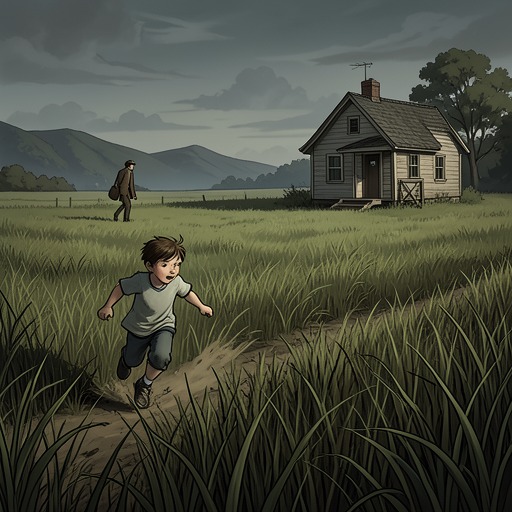
Susan saw [Corramahon](entity:location-recall-location-corramahon-0301adbf0b13) for the first time after teaching a day at [Aughawillan](entity:location-recall-location-aughawillan-cc4a3a3f8a92) School. The small house, thrown up in the middle of a field, was already damp and deteriorating, with no garden, path, or gate.
Despite her disappointment, she tried to make the place habitable and trusted that it could become a home. She returned to hospital for further treatment, while the work of preparing the house fell to relatives and local helpers.
Autumn 1942
The Reunion at Corramahon
After months apart, [Sean McGahern](entity:character-recall-character-sean-mcgahern-f7832e8f80fa) was brought from the barracks to [Corramahon](entity:location-recall-location-corramahon-0301adbf0b13) for a week alone with Susan. He ran to her after hesitating in self-conscious joy, then sat by the fire as she explained that she had been sick in hospital and had prayed he would be good.
They walked the farm, fetched milk together beneath the moon, and talked about the future. Sean’s dream of becoming a priest and saying Mass for her took shape as a promise that he believed could keep her from ever leaving him again.
Autumn 1942
The Whole Family Moves In
The brief time alone with Susan ended when the rest of the children and [Bridgie McGovern](entity:character-recall-character-bridgie-mcgovern-0e2ebfaae71a) arrived in a red turf lorry with their furniture and household goods. Sean had been reluctant to share his reunion, but the family’s lost world seemed restored as Susan welcomed each child.
The children began walking with her to [Aughawillan](entity:location-recall-location-aughawillan-cc4a3a3f8a92) School, past the railway bridge, quarry, and shop. Their daily route became the dependable rhythm of a home they now owned, however fragile the house itself was.
Early months at Corramahon
The Father’s Fury at the Fence
Francis arrived one evening by bicycle and erupted over money spent on the farm, accusing Susan’s relatives of taking advantage of her. When their young daughter [Monica](entity:character-recall-character-monica-6400f9ab2ce7) ran toward him, Susan and Bridgie rushed between them, fearing he would hurl the child against a wall.
Susan tried to answer with her account book, but he shook it in her face and threw it aside. He later returned calm and charming, then left the following day. The episode exposed the gulf between his public appearances and the violence inside the home.
1942 to 1943
The Farm Takes Shape
With help from [Pat](entity:character-recall-character-pat-781ce3926f99), workers, and the children, the household acquired cows, goats, hens, a jennet, and a cart. [Sean McGahern](entity:character-recall-character-sean-mcgahern-f7832e8f80fa) took pleasure in the animals and outdoor work, while Susan built a protected flower garden and made the stark property more welcoming.
The exchanges of food and labour between relatives were expressions of affection, but Francis saw them as evidence that his family was being cheated. The farm became both a shared project and a new source of his suspicion.
Early years at Corramahon
A Visit to the Town
Sean often travelled by narrow-gauge train with Susan to [Ballinamore](entity:location-recall-location-ballinamore-de99baa1bbc8), where [Maggie](entity:character-recall-character-maggie-39724c72a859) kept her shop. The kitchen offered warmth, food, conversation, and a wider circle of people who admired Susan and sought her company.
After shopping they sometimes went to church, where they lit a candle together. Sean’s private wish was always that she would never leave him again, a desire that shadowed even their happiest outings.
November 4, 1943
The Birth of the Seventh Child
Despite her cancer treatment and the doctors’ concerns, Susan became pregnant again. She went to [Dublin](entity:location-recall-location-dublin-d76fcbad2c3f) and gave birth at [Holles Street](entity:location-recall-location-holles-street-bdce822e5ef7) to a healthy boy, the family’s seventh child.
Francis wanted the baby christened Jude, after the patron saint of hopeless cases, but Susan resisted the name as too conspicuous. The child was christened Frances Jude Anthony and grew up as [Frankie](entity:character-recall-character-frankie-03cf3cfc14e6), though his father continued to call him Jude for years.
Autumn 1943
The Potato Kicks
While [Sean McGahern](entity:character-recall-character-sean-mcgahern-f7832e8f80fa) picked potatoes with Eddie McIniff, Eddie turned the small potatoes into footballs and taught him to kick them over the hedge. Their play was interrupted when Francis arrived and sharply rebuked Eddie and his son.
Eddie left without coming in for tea, and Sean felt ashamed. When they met again at a football match, Eddie welcomed him warmly and lifted him in the air, restoring the friendship without resentment.
Early 1940s
The Schoolmaster’s Challenge
Sean trained to serve Mass and began to feel closer to the priesthood, a vocation intertwined with his promise to his mother. During this period he was publicly admonished in church for rattling his Rosary beads while Susan was away; overwhelmed by shame, he ran and hid until his grandmother gently mocked the incident and restored his confidence.
His father later took him to Mass in [Ballinamore](entity:location-recall-location-ballinamore-de99baa1bbc8) on the way to the Ulster Final. When Canon Reilly seized Sean to force him into catechism class, Francis took the priest by the ear, and the two men marched down the church aisle holding one another until Sean answered a question and was released.
Early 1940s
The Poor Box Beating
At [Lisacarn School](entity:location-recall-location-lisacarn-7a7b77f7ff40), Canon Reilly punished a boy who had broken into a poor box and spent the money on sweets. He gave the boy a choice between the guards and punishment at school, then beat him with electric flex before the entire class.
Sean watched in terror, knowing the priest’s reputation for acting as his own law. The episode joined school violence to religious authority in a world where children had little protection from either.
Early 1940s
The Near-Drowning Dog
Sean’s black whippet [Toby](entity:character-recall-character-ea7c93e25c05) stole eggs and bit one of the girls, so the family’s workmen carried him away in a sack weighted with stones and threw him into a deep part of the lake. Toby chewed through the sack, swam ashore, and returned to the cowhouse, where Sean found him and wept with relief.
The reprieve lasted only a few days. When the men took Toby away again, he did not return. Sean hid among the cows to grieve, discovering that love could not always protect an animal or a child from the decisions made by adults.
Around age eight
The Proposal to Leave Home
During a weekend visit to [Cootehall barracks](entity:location-recall-location-cootehall-3ee2fa520aee), Francis took Sean rabbit shooting with a [.22 rifle](entity:object-recall-object-22-rifle-6ecfd914a645) and then asked him to move in with him. He argued that the boy would be better off among men, away from a house full of women, and promised that the jennet and dog could come too.
Sean recognized that the proposal would separate him from Susan and the other children. He promised not to tell anyone, but when he returned to [Corramahon](entity:location-recall-location-corramahon-0301adbf0b13) he understood instinctively that the conversation was too dark and shameful to repeat. His father had not got his way, and Sean saw hatred in his eyes as they parted.
1944
The Illness Returns
Susan began missing school and spending more time in bed, with recurring pain and digestive trouble. Her letters showed the first note of despair, though she continued to ask about the farm and reassure Francis that the children were well.
Francis knew from the earlier medical reports that her prognosis was poor, yet he sent advice about food, faith, and stubbornness instead of visiting her. His insistence that she was worrying unnecessarily concealed the seriousness of the illness from the children and from Susan herself.
June 1944
The Nurse Arrives
As Susan’s condition worsened, [Maggie](entity:character-recall-character-maggie-39724c72a859) and Sean went to find a young woman trained in [London](entity:location-recall-location-london-420923d4a60a) hospitals and persuade her to nurse their mother. The nurse agreed and arrived the next day, cleaning and reorganizing the bedroom before setting stricter limits on the children’s visits.
Sean and [Rosaleen](entity:character-recall-character-rosaleen-0f98d29c010a) helped Susan with a white powder that may have been morphine, while the nurse and another attendant cared for her. The family’s former daily life narrowed to a sickroom, and the children were gradually kept at a distance from the mother they feared losing.
June 1944
The Promise Before Death
Susan asked Sean to promise that he would not be overcome if she had to die, and that he would help keep his sisters and brother together. He refused to accept that God might call her away, insisting that she would recover and come back to school.
She comforted him with the hope of heaven, while he clung to their shared dream of his ordination and the Mass he would say for her. Their conversation exposed the difference between her quiet preparation and his desperate attempt to deny the coming loss.
June 1944
The Emptying of the House
As Susan lay dying, the family’s belongings were loaded into a lorry for a move back to [Cootehall barracks](entity:location-recall-location-cootehall-3ee2fa520aee). Sean delayed going upstairs to say goodbye, watching the furniture and even the iron beds removed from the house while the flower garden stood overgrown.
At last he entered the empty sickroom and kissed his mother, who did not move. He hurried away before he could be made to leave her, carrying the memory of that brief farewell as a lasting source of regret.
June 29, 1944
Susan’s Death
Three days after the move, a telephone call brought news that Susan had died at a quarter to three. [Katie McManus](entity:character-recall-character-katie-mcmanus-f48a8cd71a8a) began to cry, and Sean joined her; Francis then entered and announced the death formally before leading the children in a Rosary for their mother.
The older girls first laughed at the strangeness of the scene, then cried when their father rebuked them. Francis dressed in his brown suit and went to [Aughawillan](entity:location-recall-location-aughawillan-cc4a3a3f8a92), leaving the children to face the news and the first hours of a life without their mother.
June 30, 1944
The Funeral Seen in Imagination
Sean could not bear to attend his mother’s funeral. He hid in the laurel trees with the [Blue Clock](entity:object-recall-object-7d1f7f661d3b) and followed the Mass and burial in his imagination, counting the minutes as the coffin was carried to the grave and the earth covered it.
Afterward, he nearly joined men going out in the boat, then felt ashamed of wanting to escape into life so soon. He returned to the house for the Rosary and understood that his promise to say Mass for his mother could no longer lead to a shared life with her.
Weeks after the funeral
The Family Is Dispersed
Francis arranged the children’s future while their mother was still alive and the family was being moved. After the funeral, he demanded that [Maggie](entity:character-recall-character-maggie-39724c72a859) take some of the younger children, then changed his mind and reclaimed the girls, leaving all the siblings together again.
He proposed a High Mass and chose an elaborate Celtic-style headstone for Susan, but his grave plan encroached on neighbouring plots and a private path. The disputes over the monument revealed how public display and authority mattered to him even amid the family’s grief.
Within weeks of the funeral
The Proposal to Maggie
Soon after Susan’s death, Francis asked [Maggie](entity:character-recall-character-maggie-39724c72a859) to marry him. She answered cautiously, saying he should wait at least a year and that she hoped he would find someone suitable, while reminding him not to forget Susan’s children.
Maggie’s family believed she had never seriously considered the proposal and had used mourning custom to rebuke him. Francis was already courting Mollie Waters, whose former suitor arrived and took her away, leaving him furious and disappointed.
After Susan’s death
The Last Link Leaves
Francis’s proposal that [Katie McManus](entity:character-recall-character-katie-mcmanus-f48a8cd71a8a) marry him was rejected, and his relationship with her deteriorated as she began seeing [Peter McLoughlin](entity:character-recall-character-eefb6f19503d). After threatening [Katie](entity:character-recall-character-e354787b31be), Francis drove her from the household; she left [Cootehall](entity:location-recall-location-cootehall-025fa9e6101d) with [Pat](entity:character-recall-character-pat-781ce3926f99), ending the children’s last close link to Susan’s home and care.
Francis advertised for a housekeeper and prospective wife, and a series of unsuitable women came and went. The children were left increasingly to manage the house and one another beneath their father’s volatile authority.
The years after 1944
The Siblings’ Defences
The children endured beatings, threats, and constant scolding from Francis. They learned to read his moods, warn one another, and gather around whoever had been punished, gradually forming a protective unit against their father.
[Rosaleen](entity:character-recall-character-rosaleen-0f98d29c010a) began sleepwalking after their mother’s death and was eventually hospitalized for trauma. The siblings also turned their father’s familiar complaints into private performances, imitating his rages and discovering that shared humour could help them survive.
Late 1940s
A Life on the River
As he grew older, Sean worked on the bog and farm but used his skill and stamina to win time for himself. He rowed the barrack boat alone, fishing and setting lines for eels, sometimes travelling as far as [Knockvicar](entity:location-recall-location-knockvicar-6f5c2d56300b).
The river became his refuge from work, prayer, and his father’s demands. Its water, reeds, navigation signs, and changing light offered the solitude and freedom that the barracks could not provide.
Late 1940s
The Convent Turf Contract
Francis secured a contract to supply turf to a convent laundry, and from spring to autumn the children worked long days on [Gloria Bog](entity:location-recall-location-gloria-bog-a981524ea401). Sean was often kept from school because he was the most useful worker, though he did not resent the physical labour itself.
He loved the bog’s open space and found that hard work could provide a bargaining counter for time on the river. For the girls, the labour was more burdensome, especially when Francis expected Sean to make them work in his absence.
Late 1940s
A School for the Older Children
After several disruptive school changes, Sean attended [Master Kelly](entity:character-recall-character-22dc6cb7ed04)’s school at [Knockvicar](entity:location-recall-location-knockvicar-6f5c2d56300b). Kelly was an ambitious and brutal teacher who pursued scholarship students and punished children from the Rockingham estate for missing school during the pheasant shoot.
Sean found the year miserable and saw how political grievance could be turned into a new form of authority over children. He had already attended many schools, and the next move would open a very different path.
1948
The New College Opportunity
Brother Damien cycled through the countryside seeking students for a new secondary school. He persuaded Francis to let Sean sit the scholarship examination, and Sean won a half-scholarship to [Presentation College, Carrick-on-Shannon](entity:location-recall-location-presentation-college-1634ef1d9f71).
At thirteen, Sean began cycling eight miles to school. The college’s teachers and intellectual life offered him the first sustained educational opportunity of his childhood and a way beyond the narrow future his father had imagined for him.
Late 1940s to early 1950s
The Library at Moroney’s
Through his father’s friendship with [Andy Moroney](entity:character-recall-character-e3c3eec8a2e6), Sean was given access to the library in the Moroney home. He borrowed novels and read them for pleasure, returning regularly for more books while [Old Willie](entity:character-recall-character-57e90a84c6e2) asked what he thought of them.
The books opened an inner world that belonged to Sean alone. His reading grew from adventure and romance toward recognition and discovery, and later became one of the foundations of his writing life.
Around 1950
A Chance at a Scholarship
[Brother Placid](entity:character-recall-character-brother-placid-eb0fdd9adf9b) noticed that Sean’s strong examination results were undermined by absences during the potato and turf seasons. He visited the field and urged Francis to let the boy return to school and continue working toward a university scholarship.
Francis came back to Sean with the decision that he should go to school the next morning. The moment felt like a sudden opening: for the first time, Sean could imagine that his future might be gathered into his own hands.
Early 1950s
The Dream of Writing
While reading on the river, Sean began to imagine that a writer could live many lives by creating them. The idea of writing became an alternative to becoming a priest, which he had once seen as a way to escape death and keep his promise to his mother.
He told nobody about the new vocation, knowing how unlikely it seemed. Still, the private dream gave him a sense of freedom and later helped him resist his father’s attempt to remove him from school.
1953
The Move to Dublin
After the Leaving examinations, Sean chose [St Patrick’s Training College](entity:organization-recall-organization-st-patrick-s-tra-e6f06f15cd2b) rather than university. The State paid his fees and guaranteed employment, while a university course would have required financial help he was unwilling to ask his father for.
He told no one that the teaching profession’s short hours and long holidays would leave room for writing. The choice was practical, but it also let him pursue the vocation that had begun on the river.
1953 to 1954
The College’s Confinement
At [St Patrick’s Training College](entity:organization-recall-organization-st-patrick-s-tra-e6f06f15cd2b), attendance at daily Mass and evening devotions was compulsory, and students faced curfews and the constant threat of expulsion. There were religious societies but little intellectual or literary activity within the institution.
Sean found the place authoritarian and barbaric, yet its low academic demands left him room to read and write privately. He understood that its purpose was to produce conforming teachers who would serve the Church’s system rather than independent thinkers.
1954
The Marian Year
During the Marian Year, religious observances filled public life across [Ireland](entity:location-recall-location-ireland-3247a2c8bcbe). When the college closed for summer, Sean took a boat to [England](entity:location-recall-location-england-b153c1f368ea) to find work on building sites and felt awe on arriving in the country whose writers he had studied.
The work was rough but paid well. On Sundays he visited [Rosaleen](entity:character-recall-character-rosaleen-0f98d29c010a) in [London](entity:location-recall-location-london-420923d4a60a), who was training as a nurse, and she told him that life in the barracks had prepared her for the greater freedom of England.
Mid-1950s
The Second Year at College
When Sean returned from [England](entity:location-recall-location-england-b153c1f368ea), he resumed his training at St Patrick’s. His father wrote repeatedly, reproaching him for leaving without an address and suggesting that father and son could take on the world together.
Sean answered politely but did not accept the invitation to return to his father’s orbit. The letters showed Francis trying to draw him back through alternating grievance, affection, and promises of a shared future.
Late 1950s
The First Teaching Post
After graduating, Sean worked on a roof with Agnes’s brother while waiting for a teaching appointment. He eventually received a position in Athboy, moved to Drogheda within a year, and then settled in [Dublin](entity:location-recall-location-dublin-d76fcbad2c3f).
The work gave him independence and kept him away from the narrow parish life where his lack of religious conformity would have been conspicuous. He continued to write alongside teaching, though much of what he produced was discarded.
Late 1950s
The Sisters Go to London
When [Rosaleen](entity:character-recall-character-rosaleen-0f98d29c010a) wrote that the man she worked for in a drapery was making sexual advances, Sean travelled to Cavan and brought her away from the household. She feared her father’s reaction, but Sean reassured her that he would not let Francis punish her for leaving.
Rosaleen and [Breedge](entity:character-recall-character-breedge-db8324a67842) later went to [England](entity:location-recall-location-england-b153c1f368ea) for nurse training at Whipps Cross. The sisters built professional lives there and remained close, while Sean’s intervention marked a decisive act of protection within the family.
Around age fifteen
The Father’s Near-Death Plan
Convinced he might die, Francis called Sean into the dayroom and showed him a metal box containing money, documents, and instructions. He told the fifteen-year-old to arrange the funeral, buy a farm, and raise the younger children if he did not return from hospital.
Sean believed him and was devastated, but Francis came home within a week in perfect health. The episode exposed his father’s capacity to turn even imagined illness into a performance that placed an impossible burden on his son.
Mid-1950s
The Father and Son Break
After years of beatings, Sean finally rose laughing each time his father struck him. Francis faltered and turned away, crying that he had reared a son who would raise a hand to him.
Weeks later, when Francis hit one of the girls, Sean warned him that another such blow would end in disaster. His father retreated, and Sean became the person his sisters could rely on to prevent violence from continuing uncontested.
Mid-1950s
Rosaleen Comes Home
When [Rosaleen](entity:character-recall-character-rosaleen-0f98d29c010a) returned from the drapery household, Sean told Francis that she had been abused. Francis demanded proof, but Sean said her word was enough for him.
Rosaleen stayed at home for a time, and the confrontation made clear that Sean no longer accepted his father’s authority as final. The siblings increasingly made plans together to escape the constraints of the barracks and find security elsewhere.
Late 1950s
The Sisters Leave for Training
Sean and his sisters applied to [London](entity:location-recall-location-london-420923d4a60a) hospitals for nurse training before Francis learned of the plan. He initially objected, then accepted the decision when he understood that the girls could be paid while training and would have a profession.
[Rosaleen](entity:character-recall-character-rosaleen-0f98d29c010a) and [Breedge](entity:character-recall-character-breedge-db8324a67842) chose Whipps Cross Hospital. Their departure began a new life in [England](entity:location-recall-location-england-b153c1f368ea) and gave them a measure of independence from their father and the limited opportunities available at home.
Late 1950s
The Twins’ Education
[Maggie](entity:character-recall-character-maggie-39724c72a859) took [Margaret](entity:character-recall-character-00d8a2eecfca) and [Monica](entity:character-recall-character-monica-6400f9ab2ce7) into her home and paid with difficulty for their first year of secondary education. Francis later removed them from her care, but eventually sent them to a convent school in [Boyle](entity:location-recall-location-boyle-c426ab26c490).
Both girls were bright and wanted greater opportunities, though their education remained subject to their father’s decisions. They later found their way into public-service work and continued building lives beyond the barracks.
Late 1950s
Leaving the Church
As an adult, [John McGahern](entity:character-recall-character-john-mcgahern-ed7112202877) gradually drifted away from Catholic belief, though he retained affection for the ceremonies and gratitude for the religious world of his childhood. He stopped kneeling for the family Rosary during visits home, a quiet withdrawal that enraged his father.
Francis first demanded that his son not influence the younger children, then abandoned that demand when it threatened their relationship. He instead used John’s unbelief in his conflict with Agnes, showing how religion could become another instrument of household power.
Late 1950s to early 1960s
The Sisters Find Their Professions
[Margaret](entity:character-recall-character-00d8a2eecfca) and [Monica](entity:character-recall-character-monica-6400f9ab2ce7) entered clerical careers, while [Dympna](entity:character-recall-character-dympna-5eed6e49dd67) later followed them into the Civil Service before leaving for university and teaching in [England](entity:location-recall-location-england-b153c1f368ea). [Frankie](entity:character-recall-character-frankie-03cf3cfc14e6) also struggled at home and school, then left for [London](entity:location-recall-location-london-420923d4a60a) after conflict with his father.
The siblings gradually built independent lives, though Francis continued to claim that he had sacrificed everything for them. Their departures weakened his control but did not end his attempts to draw them back into the family orbit.
1960 to 1963
The First Novel Appears
[John McGahern](entity:character-recall-character-john-mcgahern-ed7112202877)’s early writing attracted notice after [Jimmy Swift](entity:character-recall-character-jimmy-swift-3ff2f48e9154) sent extracts to his brother [Patrick Swift](entity:character-recall-character-patrick-swift-ff3a838e753b), who published them in the magazine X. [Faber and Faber](entity:organization-recall-organization-faber-and-faber-a58498af1c06) offered a contract for a second novel, The Barracks, on the strength of its opening chapter.
The novel won an important prize before publication. When John sent a copy to his father, Francis replied with a brief note about an old sergeant sitting in the dark, hoping for a lamp to flicker, and never discussed the book again.
1963
The Library Removes the Novel
The Barracks was widely praised, but the library committee in [Ballinamore](entity:location-recall-location-ballinamore-de99baa1bbc8) removed it from the shelves as unfit for public consumption. The priests controlled the local committee, yet the librarian quietly kept the book beneath the counter and lent it to anyone who asked.
[Maggie](entity:character-recall-character-maggie-39724c72a859) openly challenged the censorship by telling a priest who visited her shop to take his business elsewhere until the novel was restored. The dispute showed that local people could resist religious authority even when public institutions yielded to it.
1964 to 1965
The Dark Is Banned
[John McGahern](entity:character-recall-character-john-mcgahern-ed7112202877) wrote The Dark quickly in [Dublin](entity:location-recall-location-dublin-d76fcbad2c3f) and won the Macauley Award, which enabled him to travel abroad. While he was in [Spain](entity:location-recall-location-spain-336a02c89dc7), the novel was seized by Customs and banned in [Ireland](entity:location-recall-location-ireland-3247a2c8bcbe), provoking public controversy.
The school where he had taught refused to take him back after his leave. John returned in person on the appointed day, but the manager’s order barred him from the classroom; the Teachers’ Union offered little help after learning that he had married a Finnish woman in a register office.
Late 1960s
The First Marriage Ends
[John McGahern](entity:character-recall-character-john-mcgahern-ed7112202877) married [Annikki Laaksi](entity:character-recall-character-annikki-laaksi-f082479ddda6) after meeting her in [Paris](entity:location-recall-location-paris-c02b439ce220) and spent time with her in [Finland](entity:location-recall-location-finland-956ad80e4272), [London](entity:location-recall-location-london-420923d4a60a), and [Spain](entity:location-recall-location-spain-336a02c89dc7). Their lives pulled in different directions: Annikki was increasingly drawn to work in [Helsinki](entity:location-recall-location-helsinki-a83249c689f1), while John could not imagine living there.
They separated unhappily after she turned down a permanent television position and their marriage continued to strain. As their London apartment emptied, John was overcome by memories of the house being cleared while his mother was dying.
Early 1970s
The Return to Ireland
After living in [London](entity:location-recall-location-london-420923d4a60a) and working at [Reading](entity:location-recall-location-reading-bf4cf4e10263), [John McGahern](entity:character-recall-character-john-mcgahern-ed7112202877) began a new life with [Madeline Green](entity:character-recall-character-madeline-green-363059a733b8). They spent time in [Paris](entity:location-recall-location-paris-c02b439ce220) and then rented a house near [Clifden](entity:location-recall-location-clifden-308b2453a5e5), where John fished and began to imagine settling in [Ireland](entity:location-recall-location-ireland-3247a2c8bcbe).
A newspaper headline revealed their return before they had told his family. John wrote to his sisters and father, then visited his father with Madeline and a priest. Francis was initially silent toward his son and Madeline but became gallant when he sensed her resistance.
About thirty years before the memoir’s publication
The Move Back to Leitrim
[John McGahern](entity:character-recall-character-john-mcgahern-ed7112202877) and [Madeline Green](entity:character-recall-character-madeline-green-363059a733b8) eventually chose a small farm behind the ruined [Ivy Leaf Ballroom](entity:location-recall-location-ivy-leaf-d5359f20fda0) in [Leitrim](entity:location-recall-location-f7b1cb257e80). They hoped to make a living from the land while John wrote, and the couple found that his work could support them without permanent emigration.
The thin soil and old hedgerows had protected the small fields from intensive farming. Returning to this landscape connected John’s adult life to the lanes and fields of his childhood and gave the memoir its frame of homecoming.
Around 1960
The Father’s Dublin Scheme
After retiring to [Grevisk](entity:location-recall-location-grevisk-0140af3acb83), Francis wrote that he urgently needed to move to [Dublin](entity:location-recall-location-dublin-d76fcbad2c3f) and asked John, [Margaret](entity:character-recall-character-00d8a2eecfca), and [Monica](entity:character-recall-character-monica-6400f9ab2ce7) to find a house where the family could live together. He presented the move as being for the family’s benefit, though John saw that it would restore his control and displace Agnes from her relatives.
The siblings answered together that they would help him find a property but would not leave their own rooms to live with him. Francis never replied, and when Margaret and Monica later visited, he refused to see them.
Around 1960
The Wage Demand
Francis demanded that [Rosaleen](entity:character-recall-character-rosaleen-0f98d29c010a) contribute part of her wages to support the family, arguing that he had done so much for his children. Rosaleen found his letters too distressing to read, so she sent them unopened to John, who drafted replies for her to copy.
John reminded their father of his pension, property, and the money from the sale of Susan’s farm, insisting that the children owed him nothing. Francis answered with evasions and obscure threats rather than addressing the substance of the accusation.
1960
The Chipper Collapses
[Breedge](entity:character-recall-character-breedge-db8324a67842) and Con O’Brien used the deposit for a house to buy a mobile fish-and-chip van. Con believed the business would bring wealth, but he spent freely whenever it did well and was often away drinking with friends.
After selling out at a hurling match, he fell asleep at the wheel. He was unharmed, but the van and the business were destroyed. Breedge returned to her father for help, only to find that Francis soon used emotional pressure to make her leave again.
Around 1960
Margaret’s Tuberculosis
[Margaret](entity:character-recall-character-00d8a2eecfca) was diagnosed with tuberculosis while living in [Dublin](entity:location-recall-location-dublin-d76fcbad2c3f), and her hosts feared she might infect their children. She returned to [Grevisk](entity:location-recall-location-grevisk-0140af3acb83) while waiting for hospital treatment, where Francis wrote to John asking him to use his influence to get her into a sanatorium.
John saw that his father’s stated concern for [Dympna](entity:character-recall-character-dympna-5eed6e49dd67) concealed his anxiety about stigma and the family’s reputation. [Maggie](entity:character-recall-character-maggie-39724c72a859) and [Pat](entity:character-recall-character-pat-781ce3926f99) took Margaret to [Ballinamore](entity:location-recall-location-ballinamore-de99baa1bbc8), and she later entered Blanchardstown Hospital, where she was cured; Francis never visited her.
Around 1960
Frankie Leaves for London
After [Frankie](entity:character-recall-character-frankie-03cf3cfc14e6) fought back when Francis attacked him, he fled to [Dublin](entity:location-recall-location-dublin-d76fcbad2c3f) and found John. John tried to help him return to school, speaking with [Brother Placid](entity:character-recall-character-brother-placid-eb0fdd9adf9b) and arranging a fresh start, but Frankie was too restless and troubled to continue.
When Frankie again travelled to Dublin and declared that he wanted to go to [London](entity:location-recall-location-london-420923d4a60a), John helped him reach [Rosaleen](entity:character-recall-character-rosaleen-0f98d29c010a). Frankie found office work and later returned to night school, earned qualifications in accountancy, and built a successful career.
Early 1960s
Dympna Goes to England
[Dympna](entity:character-recall-character-dympna-5eed6e49dd67) left home for [Dublin](entity:location-recall-location-dublin-d76fcbad2c3f) after taking the Civil Service examination early, though her father doubted that she had worked hard enough. She later found the clerical life unsatisfying and went back to night school.
She won a place at the University of [Reading](entity:location-recall-location-reading-bf4cf4e10263), earned a degree, and began teaching near her sisters in [London](entity:location-recall-location-london-420923d4a60a). Like [Frankie](entity:character-recall-character-frankie-03cf3cfc14e6), she found a way to resume an education her childhood circumstances had interrupted.
1960 to 1963
The Young Writer’s Breakthrough
[John McGahern](entity:character-recall-character-john-mcgahern-ed7112202877)’s writing attracted readers and publishers after extracts from his early novel appeared in X. He discarded the first novel as flawed but secured a contract from [Faber and Faber](entity:organization-recall-organization-faber-and-faber-a58498af1c06) for The Barracks.
Winning a major prize brought the private practice of reading and writing into public life. John’s success offered a vocation independent of the roles his father had imagined for him, though it did not repair their relationship.
1954
The Father’s Second Marriage
Francis married [Agnes McShera](entity:character-recall-character-agnes-mcshera-8d3f20b89c63) after a long period of trying to find a wife. He asked John whether he would object to his father replacing Susan, and John replied that the marriage was Francis’s business, not his.
Agnes was intelligent and charming, but she grew to distrust John. Her praise and attention helped restore Francis’s dominance in the household, leaving the younger children [Dympna](entity:character-recall-character-dympna-5eed6e49dd67) and [Frankie](entity:character-recall-character-frankie-03cf3cfc14e6) confused and increasingly deprived of attention.
Late 1950s
The Father Retires
Under regulations requiring guards to transfer after marrying local women, Francis was eventually assigned to [Leitrim village](entity:location-recall-location-leitrim-village-3049e7f10406). He then changed his mind and retired, moving with Agnes to [The Nurseries](entity:location-recall-location-the-nurseries-d9ace311331d) at [Grevisk](entity:location-recall-location-grevisk-0140af3acb83), only to regret the decision soon afterward.
Without his uniform and position as sergeant, he was no longer protected by the public authority he had wielded for decades. John began to understand his father as a man who lived through roles, relying on the title of Daddy after the role of sergeant ended.
Late 1950s to early 1960s
The House Turns Against Agnes
After John left for [Dublin](entity:location-recall-location-dublin-d76fcbad2c3f), Francis’s conflict with Agnes grew more visible. [Dympna](entity:character-recall-character-dympna-5eed6e49dd67) became sullen and withdrawn, while [Frankie](entity:character-recall-character-frankie-03cf3cfc14e6) openly challenged his father; Agnes defended Francis even as she tried to manage him through subtler forms of control.
John saw the younger children becoming pawns in the struggle. His visits could not undo the atmosphere in the house, and his father continued to use family affection, grievance, and promises of a shared future to draw him back.
After the publication of The Barracks
Maggie’s Death
[Maggie](entity:character-recall-character-maggie-39724c72a859) was treated for the cancer that had killed Susan. Francis travelled to [Dublin](entity:location-recall-location-dublin-d76fcbad2c3f) and stood at her hospital bed to say, “[Margaret](entity:character-recall-character-00d8a2eecfca), not my will but thine be done,” leaving her distraught; John arrived afterward and calmed her.
When Maggie died above her shop, John went to [Ballinamore](entity:location-recall-location-ballinamore-de99baa1bbc8) but later told his father plainly to stop his violent tirade. Francis stormed away, while Agnes insisted that he meant no harm and that the quarrel would soon be forgotten.
1964 to 1965
The Dark Controversy
John wrote The Dark in [Dublin](entity:location-recall-location-dublin-d76fcbad2c3f) and won the Macauley Award, which required him to travel abroad for a year. In [Spain](entity:location-recall-location-spain-336a02c89dc7), he learned that the novel had been seized and banned in [Ireland](entity:location-recall-location-ireland-3247a2c8bcbe), and he refused to lend the censorship dispute the honour of a public protest.
When his Dublin school refused to reinstate him, John returned in person and was formally barred from the classroom. The Church’s influence over education cost him his job, and he found work in [London](entity:location-recall-location-london-420923d4a60a) instead.
After John’s dismissal
Annikki’s Visit
John returned to [Ireland](entity:location-recall-location-ireland-3247a2c8bcbe) with Annikki, who quickly recognized the country’s paternalism and the restricted place of women. She disliked Francis and refused to stay more than one night at [Grevisk](entity:location-recall-location-grevisk-0140af3acb83), while Francis resented her independence but was intrigued by her foreignness.
The marriage already seemed unable to settle in either country. John later returned to [London](entity:location-recall-location-london-420923d4a60a), where he and Annikki lived with his sisters while looking for a home of their own.
Late 1960s
The Marriage Ends
Annikki received an offer of permanent television work in [Helsinki](entity:location-recall-location-helsinki-a83249c689f1) and urged John to return with her. He could not leave the writing life he was beginning to recover, and she turned the offer down, but their unhappiness continued through the winter.
They separated in the early summer. The emptying of their apartment brought back John’s memories of the household being packed into a lorry while Susan was dying, linking the end of one marriage to his childhood bereavement.
Early 1970s
The Return with Madeline
John and [Madeline Green](entity:character-recall-character-madeline-green-363059a733b8) returned to [Ireland](entity:location-recall-location-ireland-3247a2c8bcbe) and rented a house by the sea near [Clifden](entity:location-recall-location-clifden-308b2453a5e5). After a newspaper announced that John had taken a cottage in [Connemara](entity:location-recall-location-connemara-864b25b2db85), he wrote to his sisters and father to explain why he had not told them beforehand.
He later visited Francis with Madeline and a young priest. Francis ignored John at first, then became unexpectedly attentive to Madeline when she met his hostility with firmness. The meeting revived an uneasy connection without restoring trust.
Early 1970s
The Farm in Cleggan
In [Cleggan](entity:location-recall-location-cleggan-bd9a84fe1f16), Patrick O’Malley found John and Madeline a house and land that he believed they should buy. John was attracted to the fields and the ocean, but Madeline feared that the location would become fashionable and preferred the inland landscape John already knew.
They decided not to buy the property. The disagreement clarified that their eventual home would need to belong to both of them, and that John’s attachment to the landscapes of his childhood remained powerful.
Around thirty years before the memoir’s publication
The Return to the Lanes
John and Madeline settled on a small farm in [Leitrim](entity:location-recall-location-f7b1cb257e80) behind the ruined [Ivy Leaf Ballroom](entity:location-recall-location-ivy-leaf-d5359f20fda0). They restored the cottage, bought cows, and began making a living from the land while John wrote.
The lanes, hedges, and poor fields remained much as he remembered them from childhood. The adult return completed the journey that began with his mother walking him to school and framed the memoir as a homecoming to a landscape that had endured.
Later years
The Father’s Final Estrangement
Francis continued trying to pull John back into his orbit, praising writers he had not read and suggesting that his son was being left behind. John answered that his aim was to write truly about people like his father, prompting [Pat](entity:character-recall-character-pat-781ce3926f99) to laugh and Agnes to warn him against speaking so sharply.
Francis also tried to disinherit Agnes, but the law prevented him from leaving her without provision. He attempted to enlist [Frankie](entity:character-recall-character-frankie-03cf3cfc14e6) instead, while John argued that Agnes should receive everything, adding one more conflict to a relationship that had never reached understanding.
Near the memoir’s ending
The Father’s Death
When word of Francis’s death reached [John McGahern](entity:character-recall-character-john-mcgahern-ed7112202877), grief, loss, and relief arrived together. He understood that his father had demanded much while giving little, and that a life sealed off from its past had become a life of darkness.
John could not claim to understand the man he had known more closely than anyone else. He left his father to God, or to whatever truth or longing that word might hold, just as his mother had appealed to God when human limits had been reached.
At the memoir’s close
The Last Walk with Susan
In the final movement of memory, John imagines walking again with Susan through the summer lanes. He would show her the otter paths and lakeshore lawns, tell her the local news, and pick wild orchids and windflowers for her.
He would not disturb her joy or her trust in God with the knowledge of the false reproaches she endured. The imagined walk brings the memoir back to the mother whose love, John believes, remained a hidden strength throughout his life.