
Prosaic vs Poetic
The SandmanTraces the conflict between Clara's rational, prosaic nature and Nathaniel's mystical, poetic sensibility.
increasing Bearing strength in each event
 decreasing
Bearing strength in each eventdecreasingClara's rationalism
The Practical Mind
The Description
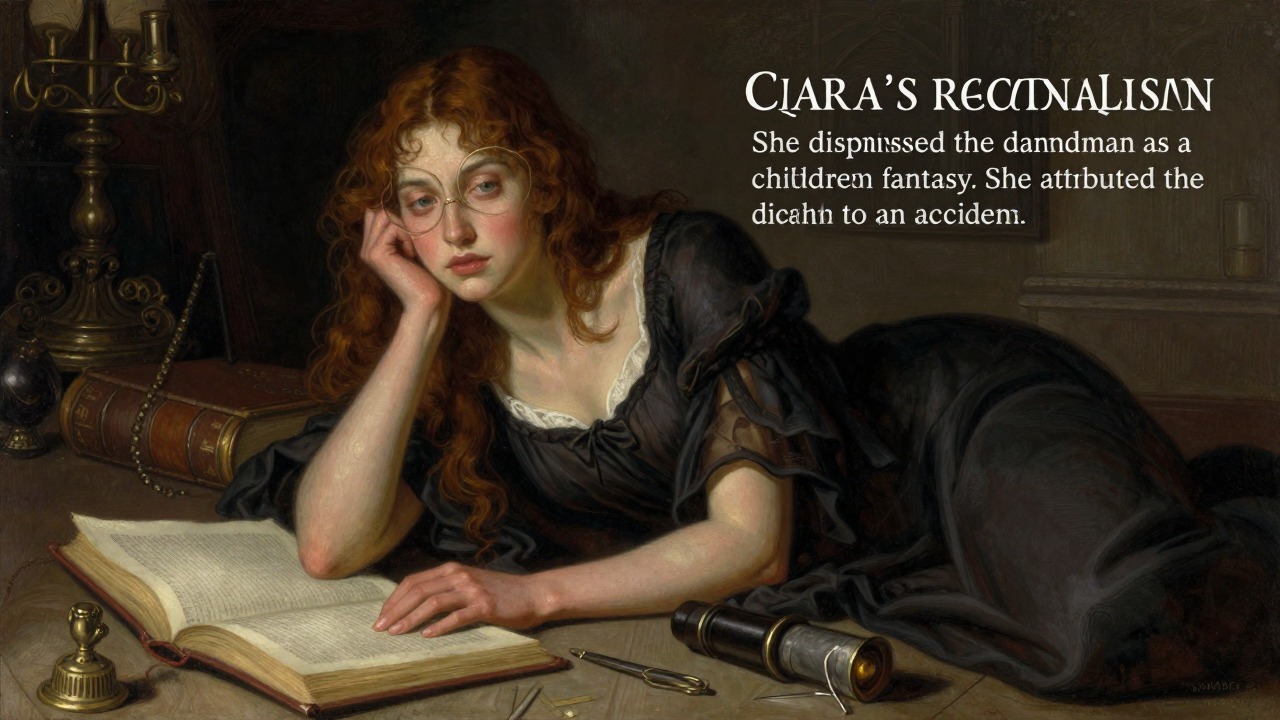
Clara was described as having a healthy imagination, a sharp-sighted intelligence, and a dislike for mystics.
The Reaction to Nathaniel's Fears
She dismissed the Sandman as a childish fantasy. She attributed the father's death to an accident.
The Criticism
Nathaniel and others called her cold and prosaic. But her perspective was grounded in reality.
Nathaniel's poetic mysticism
The Romantic Idealist
The Belief in the Supernatural
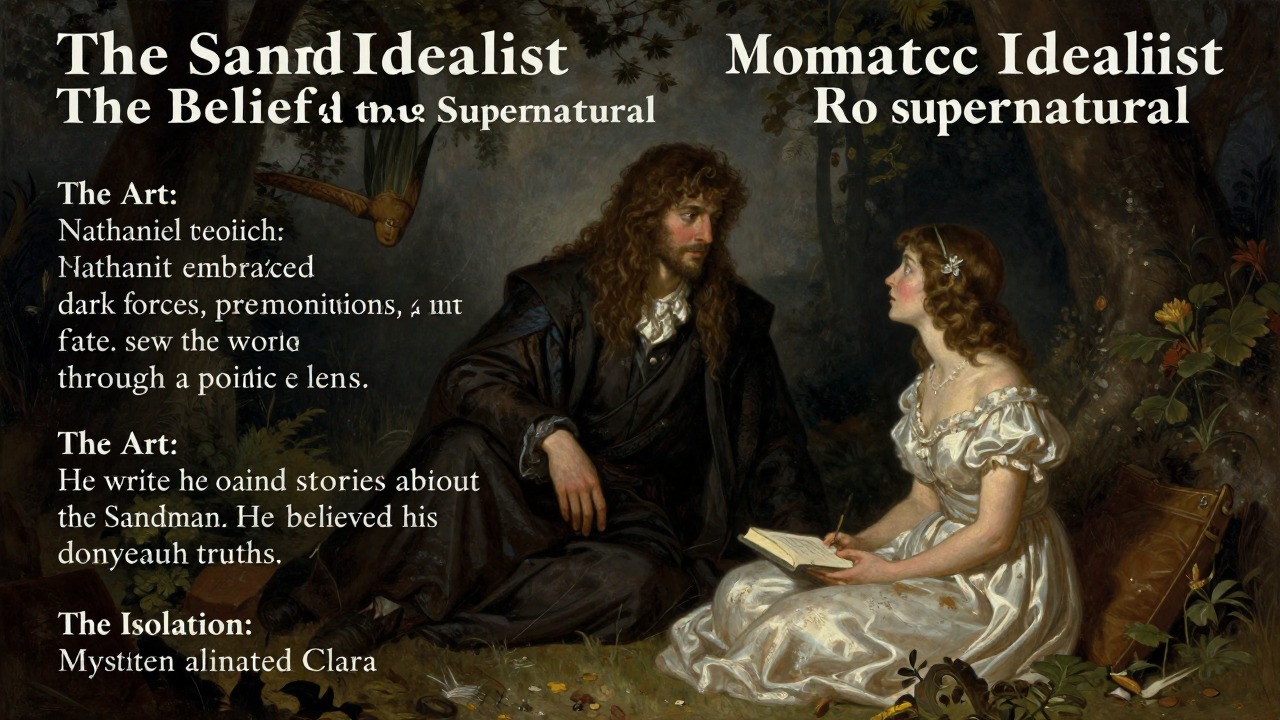
Nathaniel embraced dark forces, premonitions, and fate. He saw the world through a poetic lens.
The Art
He wrote poems and stories about the Sandman. He believed his art conveyed deep truths.
The Isolation
His mysticism alienated Clara and others. He saw himself as a poet misunderstood by prosaic souls.
The clash over the poem
The Central Confrontation
The Reading
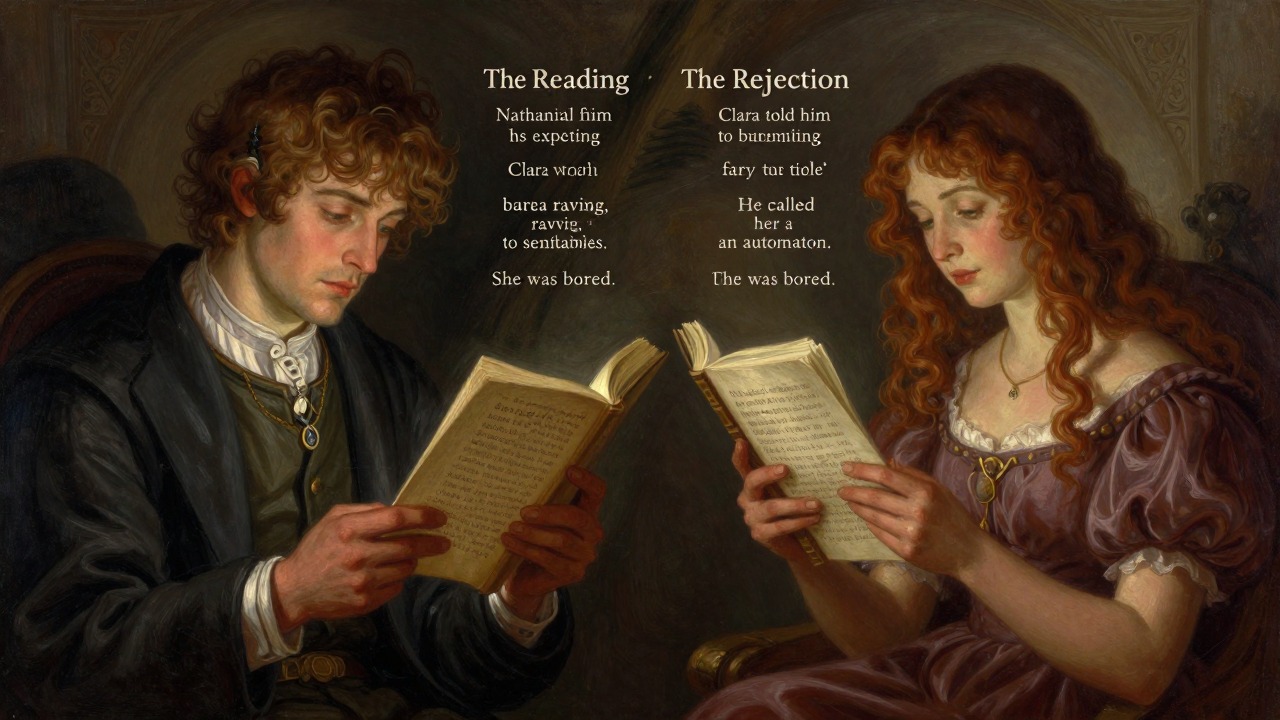
Nathaniel read his poem, expecting Clara to be moved. She was bored.
The Rejection
Clara told him to burn the 'raving, senseless fairy tale'. He called her an automaton.
The Significance
This clash highlights the incompatibility of their worldviews. The poetic cannot communicate with the prosaic.
Clara's final happiness
The Triumph of the Prosaic
The Quiet Life
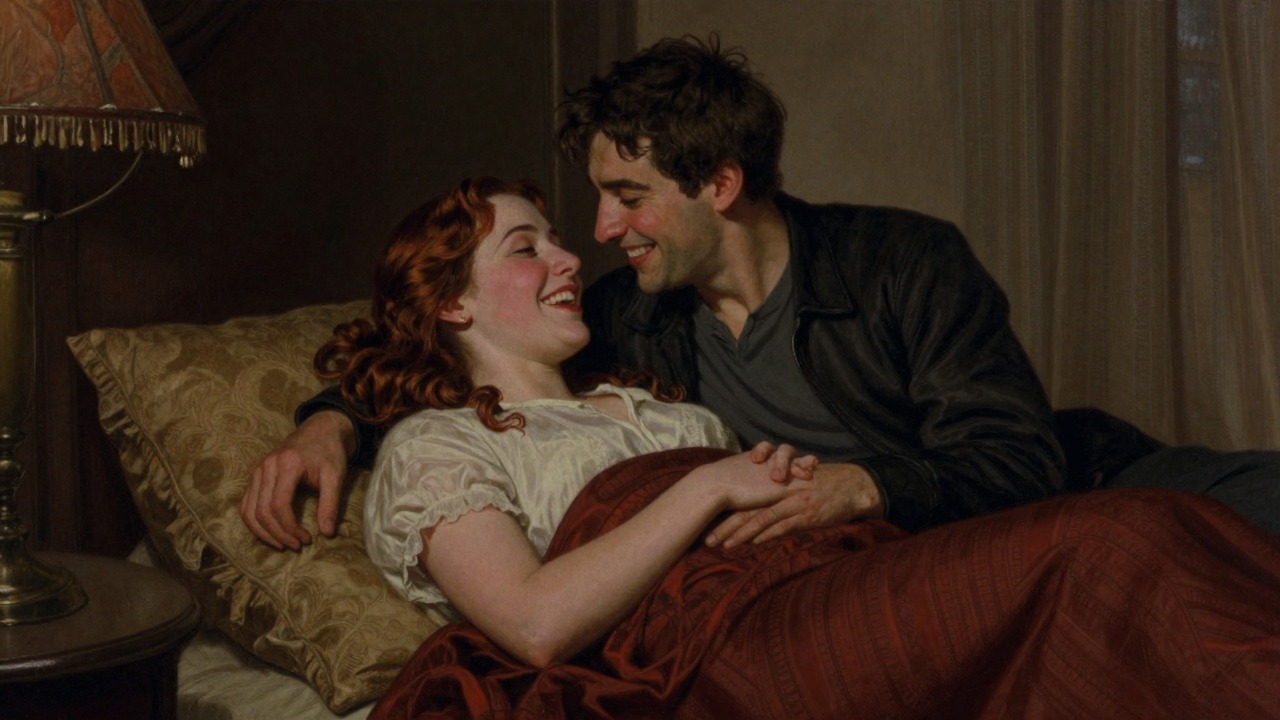
Clara found domestic bliss with a friendly man. She was happy in a simple, practical life.
The Implication
The story suggests that the prosaic spirit can survive and thrive, while the poetic spirit is self-destructive.
The Irony
Nathaniel, who scorned the prosaic, was destroyed by his own poetic obsession. Clara's prosaic nature was her salvation.
From the beginning
Throughout the story
Nathaniel's visit home
Years after Nathaniel's death
