four years before the main story
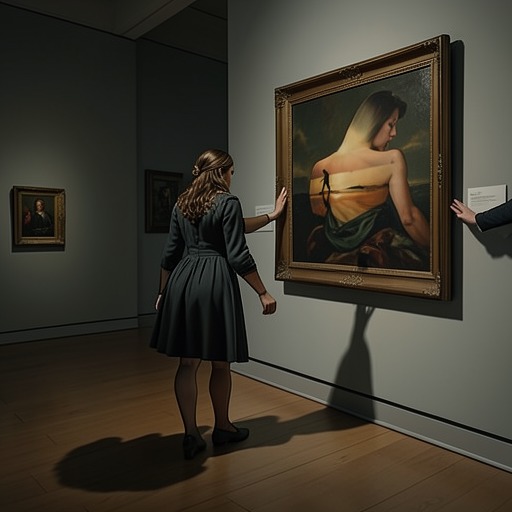
Connie Rejects Duncan's Control
[Connie Dixon](entity:character-recall-character-connie-dixon-f54f9d7cb2eb) leaves [Kansas](entity:location-recall-location-dc1f7fb4994c) for [New York City](entity:location-recall-location-7a11f2949ca3) hoping to become a painter, but Duncan Cartwright draws her into a relationship built on promises of exhibitions and fame. He gradually replaces those promises with debt, sexual exploitation, threats against her career, and pressure connected to her mother’s nursing-home care.
Her artistic ambition is diverted into work at the [Cartwright Gallery](entity:location-recall-location-f7a92e1cc92b), while Duncan treats her as property. The experience establishes the coercive life from which Connie will later try to escape.
five years before the main story
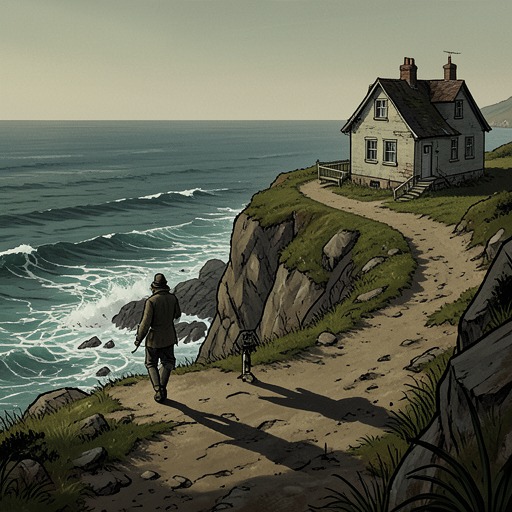
Chloe's Drowning
[Blake McGrath](entity:character-recall-character-blake-mcgrath-64247d8bb859) moves to [Maine](entity:location-recall-location-63a11a4e2b26) with his young daughter [Chloe](entity:character-recall-character-chloe-d2b048afd91a), her mother, and the puppy who will become [Ned](entity:character-recall-character-ned-160602ecacc7). While Blake works in his studio, Chloe drowns on the beach at sunset, leaving him convinced that his devotion to art helped cause the tragedy.
He abandons the ocean as a subject, stops painting, withdraws from the world, and turns the house into a memorial refuge. His grief becomes the governing fact of his life and the hidden meaning behind his later rituals.
about five years before the main story
The Canceled Exhibition
Before [Chloe](entity:character-recall-character-chloe-d2b048afd91a)’s death, Blake creates dozens of seascapes for a major exhibition intended to establish the next stage of his career. The show is canceled after the drowning, and the paintings remain wrapped and hidden in his studio.
Blake’s artistic hiatus becomes a form of self-imposed imprisonment: he preserves the work but refuses its audience, fame, and commercial value. The concealed exhibition later becomes the foundation of Connie’s professional dream.
opening evening of the main story
Connie Throws Away Her Phone
On a [Maine](entity:location-recall-location-63a11a4e2b26) cliff, Connie photographs the violent sea and briefly feels cleansed of [New York](entity:location-recall-location-75b9ea4bd176) and Duncan’s hold. In the rental car afterward, she cries over the life she has surrendered and receives several messages from Duncan despite being far away.
In a defiant gesture, she throws her phone into the darkness, then immediately feels the dread and guilt produced by years of control. Her escape is emotional before it is practical, but the act marks the first visible break with Duncan.
the following morning
Arrival in Hoyt Harbor
Connie wakes in [Hoyt Harbor](entity:location-recall-location-hoyt-harbor-b27ca461df62) and explores the busy harborfront, where the tourist economy has replaced the town’s former fishing life. The town’s summer energy briefly lifts her spirits and gives her the feeling that another kind of life might be possible.
She notices a hidden upstairs gallery between tourist shops. Her professional instincts draw her inside, turning a casual vacation outing into the discovery that changes her future.
later that day
The Bill Mason Paintings
Inside [Hoyt Harbor Gallery and Gifts](entity:location-recall-location-hoyt-harbor-gallery-0902d4595ec1), Connie sees a small unsigned seascape that overwhelms her with the same emotional force she once felt before [Woman in Blue Reading a Letter](entity:object-recall-object-c822deb90c36) at the [Rijksmuseum](entity:organization-recall-organization-f5df4fe56112). The painting’s technique and haunting imagined girl convince her that it is the work of a major artist.
She learns from the gallery owners that the painter is a local man named Bill Mason and that [Warren Ryan](entity:character-recall-character-warren-ryan-c2425a8ac3e2) owns two other paintings. The discovery revives Connie’s professional identity and suggests a possible route out of debt and dependence.
the same afternoon
Ryan Offers the Hidden Works
Connie finds [Warren Ryan](entity:character-recall-character-warren-ryan-c2425a8ac3e2) at the [Hoyt Harbor](entity:location-recall-location-hoyt-harbor-b27ca461df62) grocery store and persuades him to show her the two paintings he received from Bill Mason for supplying the reclusive artist. Ryan admits that the works are for sale if the price is right, because his business is under financial strain.
The first painting depicts gulls on a barren beach; the second returns to the enigmatic woman and the sea. Connie recognizes the same extraordinary hand and decides that the paintings may be hidden works by [Blake McGrath](entity:character-recall-character-blake-mcgrath-64247d8bb859).
that afternoon
Duncan Confirms Blake's Legend
Connie phones Duncan from Ryan’s office and asks about [Blake McGrath](entity:character-recall-character-blake-mcgrath-64247d8bb859), whom Duncan describes as [America’s Rembrandt](entity:expression-recall-expression-america-s-rembrand-ebe89a3fd237): a celebrated seascape painter whose exhibitions sold out and whose work was shown at the [Louvre](entity:organization-recall-organization-136951c23f9b) and the [National Gallery in London](entity:organization-recall-organization-f0e952c0bb2d). Duncan explains that Blake disappeared after his last [New York](entity:location-recall-location-75b9ea4bd176) exhibition.
When Connie suggests that Bill Mason may be Blake, Duncan dismisses the theory as forgery or coincidence, although he recognizes that newly discovered McGrath works would be worth even more than before. His skepticism is partly a disguise for his sudden desire to control the discovery.
later that afternoon
Connie Buys the Paintings
Connie decides to trust her instinct and withdraws two thousand dollars from the joint account used to pay for [Ruth Dixon](entity:character-recall-character-ruth-dixon-6e2422f10023)’s nursing-home care. She returns to Ryan, pays three thousand dollars in total for both paintings, and asks [Thad Ryan](entity:character-recall-character-thad-ryan-7fa223fd91dc) for directions to Mason’s property.
The purchase is both reckless and strategic. Connie risks her mother’s immediate financial security because she believes the paintings can generate freedom for her family and end Duncan’s power over her.
that afternoon
The Light House Clue
Thad explains that Bill Mason lives about an hour south, reached through [Jellicat Road](entity:location-recall-location-jellicat-road-f2603788b283) and a green mailbox. His isolated house is called [the light house](entity:expression-recall-expression-the-light-house-26f5772a04ad) because every light remains on day and night, visible to fishermen far out at sea.
Thad also reveals that Mason receives seven roses with each weekly delivery, one for every day. The strange household customs deepen Connie’s curiosity and foreshadow the grief ritual she will later witness.
that evening
Connie Crashes in the Storm
Connie drives south through a sudden storm, misses the turnoff, and eventually finds a rough track near the coast. Her car slides into a ditch, trapping her at an impossible angle and injuring her knee.
She crawls out through the window, collapses in the mud, and loses consciousness. Her desperate search for the artist has become physically dangerous, but the crash places her directly within Blake’s isolated world.
later that night
Blake Rescues Connie
Blake and [Ned](entity:character-recall-character-ned-160602ecacc7) find Connie beside the wreck. Blake drives the dog away from her, examines her injured knee, and carries her through the storm to the house after she cannot walk.
The rescue creates an intimacy neither character planned. Connie enters Blake’s home as a vulnerable stranger, while Blake is forced to confront the outside world he has spent years excluding.
the same night
Blake Reveals His Identity
After giving Connie coffee, dry clothes, and a bandaged knee, Blake questions why she came looking for Bill Mason. Connie explains that she represents a prestigious [New York](entity:location-recall-location-75b9ea4bd176) gallery and recognized the paintings as McGrath’s work.
At the bathroom door, Blake asks whether she knows that Bill Mason is really [Blake McGrath](entity:character-recall-character-blake-mcgrath-64247d8bb859). When she admits that she does, he identifies himself and quietly leaves her to absorb the revelation.
that night
The Concealed Exhibition
Blake takes Connie into his abandoned studio and shows her the thirty-one paintings created for the canceled exhibition. The first seascape moves her to tears, and Daybreak overwhelms her as a panoramic vision of oceanic force and dawn.
He explains that his paintings combine photographic reference with direct observation and emotional immersion in nature. Connie understands that his art is not merely technical realism but an attempt to convert the elements into lived feeling.
later that night
The Definition of Masterpiece
Blake argues that the word masterpiece originally meant a work made by a recognized master after years of apprenticeship, especially during the 16th and 17th centuries. He doubts that modern art retains the same disciplined relationship between craft and mastery.
His lecture reveals both his humility and his severe standards. Connie, however, sees the old meaning embodied in the works surrounding them and insists that his paintings deserve to be seen rather than buried.
each sunset during Blake's isolation
The Sunset Rose Ritual
At the daily hour of sunset, [Ned](entity:character-recall-character-ned-160602ecacc7) leaves the house for the beach and remains there until dawn. Blake explains only that the ritual is something he and the dog share, refusing to discuss its meaning.
The custom presents grief as a repeated physical act rather than a memory Blake can set aside. Connie senses that she has touched a wound and temporarily redirects the conversation toward Blake’s methods.
the following morning
Blake Signs Connie's Paintings
Before Connie leaves, Blake signs the two paintings she bought and writes dated personal inscriptions on their backs. He warns her never to reveal his location, since public knowledge would destroy the privacy he has protected for years.
The signatures transform the paintings from anonymous discoveries into authenticated works with enormous market value. Connie promises secrecy, accepting that her future now depends on preserving Blake’s boundary.
later that morning
The Beachside Farewell
Connie and Blake chase [Ned](entity:character-recall-character-ned-160602ecacc7) along the beach after the dog steals her purse. Their playful pursuit ends with both of them laughing, splashing one another, and briefly allowing desire to replace the house’s grief.
Before Connie leaves, Blake gives her five hundred dollars for emergencies. She kisses him goodbye, while both recognize that the encounter has become emotionally significant despite the promise of distance.
the next day
Ruth's Defiant Spirit
Connie visits [Ruth Dixon](entity:character-recall-character-ruth-dixon-6e2422f10023) at the nursing home near [Exeter](entity:location-recall-location-9e03ffedf218). The facility director complains that Ruth pinched a nurse, smuggled beer into her room, claimed to have been Marlon Brando’s lover, and attacked the resident cat Mr. Snuggles with her walking stick.
The comic encounter restores Connie’s connection with her mother and reminds her that Ruth remains lively despite institutional confinement. Ruth also recognizes from Connie’s face that Duncan is harming her and tells her that a mother always knows.
that evening
The Sister's Alarm
At [Jean](entity:character-recall-character-jean-3b22ff98bd2e)’s home, Connie reveals that she spent two thousand dollars from the nursing-home account on the paintings. Jean reacts with despair rather than excitement, unable to believe that anonymous-looking canvases could be worth the fortune Connie claims.
The sisters’ conflict exposes the practical cost of Connie’s gamble. Connie insists that Blake’s identity is genuine and asks Jean to trust her just once, tying her new independence to the financial rescue of their mother.
the following day
The Boardroom Confrontation
Connie returns to the [Cartwright Gallery](entity:location-recall-location-f7a92e1cc92b) in [New York](entity:location-recall-location-75b9ea4bd176) carrying the paintings. Duncan confirms that the photographed work is genuine McGrath and demands to know where she found it, threatening to cut off her mother’s care and evict her from the apartment he controls.
Connie rejects his threats and offers him one signed painting in exchange for a complete release from their debts and relationship. The transaction becomes her first deliberate act of bargaining from a position of power.
during the same confrontation
Duncan Assaults Connie
When Connie refuses to disclose Blake’s location, Duncan slaps her across the face. He then accepts her demand for a second painting in exchange for a large payment to the nursing-home account and cash for Connie.
Connie verifies the transfer with [Jean](entity:character-recall-character-jean-3b22ff98bd2e) before surrendering the work. Duncan’s violence confirms that his polished social persona is only a mask, while Connie’s cold insistence marks the collapse of his control.
the next day
Connie Returns to Maine
Connie transfers part of the sale proceeds to [Jean](entity:character-recall-character-jean-3b22ff98bd2e), leaving enough to secure Ruth’s continuing care, then packs her belongings and abandons the apartment leased in Duncan’s name. She decides that [New York](entity:location-recall-location-75b9ea4bd176) no longer represents ambition but captivity.
She drives north toward [Maine](entity:location-recall-location-63a11a4e2b26) with only modest savings and the dream of opening a gallery. The journey is a literal and moral departure from Duncan’s world and the first step toward a self-directed identity.
the following morning
Ryan Receives Restitution
Connie returns to [Warren Ryan](entity:character-recall-character-warren-ryan-c2425a8ac3e2)’s office and tells him that the paintings were worth far more than the agreed price. Rather than exploit his lack of knowledge, she writes him a check for an additional forty thousand dollars.
Ryan is overwhelmed, having already used the original money to stabilize his business. Connie’s decision establishes her distinction from Duncan’s predatory commercialism and acknowledges the local people who unknowingly preserved Blake’s work.
later that day
Connie Returns to Blake
Connie drives to Blake’s house and finds him repairing his truck. She repays the five hundred dollars he lent her and tells him she has left [New York](entity:location-recall-location-75b9ea4bd176), lost her job, and devoted the rest of the painting proceeds to her mother.
She admits that she may soon be sleeping in her car while pursuing a [Maine](entity:location-recall-location-63a11a4e2b26) gallery. Her willingness to sacrifice security for a dream forces Blake to recognize that she has returned for more than commercial access to his work.
the same afternoon
Connie Asks to Be Blake's Agent
Connie proposes an exhibition of Blake’s hidden paintings and asks to become his agent. Blake initially says he does not need one, suspecting that professional motives may conceal commercial ambition.
Connie admits that she returned because she wanted to see him and be near him, while still believing the world deserves his paintings. Her confession breaks through his suspicion and makes their relationship openly personal.
immediately afterward
The Portrait Condition
Blake agrees to let Connie exhibit his old work on one condition: she must sit for a portrait. He wants to paint her as soon as possible, despite having abandoned painting and never having worked seriously in portraiture.
Connie accepts, delighted by the chance to remain with him. Blake then reveals that he is going blind and calls the portrait his last chance for redemption, transforming the proposed artwork into an existential undertaking.
that evening
The Chloe Revelation
After the sunset rose ritual, Connie infers that the woman in Blake’s paintings represents the lost figure who drew him back to the beach. Blake corrects her: the young woman is an imagined adult version of [Chloe](entity:character-recall-character-chloe-d2b048afd91a), the daughter who drowned five years earlier.
He explains that the roses, [Ned](entity:character-recall-character-ned-160602ecacc7)’s nightly vigil, and the house’s constant lights are all attempts to keep Chloe remembered and to guide her home. His grief is revealed as love turned into permanent self-punishment.
later that night
Connie Chooses to Stay
Connie sits with [Ned](entity:character-recall-character-ned-160602ecacc7) on the beach and weighs the danger of remaining with a man whose grief has hardened into isolation. She recognizes that attraction alone cannot heal Blake, but also understands that leaving would abandon the possibility of a shared future.
She decides to stay. The choice is not presented as pity but as a commitment to preserve hope while respecting Blake’s memories of [Chloe](entity:character-recall-character-chloe-d2b048afd91a).
two days later
The Portrait Begins
Blake prepares an orange-grounded canvas in the studio and positions Connie at the window with a rose. He explains that the warm underpainting will radiate through the upper layers, giving the finished work depth and natural warmth.
The modeling session becomes charged with mutual desire. As Blake adjusts the straps of Connie’s bra and studies her face through the camera, they finally kiss and acknowledge the attraction that has been building since their first meeting.
a few days into the portrait
Storm Consummation
During another violent storm, Blake and Connie’s restraint collapses. After kissing inside the house, Blake carries her into the rain and they make love on the beach beneath lightning and the pounding sea.
The setting fuses erotic union with the natural force that has defined Blake’s art and trauma. Their intimacy becomes a new memory of the shore, one capable of competing with the grief attached to it.
over the next fourteen days
The Portrait of Connie
Blake works methodically on Connie’s portrait while she poses, rests, and explores the beach with him and [Ned](entity:character-recall-character-ned-160602ecacc7). His skills return, and the painting develops into a luminous image of longing, with Connie’s face and the rose rendered as if alive.
Their domestic life becomes joyful and productive: they clean the house, share meals, make love, and plan Connie’s gallery. The portrait gives Blake a temporary purpose while binding Connie’s artistic and emotional future to his.
near the portrait's completion
Duncan's Threatening Call
Duncan obtains Connie’s new phone number by deceiving the nursing home. He calls to demand that she remove her old paintings from the [Cartwright Gallery](entity:location-recall-location-f7a92e1cc92b), threatening to burn them if she does not collect them.
He also taunts her about their former sexual relationship. Connie rejects his version of the past and hangs up, but Blake overhears only the most damaging fragments and mistakes the call for proof that she has manipulated him to obtain his paintings.
immediately after Duncan's call
The Betrayal Misunderstanding
Blake confronts Connie in the studio, convinced that she promised Duncan to take all his paintings and spoke of their intimacy as something she endured merely to acquire them. In rage and hurt, he offers her his canvases, his money, and his secrets, then orders her out.
Connie explains that Duncan was referring to her own abandoned artwork, not Blake’s paintings, and that his sexual taunts described coercion rather than desire. The misunderstanding exposes the couple’s fragile trust before they can rebuild it through honesty.
the same night
Blake and Connie Reconcile
Once Blake understands the call, his anger gives way to relief and remorse. Connie tells him the full history of Duncan’s grooming, debt, threats, and sexual exploitation, explaining that the painting sale freed her from that arrangement.
They embrace and make love with the urgency of survivors restoring a damaged bond. Their reconciliation confirms that the relationship has become a shared choice rather than an accidental extension of either person’s trauma.
after their reconciliation
The No More Secrets Agreement
In bed, Connie and Blake promise that there will be no more secrets between them. Blake admits that opening his grief has eased the burden he carried, while Connie acknowledges that she should have told him about Duncan before the crisis.
The vow gives their future a moral structure: trust will be built through disclosure rather than protected through silence. It also prepares them to face Blake’s blindness as a shared reality instead of an isolated private catastrophe.
the following morning
The Portrait Is Unveiled
Blake reveals the completed portrait to Connie after arranging the studio to display it properly. She sees an image that captures her soul and appears almost magically luminous, while Blake explains that he painted her through adoring eyes.
Connie names the work [Lady of the Light House](entity:expression-recall-expression-lady-of-the-light-c7d5cdf85d54). The painting becomes both a record of their happiness and Blake’s final visible statement before blindness, a work in which grief has been joined by love.
two days later
Blake Rejects a New Career
Walking with Connie on the beach, Blake says he does not plan to paint again. The portrait fulfilled his need for redemption, but his failing sight makes a return to his former standards seem futile.
Connie argues that his gift should not be wasted, yet Blake insists that he has no desire to conquer another artistic world. His refusal establishes the conflict between artistic vocation and the physical limits closing around him.
the following weeks
Connie Learns Blake's Techniques
Connie begins studying Blake’s archived photographs and asks him to teach her. He explains canvas preparation, orange underpainting, color relationships, brush control, stroke direction, and the observation of nature.
The lessons revive Connie’s abandoned desire to paint without displacing her plan for a gallery. Blake’s knowledge becomes an act of inheritance, allowing his art to continue through instruction even as his sight deteriorates.
during the following weeks
Connie's Seascape Lesson
Under Blake’s supervision, Connie paints a seascape from one of his reference photographs. She learns to mix the sky first, echo its colors in the water and distant land, and use controlled wrist strokes that follow the forms she is depicting.
After days of work, she completes a painting far beyond her earlier ability. Blake praises her seriously and helps transform her old dream of painting from a source of shame into a living practice.
the same period
The Gallery Takes Shape
Connie rents a narrow shop in [Hoyt Harbor](entity:location-recall-location-hoyt-harbor-b27ca461df62), arranges renovations and lighting, commissions catalogs, and plans an exhibition of Blake’s lost works. The enterprise grows from her vision of a gallery that values art rather than Duncan’s manipulative commercialism.
Blake agrees to let her show the paintings and the new portrait. Their private household becomes the source of a public cultural project, linking their emotional recovery to Connie’s professional independence.
the last day of summer
Blake's Sudden Blindness
Blake wakes and discovers that his vision has disappeared completely. Terror and rage overwhelm him; he tears through the house, knocks over furniture, wields his cane, and storms onto the beach while Connie watches helplessly.
His anticipated illness becomes an immediate existential crisis. The blindness threatens his independence, his relationship with [Ned](entity:character-recall-character-ned-160602ecacc7), and the artistic identity through which he has understood himself.
the following morning
Blake's Near-Drowning
After wandering the beach through a storm, Blake tells Connie to leave him so she will not be trapped in his darkness. He insists that her youth and future should not be sacrificed to pity, while Connie argues that grief, not blindness, is what has disabled him.
In fury and desperation, Connie pushes him backward into the surf. The current carries the blind man offshore, and after nearly surrendering to death he recovers the will to live when visions of [Chloe](entity:character-recall-character-chloe-d2b048afd91a) and the sound of Connie’s voice reach him.
the same morning
Blake Returns from the Sea
Guided by Connie’s repeated calls, Blake swims and fights his way back through the surf. Connie refuses to rescue him directly, forcing him to choose life and find his way toward her voice.
When he reaches her, they cling to each other and confess their love. Blake recognizes that he can preserve [Chloe](entity:character-recall-character-chloe-d2b048afd91a)’s memory without surrendering his entire future to grief, while Connie proves that her commitment is neither sympathy nor obligation.
that evening at sunset
Blake's Farewell to Chloe
Blake returns to the beach with [Ned](entity:character-recall-character-ned-160602ecacc7) and performs the final rose ritual. He throws the last red rose into the sea and speaks aloud to [Chloe](entity:character-recall-character-chloe-d2b048afd91a), telling her that he loves her, that she is beautiful, and that he will no longer wait for her return.
He promises to remember her through sunlight, wind, and love rather than endless sorrow. Afterward, Connie helps him turn off the house lights one by one, ending the “light house” vigil and allowing the home to become a future dwelling.
near the end of summer
The Gallery Opening
[Connie Dixon](entity:character-recall-character-connie-dixon-f54f9d7cb2eb) opened the Connie Dixon Art Gallery in [Hoyt Harbor](entity:location-recall-location-hoyt-harbor-b27ca461df62), displaying Blake's lost seascapes and "The Lady of the Lighthouse." Collectors, investors, critics, and former admirers from around the world came, making this small seaside town the center of an international art event
the gallery opening night
Blake Returns to Painting
At the request of Congni, Blake addressed the gathered guests. He said that Congni's love and perseverance had saved him from despair, and he announced that despite his blindness, he would return to the canvas. He would not attempt to re-create the sea views that relied on sight. Instead