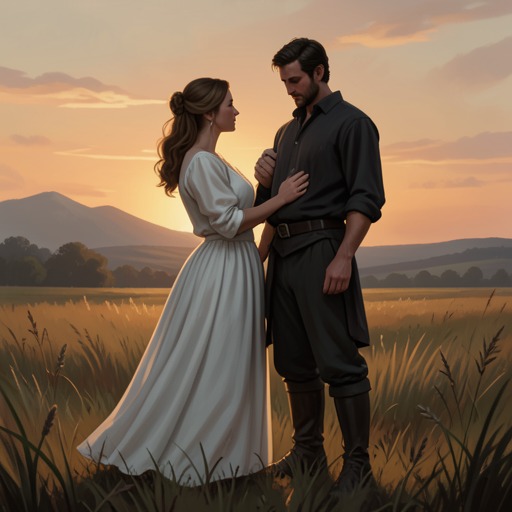
Cinderella
TideThe Cinder Girl is the storybook Prince James gives Meira, a tangible link between their encounter at the palace and the quiet domestic scenes in which Little Emblyn reads to her. The book moves from a gift held close to Meira’s heart to a shared reading experience, and then appears again beside the painting of the wrecked Cygnus. Its story of a girl treated as a servant gives the object a further resonance with Meira’s circumstances, although the evidence presents that connection through juxtaposition rather than explanation.
A Gift from Prince James
The book enters the story after Meira has been dressed for the ball. Little Emblyn, who helped prepare her, compares her to the little cinder girl who went to the ball and married the prince, then promises to tell her the story later. The comparison turns a familiar fairy-tale pattern into a playful comment on Meira’s immediate situation: she is dressed for a royal occasion, and a prince is part of the evening. Little Emblyn’s remark establishes the tale before the book itself appears, making the gift feel like a continuation of a story already begun between the women.
At the end of the visit, Prince James gives Meira the book. He takes her hand, bids her good night, kisses her hand, and welcomes her back; Meira bows her head and holds the volume against her heart. Once Galahad Stormcrane has led Thondorfax away from the palace, he asks what the prince gave her. Meira raises the book so he can see it. The gesture keeps the gift in view without requiring her to explain it aloud: Galahad recognizes its title, and Meira confirms his recognition with a quick nod.
The object’s physical appearance is described closely. It is small, bound in red ornamented leather, and marked with gold lettering. When Meira opens it, the first image is a gorgeous castle outlined in gold; the following pages show the poor girl sweeping the hearth before her wicked stepmother and stepsisters. The decorated binding and illuminated images make this more than an unspecified book in the scene: its material form carries the visual contrast between the glamour of a castle and the hardship of the girl’s work.
The Story Little Emblyn Reads
The book becomes part of the household’s evening routine. At home, Galahad Stormcrane eats stew at the dining table while Little Emblyn and Meira sit by the fire, each with a lamp and knitting. Little Emblyn works on what looks like a green sweater; Meira, less practiced, slowly knits a maroon scarf and often looks to Little Emblyn for reassurance. When Little Emblyn places the small volume on a bookstand, Galahad notices it. She announces that she will read The Cinder Girl, and Meira smiles, tucking her feet onto her chair as Little Emblyn leans toward the pages and lamplight.
The passage read aloud introduces a lonely girl whose widowed father remarries in hopes of giving her a proper mother. The new wife is beautiful, but her two daughters are ugly and spiteful. After the father dies, the stepmother and stepsisters treat the girl like a slave: she works continually, eats in the kitchen, and sleeps beside the fire’s embers for warmth. Her sisters call her Cinderella. The book’s opening thus places the cinder girl’s name beside a concrete account of domestic deprivation, rather than presenting her only as a beautiful figure destined for a ball.
Little Emblyn continues with the girl’s character. Though her family treats her unkindly, she remains kind and cheerful, singing as she works and smiling. As she grows into a woman, she becomes more beautiful, a change that makes her stepmother and stepsisters jealous. Meira stops knitting and lets her hands fall into her lap as she listens. Galahad, seated at the table, lowers his hand and looks into the parlor while the reading holds his attention too. The book therefore gathers the three characters into one scene: Little Emblyn supplies the spoken story, Meira listens with concentrated stillness, and Galahad watches from the adjoining room.
Recurrence and Resonance
The Cinder Girl returns in a later parlor scene, where Meira carries the red book as she approaches the mantel. She looks at the painting of the battered Cygnus amid a stormy sea, then points toward it. The book is again held against her chest, now with her left hand, while her gaze traces the image of the broken ship. The narrative does not explain the gesture in the available passage, so the book’s meaning in this moment remains open; what is concrete is its proximity to the painting and Meira’s act of directing attention toward that image.
Across these appearances, the volume changes context without changing its identity. It is first associated with Meira’s ball clothes and Little Emblyn’s playful comparison, then with Prince James’s attention and the farewell at the palace, then with the warmth of a firelit reading, and finally with the shipwreck painting. The fairy tale’s domestic cruelty and the image of the wrecked Cygnus are distinct elements, not explicitly equated by the narration. Their placement around Meira nevertheless lets the book carry more than one association: it is a prince’s gift, a story shared among companions, and an object present when Meira turns toward a picture of loss.
Narrative Function
The book provides a story within the larger story, but the available reading gives only its opening account of Cinderella’s family, labor, and cheerfulness. Little Emblyn had earlier promised to tell the tale, and the later reading fulfills that promise in an ordinary evening setting, amid knitting, lamplight, and supper. This framing makes the act of reading itself significant: the book is not merely named or displayed but opened, described, and voiced for Meira, whose hands pause over her work as she listens.
Its recurring physical details help maintain continuity between otherwise different scenes. The red leather cover identifies it when Galahad asks what James gave Meira; Meira’s holding it against her heart marks its place in the farewell; and the bookstand makes it the focus of Little Emblyn’s reading at home. Later, Meira carries the same volume to the mantel and holds it while attending to the Cygnus painting. The book thus connects a public royal visit to private companionship, while its embedded tale offers a parallel image of a girl enduring unkind treatment. The text does not state that Meira identifies herself with Cinderella, but Little Emblyn’s earlier comparison and Meira’s attentive response establish the possibility without closing it down.