Brass key to Michael's apartment
TrespassesThe Brass key to Michael's apartment moves from practical permission to intimate access and, finally, to a memento of loss. Given by Michael Agnew to Cushla Lavery during a strained night in his flat, it lets her enter on her own; later, when she gathers the remnants of their relationship, the key has become one object among many that mark what she has lost.
Given as Permission
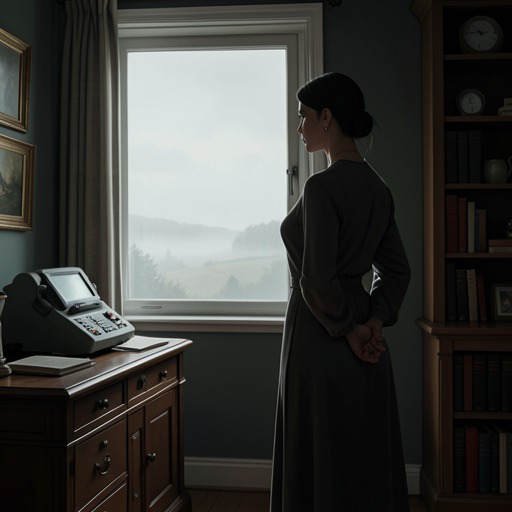
Michael gives Cushla the key while his table is crowded with folders, ring binders, cups and papers, and he is drinking alone. She has said that she should go because she has work to do; he asks her to stay. After she draws the curtains and places her hands on his tense shoulders, he takes a key from his pocket and gives it to her, saying she can come and go as she pleases. Cushla waits for him to say more, sensing that the moment carries significance, but he only strokes her hand and reaches for a pen. The gesture grants her access plainly, while leaving the emotional meaning of that access unspoken.
A Key Put to Use
The key becomes a working means of entry when Cushla returns to Michael's flat with Gerry Devlin. She crosses the gravel with her shoes in her hand, takes the brass key from her bag, unlocks the door, and raises a hand in farewell to Gerry. The small, deliberate sequence makes the earlier offer concrete: she no longer needs to wait outside or be admitted by Michael. The apartment is still recognizably his space—his bedroom, cardigan, papers and whiskey glasses remain there—but Cushla can cross its threshold by herself.
From Access to Keepsake
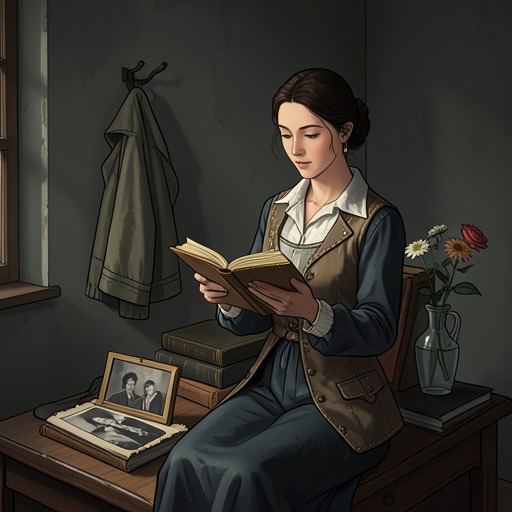
After Michael's death, Cushla gathers objects that she has assembled as mementoes: Irish books, a hotel soap wrapper from Dublin, a used banknote, and the St Joseph novena card that Michael had found silly. The single brass key is part of this collection. Its function has changed: once it opened Michael's door, now it belongs to the private inventory through which Cushla confronts the fact that Siobhán de Buitléar had his life, his child and his death. Set among such keepsakes, the key preserves the intimacy of being allowed into his home while also measuring the distance that death has made final. Its movement from pocket, to Cushla's bag, to the gathered mementoes gives a tangible shape to a relationship whose significance Michael's original gesture left unstated.