Cushla Lavery and Davy McGeown
TrespassesCushla Lavery and Davy McGeown’s relationship begins in the classroom, where her attention distinguishes him from a child whom other pupils mock and adults too readily judge through his family’s circumstances. It deepens through acts of ordinary care—drying him off, listening to him, visiting his home, and helping his family in crisis—until the teacher-pupil bond becomes one of the novel’s most enduring attachments. Their eventual separation does not erase that connection: years later, Davy returns as an adult, carrying memories of Cushla’s kindness and the consequences of the losses she could not prevent.
A Pupil Seen Clearly
Cushla first encounters Davy not as an abstract case of hardship but as a small boy caught in the rain on his way to school. She tries to avoid a puddle outside the chip shop, but passing traffic soaks him. At school, he arrives dripping and cold. Cushla brings him to the staff toilet and dries his face and hair with paper towels. The gesture is modest, and the roughness of the towels makes him wince, but it establishes a pattern: she notices his immediate discomfort and responds rather than treating it as a nuisance.
That attentiveness contrasts with the suspicion surrounding Davy’s home life. His father’s work as a roofer is uncertain, and his mother is Protestant while the children are being raised Catholic. Bradley regards the family’s religious difference as a reason for distrust. When Davy says he forgot something, Cushla steps in before the headmaster can decide on a punishment, places her hands on the boy’s shoulders, and guides him away, insisting that it was a mistake. Her intervention does not change the school’s wider assumptions, but it gives Davy a teacher prepared to distinguish him from the prejudices directed at his family.
In class, Davy sits in the front row, not because he is badly behaved but because other children torment him. He repeatedly volunteers during the class’s news exercise, even when his classmates do not attend to what he says. When he reports that his father has found work, the announcement receives little notice; other children redirect the moment toward teasing. Cushla’s response to his schoolwork offers a different kind of recognition. For a poem inspired by Wordsworth’s daffodils, Davy writes of flowers like spears and shapes the words along the stem of a flower he has drawn. Cushla praises the work quietly. He considers the compliment, then returns to his seat: a brief exchange in which his imagination, rather than his family’s troubles, is what she sees.
From Classroom Kindness to Family Support
Cushla’s care extends beyond school. One rainy afternoon, she stops beside Davy on the road and offers him a lift. He says he is not allowed into cars with strangers; she answers that she is hardly a stranger and offers to explain herself to his mother. When she takes him home, she meets Betty, who welcomes her at the door and reminds Davy about wearing a coat. The visit makes the teacher’s attention personal: she has crossed from the school setting into the family’s daily life, where care is entangled with poverty, communal suspicion, and the practical demands placed on Betty and the children.
That closeness grows as Cushla learns what is happening to the family. She brings Gina to the McGeowns’ home with bags of supplies, where Davy is sitting beside his sister Mandy. He tells Cushla, in the formal manner of a classroom news report, that his father has been attacked. Cushla kneels and takes his hands. He seems disappointed by the smallness of her response, a sign that knowing the fact is not the same as making the danger or grief disappear. The scene defines both the value and the limit of her support: she can be present, listen, and offer help, but she cannot undo what has happened.
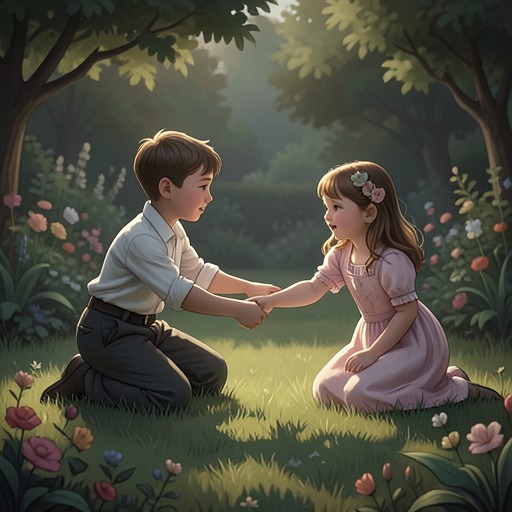
When Cushla later gives the McGeowns a lift after church, Davy’s ease with her appears in a different register. The two are giddy together on the way to his home, sharing jokes about his appearance and familiar popular-culture references. At the house, he runs inside to discover that his father has returned. Cushla’s relationship with Davy now includes both the protective seriousness of an adult responsible for a vulnerable pupil and the lighter, playful exchanges of someone he trusts. He can tell her painful news, but he can also joke in her company.
The most difficult episode comes when Cushla returns to find Gina injured and in need of care. Later, after the McGeown home is attacked with a firebomb, Cushla reaches the estate as the family is leaving. Betty is trying to keep Mandy back while supporting Seamie; Davy is not immediately beside them. Once the family is clear of the crowd, he produces his father’s tablets and says he has brought them so Seamie can sleep. At Cushla’s home, she helps arrange food, tea, and beds for the family. The children have brought almost nothing apart from Davy’s schoolbag. She gives them clothes to sleep in and shows them her childhood books in the spare room. Her role has widened from teacher to sheltering adult, though the care is necessarily improvised and the family’s future remains unsettled.
Separation and the Unfinished Promise
Cushla’s home cannot become a permanent refuge. When she drives the family to another part of Belfast, Betty and Mandy leave the car to join Seamie, while Davy stays behind for a final moment. He promises to write and says he knows Cushla’s address by heart. She tells him that getting to know him has been the joy of her life, and he throws his arms around her neck. She holds him tightly, worried that she may be hurting him. The farewell makes their attachment explicit, but it also shows how little control Cushla has over the separation: she can offer affection and a promise of continued contact, not a home in which the family can remain together.
After they leave, Cushla finds Davy’s satchel in the spare room. Inside are his school things, medals, a Communion missal, and the rosary beads she bought him in Dublin. His exercise-book letter asks Jim’ll Fix It to help his father get better, bring Tommy home, and let Miss Lavery get the person she loves. A postscript says that Jonathan thinks her hair is strange but Davy likes it. The letter gathers his worries and his attachment to Cushla into the familiar format she taught the children at school. Its childlike requests reach beyond what either a teacher or a wish-making television programme can provide, but the care behind them remains concrete: Davy has remembered her lessons, her gifts, and her private life.
The bond persists through absence, though Cushla cannot easily find him. Gerry later obtains a letter from Davy, who has been placed with a foster family; Mandy is living elsewhere. Cushla’s happiness at hearing from him gives way to distress at the news that the children have been separated and that the family has not found a new home. The letter continues the thread established at school: Davy addresses her as his teacher and uses the written form she taught him. Yet correspondence cannot restore their daily contact or reverse the conditions that sent him away.
Reunion and Adult Recognition
In 2015, Cushla meets Davy again as a middle-aged man rather than the boy she has repeatedly imagined finding. He is carefully dressed in a pea coat, denim shirt, and maroon sweater, whose colour recalls the day she soaked him with the car. The physical detail links his adult presence to their first encounter without suggesting that time has simply returned them to the past. The boy’s skittishness seems to have gone, though he takes her hand and swings it. Cushla tells him that she looked for him; her search had included classrooms, telephone directories, and repeated attempts to find him among those attending Tommy’s funeral. The reunion therefore carries not just recognition but the history of a long, unsuccessful effort to keep the connection alive.
Davy now has a daughter and four grandchildren. He tells Cushla that his daughter is angry with him and that he was not ready to be a father at the time. Cushla’s remorse rises from the knowledge that he was sent away and did not learn how to become a father, but the passage does not turn that feeling into a simple claim that she caused his later difficulties. Davy squeezes her hand, and he says that he and his daughter see each other a little now; it is a beginning. His present life includes both the consequences of earlier separation and the possibility of renewed connection.
Davy introduces Ellen to Cushla, and Ellen says that Davy has told her about his former teacher. He then invites Cushla to look at the John Lavery works with him. She accepts with evident warmth. Their last exchange does not pretend that the years apart can be recovered or that Cushla could have prevented every loss. Instead, it gives the relationship a present tense again: the former pupil has returned, remembers who she was to him, and makes room for her in the life he has built.
The Meaning of the Relationship
The relationship is shaped by repeated acts of attention rather than by authority alone. At school, Cushla protects Davy from an unfair response, listens when his news goes unnoticed, and recognizes his poem. Outside school, she offers transport, visits his family, and provides practical help when they are displaced. These actions make teaching a continuing responsibility in the novel, but they also expose its limits. Cushla can care for Davy without controlling the forces that threaten his family, determine where he lives, or separate him from Mandy.
Davy’s later return gives that care a complicated measure. He remembers the ordinary details of being taught and looked after, while Cushla remembers the promise of a letter, the possessions left in the spare room, and the years in which she could not locate him. Their reunion does not erase the interruption; it allows both characters to meet across it. The relationship endures not as an ideal of rescue, but as a bond made from attention, affection, separation, and the chance to recognize one another again.